
A 2025 meta-analysis of 18 randomized trials found that anti-inflammatory diets lowered systolic blood pressure by about 4 mmHg, showing that this is a measurable, evidence-based approach to cardiovascular prevention. An anti inflammatory diet is a sustained eating pattern, not a supplement regimen or a list of forbidden foods.
For executives managing demanding schedules, the useful question isn't which ingredient promises to fight inflammation. It's which repeatable food choices fit business meals, travel, family preferences, and an individual cardiovascular risk profile.
Preventive cardiology adds an important discipline: evaluating dietary changes alongside blood pressure, cholesterol-related markers, glucose, and clinical history. Nutrition deserves serious attention, but it shouldn't be asked to replace indicated medical care.
Table of Contents
- What the Anti Inflammatory Diet Really Is
- The Evidence Behind Heart and Metabolic Benefits
- Foods to Emphasize and Foods to Limit
- Sample Meal Ideas for a Busy Executive Schedule
- How Hosmane Longevity Center Personalizes Your Plan
- Practical Steps to Start and Sustain the Diet
- Common Misconceptions and What the Evidence Shows
- Your Next Step Toward Data-Driven Heart Health
What the Anti Inflammatory Diet Really Is
The precise finding behind the opening comes from a systematic review of anti-inflammatory dietary interventions: among 2,602 participants, average systolic blood pressure fell by 3.99 mmHg, with significant improvements in diastolic blood pressure, LDL cholesterol, total cholesterol, and high-sensitivity C-reactive protein, or hs-CRP.
Those results concern dietary patterns, not a particular food marketed as anti-inflammatory. The term describes a broad approach emphasizing minimally processed plant foods, fiber, unsaturated fats, and fish, rather than a single standardized prescription.
A pattern rather than a prescription
A Mediterranean-style pattern offers a practical foundation. Meals revolve around vegetables, fruit, legumes, whole grains, nuts, fish, and extra-virgin olive oil, with fewer refined carbohydrates, processed meats, and foods contributing excess saturated fat.
The distinction matters because adding a favorable ingredient doesn't necessarily improve the rest of a meal. Olive oil added to an otherwise unchanged eating pattern isn't equivalent to using it while replacing less favorable choices.
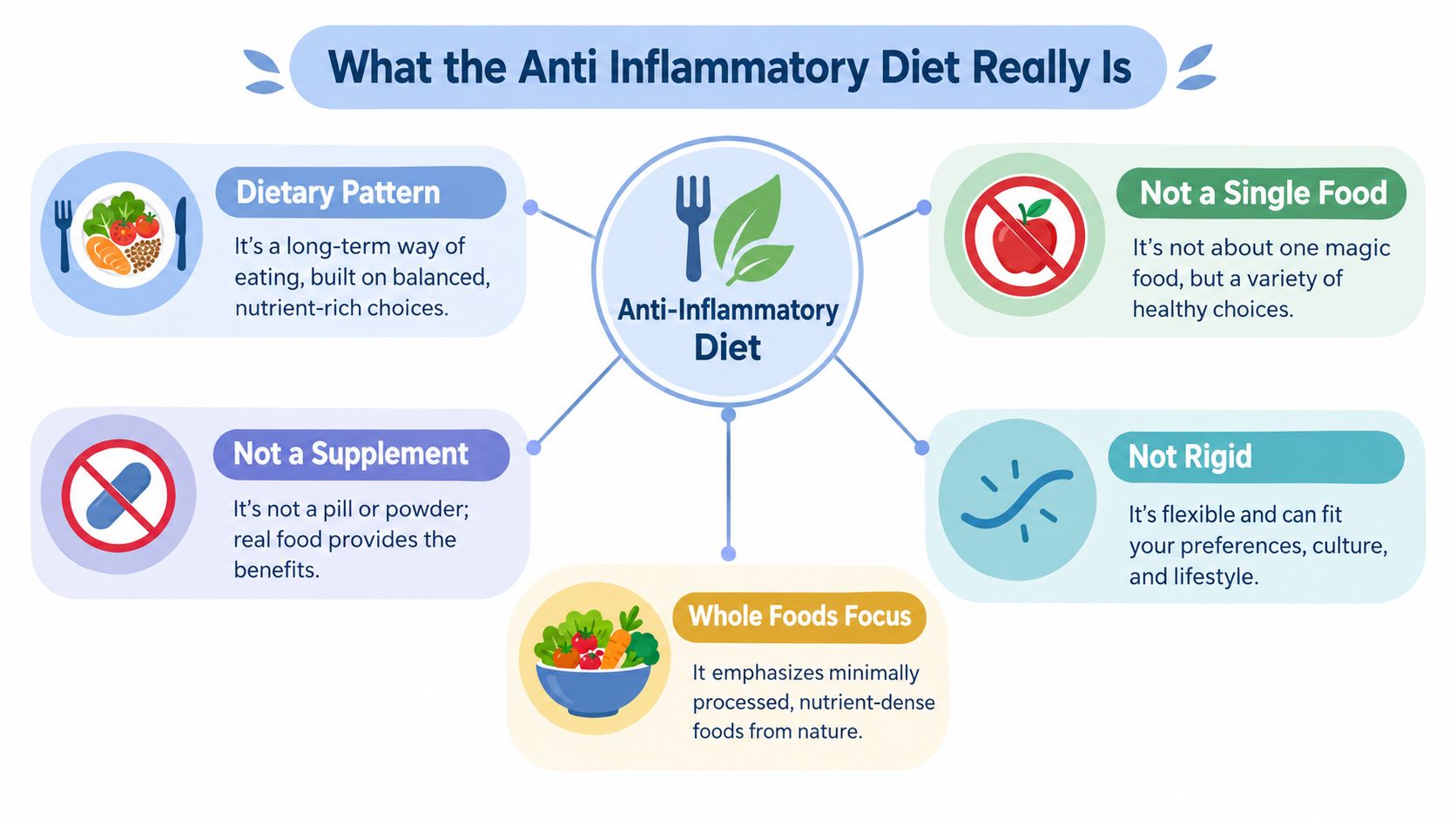
An investment portfolio provides a useful analogy. Evaluating an entire portfolio is more informative than judging its performance by a single holding. Similarly, dietary quality depends on the combination of foods, the choices they replace, and whether someone can maintain that combination.
Practical rule: Evaluate the recurring meal, not the most fashionable ingredient.
Flexibility supports implementation
The pattern doesn't require elaborate cooking or an unfamiliar cuisine. Beans can appear in a soup, a grain bowl, or a familiar family recipe; vegetables can be fresh, frozen, roasted, or incorporated into a prepared meal.
For a busy professional, the practical definition is straightforward: a repeatable eating pattern built around plant foods and unsaturated fats, adapted to medical needs and everyday constraints. Its value should be assessed through the overall prevention plan, not through claims attached to individual products.
The Evidence Behind Heart and Metabolic Benefits
The most influential cardiovascular evidence comes from PREDIMED, not from a laboratory experiment involving an isolated nutrient. The landmark 2013 randomized trial enrolled 7,447 adults at high cardiovascular risk without established cardiovascular disease and compared Mediterranean diets supplemented with extra-virgin olive oil or nuts against a control diet.
The Mediterranean-diet groups had a hazard ratio of approximately 0.70, corresponding to about a 30% relative reduction in major cardiovascular events, in that trial. The outcome involved clinically important events, rather than only changes in an inflammatory blood marker.
Relative benefit needs clinical context
A relative reduction isn't a percentage-point reduction, and it doesn't describe every participant's personal benefit. The reanalyzed PREDIMED findings reinforce the importance of interpreting dietary benefit in light of baseline risk, adherence, and the broader clinical situation.
Someone with substantial cardiovascular risk may have a different potential absolute benefit than someone whose baseline risk is lower. Neither should interpret the trial as evidence that dietary changes make blood pressure treatment or lipid management unnecessary.
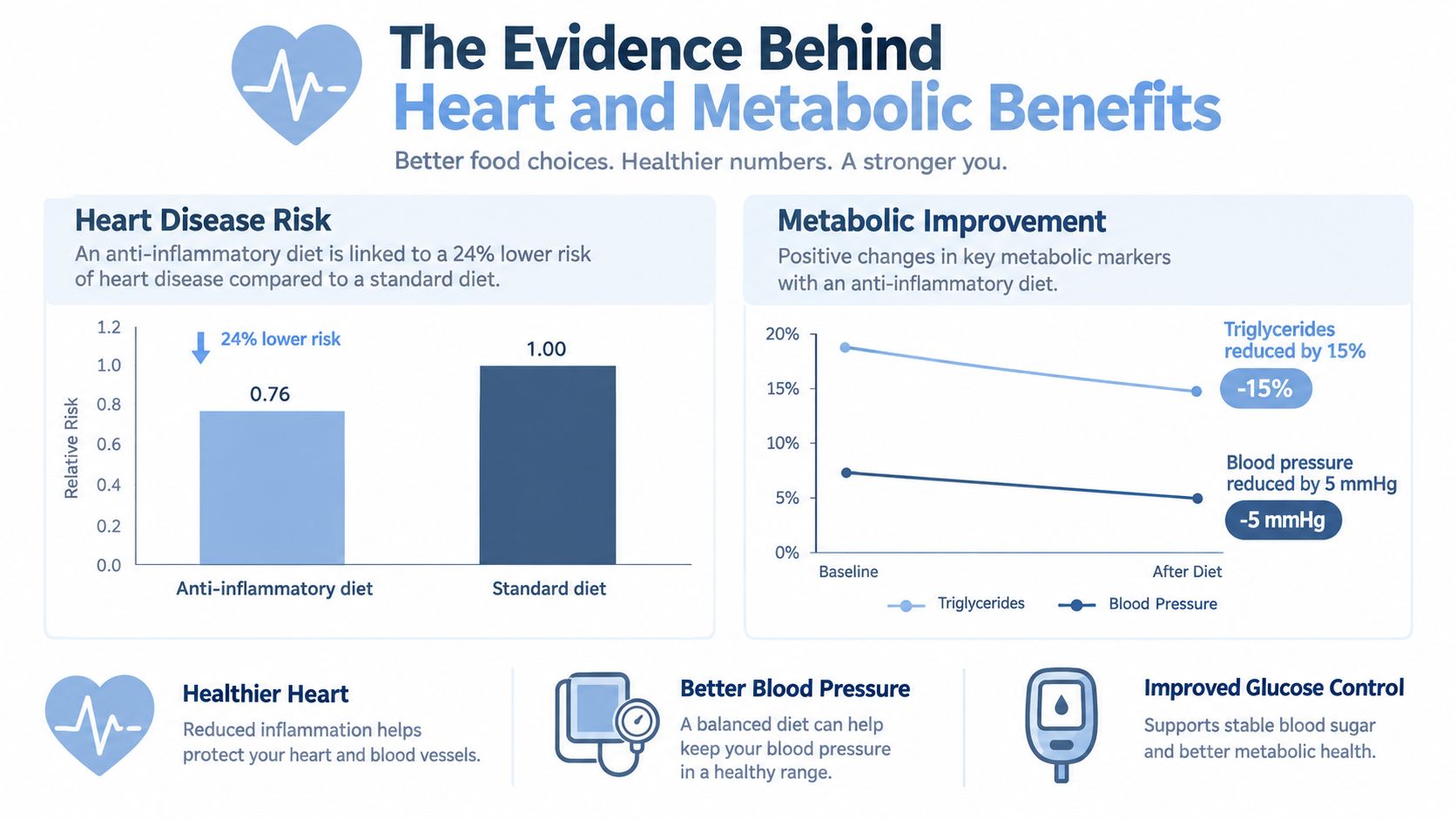
The trial results and their clinical context are more useful than any simplified graphic estimate. No single percentage can summarize the expected effect of this eating pattern for an individual patient.
Multiple outcomes, not a single mechanism
The blood-pressure and lipid findings described earlier suggest that the potential benefits extend beyond inflammation alone. Supporting biomarker evidence is informative, but less uniform: a review of dietary factors and inflammation describes improvements in some Mediterranean-style interventions and no significant inflammatory-marker effect in another population with treated coronary disease.
That contrast supports a measured conclusion. Dietary quality belongs in prevention, but neither a particular menu nor a favorable laboratory result guarantees protection.
For readers seeking broader terminology, 10 Rx Home on metabolic health offers additional background. Clinical decisions still require an individualized assessment.
A structured preventive cardiology program can place nutrition alongside the other findings that determine cardiovascular risk, rather than treating food choices as an isolated intervention.
Foods to Emphasize and Foods to Limit
Substitution is more useful than prohibition. Replacing a processed-meat lunch with a lentil bowl changes the meal; adding a small side salad while leaving the rest unchanged is a different intervention.
The association between overall dietary inflammatory potential and cardiovascular outcomes is meaningful. A Dietary Inflammatory Index meta-analysis found 23% higher incident cardiovascular disease risk and 29% higher cardiovascular mortality risk in the highest inflammatory-diet category compared with the lowest. These are population-level associations, not an individual diagnostic score or proof that a particular meal causes an event.
Anti-Inflammatory Food Choices at a Glance
| Category | Emphasize | Limit |
|---|---|---|
| Vegetables and fruit | Varied produce, including convenient frozen options | Meals that routinely omit produce |
| Grains and starches | Oats, barley, quinoa, whole-grain bread | Refined snack foods and commercially baked pastries |
| Protein sources | Lentils, beans, fish, nuts | Processed meats and excess red meat |
| Fats | Extra-virgin olive oil and nuts | Choices contributing excess saturated fat |
| Beverages | Water and unsweetened drinks | Sugar-sweetened beverages |
| Convenience meals | Options containing vegetables, legumes, or whole grains | Default meals dominated by refined starches and processed meat |
The table is a decision aid, not a rigid prescription. Allergies, intolerances, medical conditions, appetite, and cultural preferences can change which examples are appropriate.
Convenience isn't the enemy
A useful grocery strategy is to stock components rather than expect every meal to be cooked from scratch. Frozen vegetables, canned beans, plain oats, and packaged nuts can form the basis of practical meals.
- Replace the default lunch: Choose a bean-based bowl or fish with vegetables instead of routinely ordering deli meat and refined bread.
- Improve the snack environment: Keep fruit and nuts accessible rather than relying entirely on pastries or refined snack foods.
- Change the beverage order: Select water or unsweetened tea when a sweetened drink has become automatic.
The trade-off is straightforward: an elaborate plan may look excellent on paper but be difficult to repeat. A simpler pattern that fits the workday gives the clinician and patient something concrete to evaluate and refine.
Sample Meal Ideas for a Busy Executive Schedule
A calendar filled with early calls, client lunches, and travel requires dependable meal defaults. The following examples illustrate how the pattern can fit ordinary decisions; they aren't a prescribed menu or a claim that any meal independently lowers inflammation.
Before an early meeting, plain Greek yogurt with nuts and berries is a convenient option when dairy is tolerated. Oats with fruit and nuts provide an alternative, and either can be planned before a rushed morning makes the office pastry tray the easiest choice.
Business lunches without special requests
Grilled salmon with quinoa and roasted vegetables is a straightforward business lunch. A restaurant without that combination may offer fish with a vegetable side, a bean salad, or a grain bowl that can be adapted without turning the meal into a negotiation.

The useful preparation happens before ordering: scan the menu for vegetables, legumes, fish, and whole grains, then build around what's available. The goal isn't to reproduce a perfect plate at every restaurant.
A workable travel meal is more useful than a perfect meal that isn't available.
Travel dinners and familiar cuisines
Lentil soup with whole-grain bread makes a practical hotel or airport dinner when available. For home preparation, Calorie Genie AI's guide to calories in homemade vegetable soup can serve as a recipe-planning resource; energy content and dietary quality remain separate considerations.
Cultural preferences don't need to disappear. Possible choices include a lentil dish with vegetables, beans and greens with whole grains, or fish with vegetables and rice, adapted to preferences and tolerability.
- For delayed meals: Carry an acceptable snack, such as fruit or nuts, rather than depending entirely on whatever appears between meetings.
- For business dinners: Treat alcohol as a separate clinical discussion, not a required feature of Mediterranean-style eating.
- For irregular schedules: Establish reliable opportunities to eat instead of adding a restrictive timing rule that conflicts with travel or prescribed treatment.
These defaults reduce the number of decisions required during a demanding week. They also give a dietitian specific meals to adjust, rather than an abstract intention to eat better.
How Hosmane Longevity Center Personalizes Your Plan
Generic food advice can't establish whether someone's principal concern is blood pressure, an adverse lipid profile, glucose regulation, or evidence of subclinical atherosclerosis. Personalization starts by identifying the clinical problem, then selecting dietary changes that fit both that problem and the person's schedule.
Hosmane Longevity Center offers physician-led preventive cardiology and longevity medicine with registered dietitian support. The practice is led by Dr. Vinay Hosmane, a triple board-certified non-invasive cardiologist with approximately 20 years of experience and leadership roles within the American College of Cardiology.
Connecting assessment with practical decisions
Advanced cardiac testing may include Coronary Artery Calcium scoring, Carotid Intima-Media Thickness assessment, advanced lipid testing including ApoB and Lp(a), and inflammatory markers such as hs-CRP. The appropriate selection depends on the clinical question; a longer test list isn't automatically a better evaluation.
Results need physician interpretation and a coherent plan. A dietary consultation should connect the findings with current meals, food preferences, medical history, and the constraints that determine whether a recommendation is feasible.
The center's approach to personalized nutrition includes registered dietitian-led evaluation and planning shaped by laboratory findings and schedule demands. That may mean revising restaurant defaults, planning travel meals, or adapting familiar recipes rather than issuing a generic list.
What personalization should accomplish
- Set a clear priority: Identify the risk factor or dietary issue that warrants attention first.
- Translate advice into meals: Specify realistic substitutions for the patient's actual breakfast, lunch, dinner, and travel routine.
- Define follow-up: Establish which clinical findings will be reassessed and how the results could change the plan.
Testing is available to anyone, not only executive health program members. Patients can discuss an appropriate evaluation without assuming that every available study is necessary.
Biomarker-guided planning is more specific than generic advice, but greater specificity doesn't guarantee a better outcome. Its practical value lies in clearer priorities, appropriate testing, and recommendations that can be adjusted when circumstances or findings change.
Practical Steps to Start and Sustain the Diet
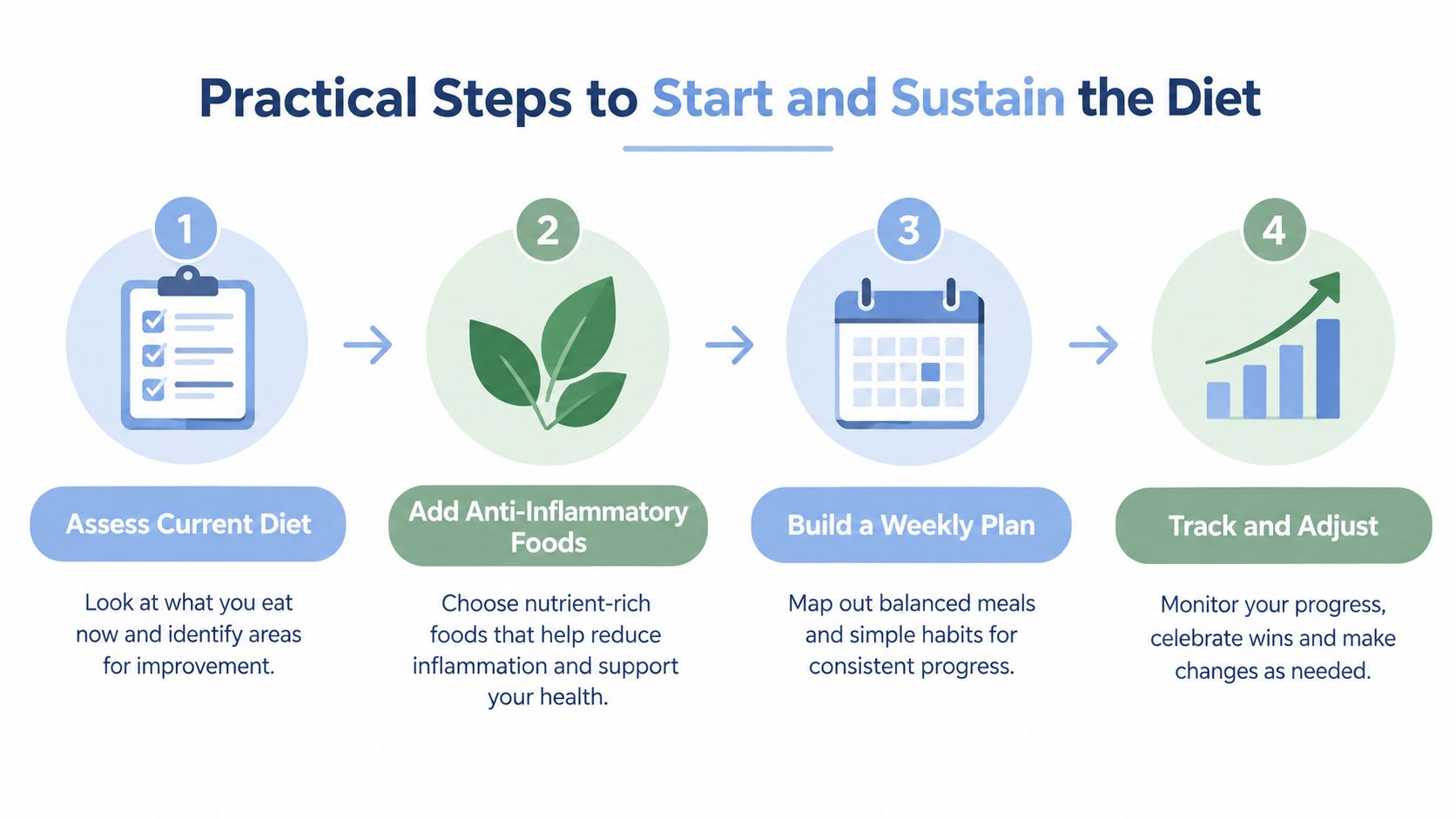
Start with the recurring decision that causes the most difficulty. For some professionals, that's a sweetened beverage ordered automatically; for others, it's a lunch chosen between calls or dinner assembled after arriving home late.
A useful opening change is replacing sugar-sweetened drinks with water or unsweetened tea, then introducing legumes or fish into existing meals. The aim is to modify a familiar routine rather than create an entirely new lifestyle overnight.
Build a repeatable weekly plan
Choose meals that share ingredients and require little additional preparation. Lentils can become soup or a salad component, while roasted vegetables can accompany dinner and appear in the next workday's lunch.
A systematic review of 20 randomized controlled trials found changes in multiple inflammatory markers with Mediterranean-diet interventions, with the strongest practical signal when the pattern included extra-virgin olive oil or nuts. That supports incorporating these foods into a sustained pattern, not treating them as a short-term course of treatment.
Planning principle: Keep a fallback meal available for the evening when the original plan fails.
Track implementation before judging response
Follow-up should examine what changed, not only whether someone intended to follow the plan. A brief food record covering ordinary workdays and travel can help identify obstacles without demanding exhaustive tracking.
- Document the starting point: Review current meals, relevant laboratory findings, blood pressure, and prescribed treatment.
- Agree on reassessment: Let the clinician set the timing after a sustained dietary period rather than adopting a universal testing deadline.
- Adjust with context: Interpret hs-CRP and lipid changes alongside ApoB, glucose status, body weight, medication use, and overall risk.
A lack of improvement in a single marker doesn't automatically mean the entire approach failed. It calls for a review of adherence, competing influences, and whether the original target was appropriate.
Common Misconceptions and What the Evidence Shows
A universal food blacklist isn't a substitute for clinical reasoning. An exclusion based on a demonstrated intolerance or medical diagnosis is different from eliminating gluten, dairy, or nightshades because an online list labels them inflammatory.
A 2025 review of diet and inflammatory biomarkers found substantial variation by population, study design, marker, and dietary assessment method. Associations were relatively consistent for CRP, while findings for TNF-alpha, leptin, and adiponectin were mixed.
Packaged doesn't automatically mean unsuitable
Processing level deserves attention, but it isn't a perfect proxy for nutritional quality or individual biological response. A review of ultra-processed food intake and inflammatory markers found the most consistent associations with CRP or hs-CRP, while results for several other markers were inconsistent or population-specific.
That evidence doesn't justify treating every packaged option as interchangeable. A practical assessment should consider the food's composition, what it replaces, and whether excluding it would make adequate eating unnecessarily difficult.
| Claim | More useful interpretation |
|---|---|
| Every packaged food must go | Assess nutritional composition and the role it plays in the overall pattern |
| Dairy or gluten must be eliminated | Distinguish a clinical reason for avoidance from a universal restriction |
| A lower CRP proves lower heart risk | Interpret the marker within the complete cardiovascular assessment |
| Diet can replace prescribed treatment | Discuss dietary changes and medication decisions with the treating clinician |
Better biomarkers aren't the same as proven outcomes
A randomized dietary trial in patients with coronary artery disease found 32% lower hs-CRP with a vegan intervention than with an American Heart Association-recommended diet. That demonstrates a measurable biomarker difference, not universal superiority or proof of atherosclerosis reversal.
The distinction protects against overinterpreting an encouraging laboratory result. ApoB, Lp(a), blood pressure, glucose, sleep, and evidence of subclinical atherosclerosis still require appropriate evaluation.
Restrictive plans also impose trade-offs. Removing foods without suitable replacements can complicate fiber intake, protein adequacy, social meals, and adherence, which makes a dietitian's assessment more useful than a longer list of exclusions.
Your Next Step Toward Data-Driven Heart Health
The strongest reason to consider this eating pattern is its place within cardiovascular prevention, not its popularity. The evidence supports thoughtful dietary change while leaving room for individual variation, realistic constraints, and medical treatment when indicated.
A productive consultation should produce priorities, not more information. Patients should understand which findings matter, which dietary changes are worth attempting, and what would prompt an adjustment at follow-up.
Prepare for a focused consultation
Useful preparation includes recent laboratory results, a medication list, relevant family history, and a description of typical workday and travel meals. Specific examples help a clinician distinguish a knowledge gap from an access, scheduling, or tolerability problem.
For readers trying to understand lipid-related risk, an explanation of the ApoB test can help frame a more informed discussion. No single result should be expected to answer every prevention question.
For adults in Lewes, Wilmington, Rehoboth, and nearby Pennsylvania and Maryland, the next step needn't be a more restrictive diet. It can be a clinical conversation about how current eating habits fit the broader risk picture and which changes deserve attention first.
That approach respects both the evidence and the demands of professional life. The goal is a clear, sustainable prevention plan, not a promise attached to a menu.
Hosmane Longevity Center offers physician-led preventive cardiology, appropriate advanced cardiac testing, and registered dietitian-led nutrition planning matched to laboratory findings and demanding schedules. To discuss how anti-inflammatory eating could fit an individualized prevention plan, visit Hosmane Longevity Center and request a consultation.