
A larger executive health package doesn't automatically provide better cardiovascular protection. The useful question isn't how many tests were performed. It's what a result will change, whether the finding can be interpreted reliably, and whether the next step improves prevention or only creates another appointment, scan, or source of anxiety.
That distinction matters for professionals in Lewes, Wilmington, Rehoboth, and nearby Pennsylvania and Maryland who may already have annual physicals, extensive laboratory panels, and demanding schedules. A physician-led preventive cardiology program should identify meaningful risk before symptoms appear, clarify treatment decisions, and turn findings into actions that can survive travel, business meals, and long workdays.
Table of Contents
- Redefining Executive Heart Health Beyond Standard Screenings
- Core Diagnostic Components of Advanced Cardiac Testing
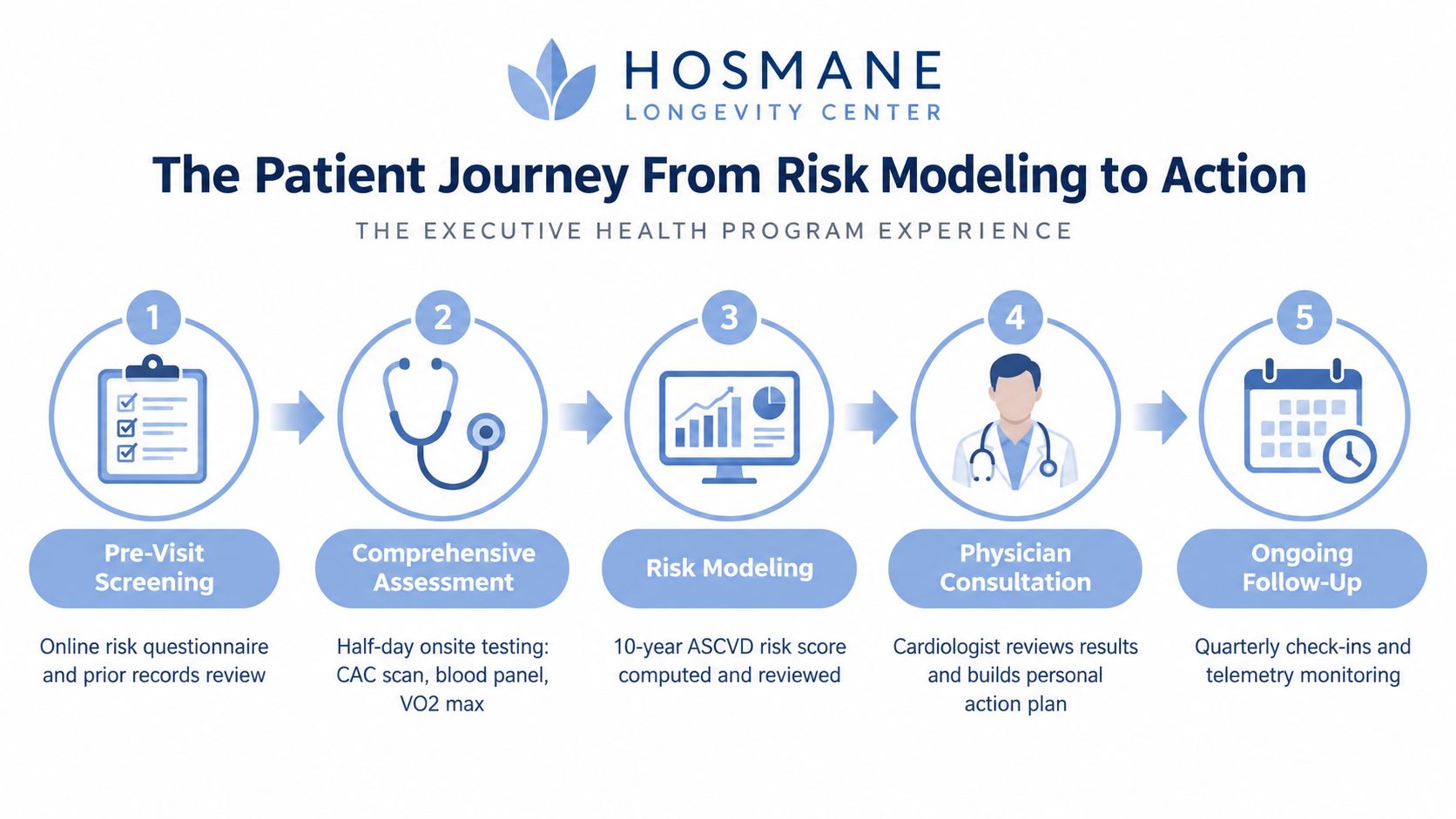
- The Patient Journey From Risk Modeling to Action
- Comparing Fragmented Primary Care to Integrated Prevention
- Translating Biomarkers into Sustainable Lifestyle Interventions
- The Value of Physician-Led Interpretation and Evidence-Based Care
- Taking the First Step Toward Proactive Cardiovascular Longevity
Redefining Executive Heart Health Beyond Standard Screenings
Many high-achieving adults treat thoroughness as a volume problem. More blood markers, more imaging, and more wearable data can feel reassuring, but testing only has clinical value when it improves a decision. A scan that doesn't alter treatment, follow-up, or lifestyle planning may add information without adding protection.
The modern objective is risk stratification, not indiscriminate detection. That means estimating baseline cardiovascular risk, identifying relevant risk factors, and selecting an advanced test only when its result can resolve uncertainty. The USPSTF statin recommendation illustrates the principle. For adults aged 40 to 75 without established cardiovascular disease, statin decisions depend on age, risk factors, and estimated ten-year cardiovascular-event risk, not on a single cholesterol value.
Testing should answer a management question
A practical consultation asks:
- What is the pretest probability? Is the person low risk, clearly high risk, or near a treatment threshold?
- What will an abnormal result change? The answer might involve medication, blood-pressure monitoring, smoking cessation, exercise planning, or follow-up.
- What happens after an unexpected finding? Incidental findings and false positives can lead to additional procedures without improving outcomes.
- What is the cost of waiting? Deferring a useful test can also be harmful when it leaves a meaningful risk decision unresolved.
Coronary artery calcium, or CAC, is valuable precisely because it can clarify an uncertain statin discussion in selected adults. It isn't a universal screening ritual, and it isn't a guarantee of future protection. European guidance similarly cautions against broad population screening with CAC or coronary imaging, while supporting selective use near treatment thresholds or in people with moderate risk. The European prevention guidance on cardiovascular risk assessment also supports considering Lp(a) at least once during adulthood because it is largely genetically determined.
Practical rule: A diagnostic test earns its place when the result has a defined path to action.
Executives evaluating an executive health program may also find broader context useful, particularly when comparing medical prevention with general lifestyle services. The Approved Lux guide to wellness centers can help distinguish lifestyle-oriented offerings from a physician-led cardiovascular assessment. For a more detailed look at program design, readers can also review the guide to the best executive health programs.
Core Diagnostic Components of Advanced Cardiac Testing
Advanced testing should be selected to answer a clinical question, not to make a package appear impressive. CAC, carotid imaging, ApoB, Lp(a), blood-pressure monitoring, and functional testing each describe a different part of cardiovascular risk. None should be interpreted in isolation.
Imaging that can resolve uncertainty
CAC scoring detects calcified coronary plaque and can help convert an abstract risk estimate into an imaging-defined measure of subclinical atherosclerosis. In adults aged 40 to 75 without diabetes and with LDL-C of 70 to 189 mg/dL, ACC/AHA guidance supports considering CAC when estimated ten-year ASCVD risk is 7.5% to 19.9% and the patient or clinician remains uncertain about statin therapy. A CAC score of zero may support deferring or postponing a statin in appropriately selected adults, except when smoking, diabetes, or a strong family history of premature ASCVD changes the calculation. CAC from 1 to 99 generally favors treatment, especially at age 55 or older, while CAC of at least 100 Agatston units or at least the 75th percentile generally supports statin therapy after discussion. These thresholds are summarized in the ACC/AHA guideline on blood cholesterol management.
Carotid intima-media thickness, or CIMT, can provide information about vascular structure and may contribute to a broader assessment of vascular aging. Its usefulness depends on technique, interpretation, and whether the result will change management. A preventive program shouldn't order CIMT merely because it's available.
Biomarkers that expose residual risk
ApoB helps quantify the number of atherogenic particles, while Lp(a) can reveal genetically influenced risk that a standard lipid panel may not capture. An Lp(a) level of at least 125 nmol/L or 50 mg/dL is considered high in ACC/AHA material and is associated with approximately a 1.4-fold higher long-term risk of myocardial infarction or stroke. A concentration of 250 nmol/L is associated with at least a two-fold higher long-term risk. Those figures come from the ACC/AHA updated lipid guidance.
Lp(a) is relatively stable over a lifetime, so testing is often considered once in adulthood, with repetition determined by clinical context. A raised result isn't a diagnosis of obstructive coronary disease. It can instead prompt closer attention to LDL cholesterol, blood pressure, diabetes, tobacco exposure, and family history.
For a broader discussion of how advanced imaging fits into a clinical plan, the advanced cardiovascular imaging overview offers useful background. The central principle remains simple: each test should have a defined interpretation and a documented next step.
The Patient Journey From Risk Modeling to Action
A well-designed executive health visit begins before the patient arrives. Prior records, family history, medications, symptoms, exercise patterns, sleep, tobacco exposure, business travel, and dietary routines all shape the meaning of later results. Without that context, advanced testing can produce a technically detailed but clinically shallow report.
The first appointment should establish the questions that matter. Is the concern an unclear statin decision, difficult blood pressure, inherited lipid risk, reduced exercise capacity, sleep disruption, or a family history that deserves more careful review? The answer determines which studies are useful and which can be left out.
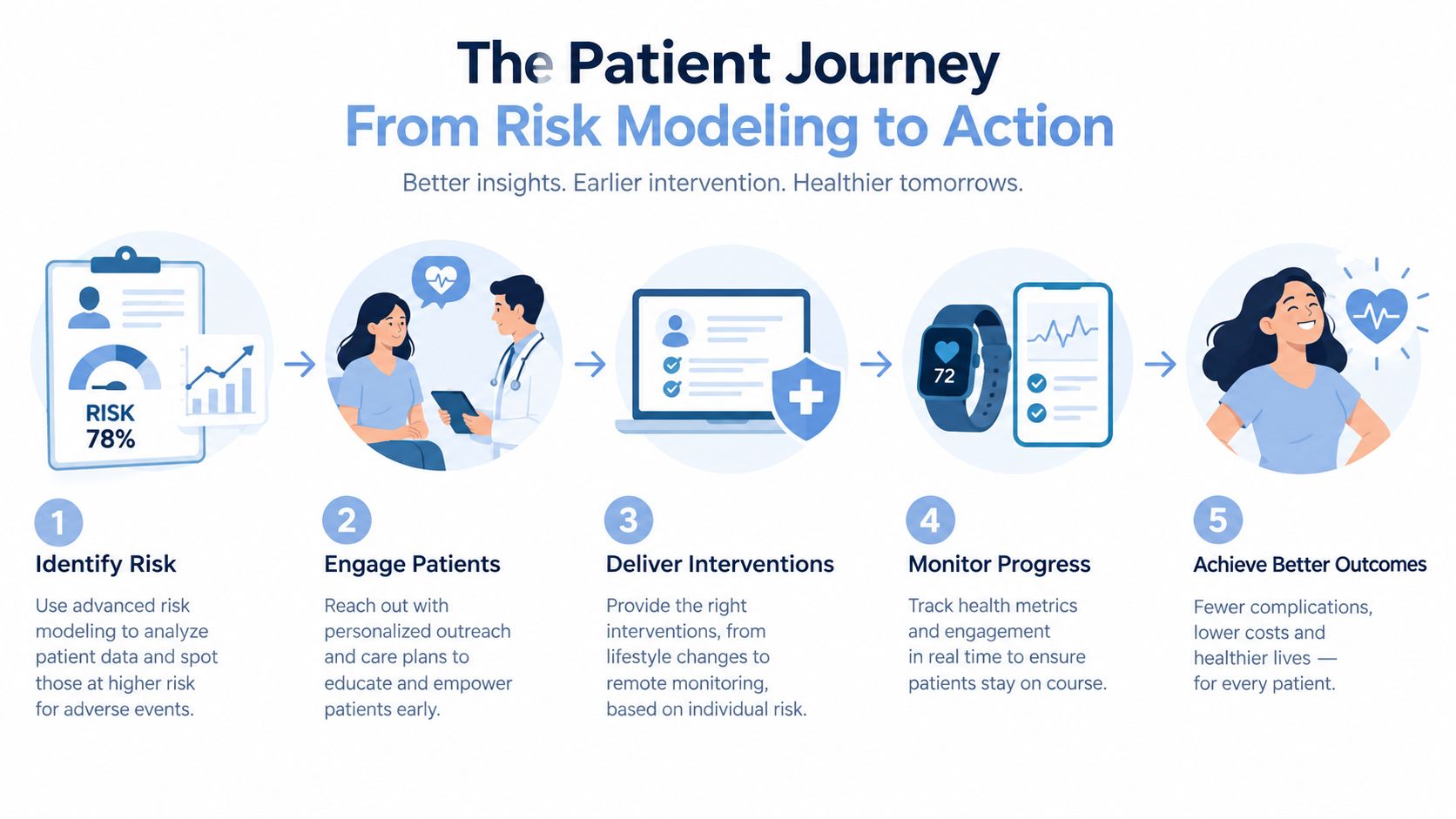
From measurements to a prioritized plan
Out-of-office blood-pressure measurement is often essential because a clinic reading may not represent daily physiology. ACC/AHA guidance recommends ambulatory or home monitoring to confirm hypertension, particularly for adults not taking antihypertensive medication whose office systolic pressure is at least 130 but below 160 mm Hg, or whose diastolic pressure is at least 80 but below 100 mm Hg. A commonly recommended home protocol takes morning and evening readings, with two readings on each occasion, for at least three days and preferably seven days. The ACC/AHA blood-pressure measurement guidance explains why these readings require proper technique and interpretation.
A 24-hour ambulatory study can reveal white-coat hypertension, sustained hypertension, or patterns that a single visit misses. A home sleep study may add context when snoring, fragmented sleep, daytime fatigue, resistant blood pressure, or an irregular schedule suggests sleep-related risk.
The final consultation should not be a data dump. It should rank findings by importance:
- Immediate clinical priorities, such as clearly raised blood pressure or a lipid pattern requiring treatment discussion.
- Decision-shaping findings, such as CAC or Lp(a) when the result changes risk classification.
- Sustainable interventions, including exercise, nutrition, sleep, and follow-up that fit the person's work and travel demands.
- Deferred or unnecessary testing, where another study is unlikely to change management.
Travel and business meals don't make prevention impossible. They do require plans that account for airport food, late meetings, disrupted sleep, and limited access to exercise equipment. A useful program gives the patient a short list of priorities rather than asking for perfect adherence to an unrealistic routine.
Comparing Fragmented Primary Care to Integrated Prevention
Primary care remains essential, but cardiovascular prevention can become fragmented when laboratory testing, imaging, exercise advice, nutrition support, and specialist consultations occur in separate systems. The patient may receive several technically correct observations without a unified answer to the question, “What matters most, and what should happen next?”
An integrated preventive cardiology program assigns one clinician responsibility for synthesizing the record. That clinician can interpret lipid markers alongside blood pressure, family history, sleep, exercise capacity, medication preferences, and imaging findings. The value lies less in collecting every available result than in preventing contradictory or disconnected recommendations.
| Feature | Standard Primary Care | Preventive Cardiology Program |
|---|---|---|
| Primary purpose | Broad health maintenance and evaluation of active concerns | Deliberate cardiovascular risk assessment and mitigation |
| Testing approach | Standard screening guided by routine care and symptoms | Targeted advanced testing when it can resolve uncertainty |
| Risk interpretation | May require coordination across multiple clinicians | Cardiologist-led synthesis of imaging, biomarkers, and history |
| Blood-pressure assessment | Often centered on office readings | Can incorporate home or ambulatory monitoring when appropriate |
| Lifestyle planning | General counseling may be provided | Exercise, nutrition, physical therapy, and coaching can align under one plan |
| Follow-up | Often organized around routine visits or new problems | Structured around risk priorities and response to interventions |
The benefit of one coherent clinical narrative
Standard screening can miss a genetically influenced marker such as Lp(a), a high ApoB pattern, or an early sign of vascular disease. Conversely, advanced testing without physician interpretation can create uncertainty rather than resolve it. A triple board-certified cardiologist can place each result within the patient's total risk profile and coordinate with primary care rather than operating separately.
A multidisciplinary team can reduce practical friction. A registered dietitian can translate lipid findings into meals that work during travel. Physical therapy can help adapt exercise to musculoskeletal limitations. Cardiovascular sonography and monitoring services can support testing, while the physician retains responsibility for interpretation and prioritization.
This model doesn't replace primary care. It complements it by creating a cardiovascular-specific plan that can be communicated back to the patient's existing clinicians.
Translating Biomarkers into Sustainable Lifestyle Interventions
A biomarker matters when it changes a decision. A high ApoB level may prompt discussion about dietary pattern, medication, or both. Higher blood pressure may call for readings outside the clinic, sodium awareness, sleep evaluation, exercise planning, and medication review. A raised Lp(a) generally shifts attention toward stronger management of modifiable risks, rather than suggesting that one lifestyle change can remove inherited risk.
Nutrition must fit the calendar
Registered dietitian-led care should account for laboratory findings and the day-to-day demands of executive life. That includes client dinners, airport meals, hotel breakfasts, alcohol-centered events, and periods when cooking is impractical. A workable approach might emphasize protein and fiber at breakfast, a dependable lunch structure, sensible restaurant choices, and portable travel options.
Plant-based fats can fit a heart-conscious dietary pattern, but food advice requires clinical context. Gym Snack's guide to plant based fats offers a practical overview of food choices. A clinician and dietitian then determine how those choices fit lipid levels, glucose, weight, allergies, and personal preferences.
The personalized nutrition guide is most useful as a framework for turning health data into repeatable decisions. It should support judgment rather than impose a rigid menu.
Exercise should be prescribed, not merely encouraged
“Exercise more” gives little direction to someone managing a demanding schedule. A useful prescription identifies activity type, intensity, frequency, progression, and safety considerations. Functional assessment can clarify whether the priority is aerobic conditioning, strength work, mobility training, physical therapy, or a gradual return after inactivity.
Health coaching can support implementation when it reinforces a medically coherent plan. Sleep and stress require the same practical approach. Someone crossing time zones or working late may need a different strategy from someone with a predictable schedule.
The most durable intervention survives an ordinary Tuesday and remains useful long after the intensive visit is over.
The Value of Physician-Led Interpretation and Evidence-Based Care
Consumer health trackers can record trends, and direct-to-consumer laboratory services can provide measurements. Neither automatically explains whether a finding is clinically meaningful, whether the test was appropriate, or what action carries more benefit than harm.
A physician-led assessment adds the missing context. Dr. Vinay Hosmane can consider family history, blood pressure, lipid fractions, diabetes status, smoking exposure, sleep, exercise capacity, competing conditions, previous test quality, and the patient's preferences before recommending a next step. A number that looks abnormal in isolation may have little practical consequence. A result within a conventional range may deserve attention when combined with strong inherited risk or demonstrable plaque.
Guidelines protect patients from unnecessary escalation
ACC, AHA, and ESC guidance supports selective testing and shared decision-making. The Million Hearts initiative provides a population-level example through its ABCS framework, which emphasizes appropriate antithrombotic use when indicated, blood-pressure control, cholesterol management, and smoking cessation. Million Hearts 2027 set a goal of averting 1 million preventable cardiovascular disease events during the five-year period from January 2022 through December 2026, based on an estimated 20% improvement in key prevention indicators. The initiative's framework is described by the U.S. Department of Health and Human Services Million Hearts program.
Those goals don't justify ordering every available test for every patient. They support organized prevention, reliable follow-up, medication adherence, and measurable quality improvement. A physician should be willing to say that a test isn't needed when it won't alter management.
Coordination matters more than data volume
Physician-led interpretation also protects against low-value cascades. An incidental imaging finding may require clarification, but not every abnormality warrants an invasive procedure. A borderline biomarker may call for confirmation or lifestyle work rather than immediate treatment. Shared decision-making allows the patient to weigh potential benefit, inconvenience, cost, anxiety, and long-term commitment.
Hosmane Longevity Center uses a physician-led model in which cardiovascular diagnostics, risk modeling, nutrition, exercise planning, and optional supportive services are organized around a single care plan. Testing is available to people who aren't enrolled in the full program when a focused diagnostic question can be addressed separately.
Taking the First Step Toward Proactive Cardiovascular Longevity
A practical starting point is a consultation focused on questions, not on purchasing the largest available test package. A professional in Wilmington might arrive with a family history of early heart disease and inconsistent office blood-pressure readings. Someone in Lewes or Rehoboth might have a normal standard lipid panel but want to understand whether Lp(a), ApoB, CAC, sleep, or exercise capacity changes the prevention strategy. Those situations call for different evaluations.
Before the visit, patients should gather:
- Prior cardiovascular records: Bring laboratory results, imaging reports, electrocardiograms, stress tests, and medication lists when available.
- Family history: Note premature heart attack, stroke, peripheral artery disease, diabetes, hypertension, and known lipid disorders among close relatives.
- Home measurements: Bring blood-pressure readings and information about how and when they were obtained.
- Daily constraints: Describe travel, work hours, business meals, sleep patterns, exercise access, and caregiving responsibilities.
- Personal priorities: Clarify whether the main concern is medication uncertainty, inherited risk, performance, sleep, weight, blood pressure, or long-term prevention.
Hosmane Longevity Center serves patients in Lewes and Wilmington, Delaware, through a cash-pay model, with limitations related to Medicare and Medicaid enrollment. No referral is required. The center offers in-person cardiovascular evaluation, advanced imaging and biomarkers, blood-pressure monitoring, home sleep studies, exercise and physical therapy consultation, registered dietitian support, internal-medicine-led coaching, and optional integrative or mental-health coordination.
Expectations should remain realistic
Preventive cardiology reduces risk through earlier identification, thoughtful treatment, and sustained follow-up. It doesn't guarantee that disease will be prevented, reversed, or eliminated. A CAC score of zero doesn't make someone immune to future disease, and a high Lp(a) result doesn't diagnose an obstructed artery. Every finding requires clinical interpretation and a plan that can be revisited as circumstances change.
The most useful executive health strategy is therefore selective, longitudinal, and candid. It favors tests that change decisions, interventions that fit real life, and follow-up that keeps priorities visible without turning prevention into an endless testing cycle.
Hosmane Longevity Center provides physician-led preventive cardiology and executive health evaluations in Lewes and Wilmington, with advanced diagnostics translated into individualized cardiovascular and lifestyle plans. Visit Hosmane Longevity Center to request a consultation and discuss which testing and follow-up strategy fits the patient's risk profile and schedule.