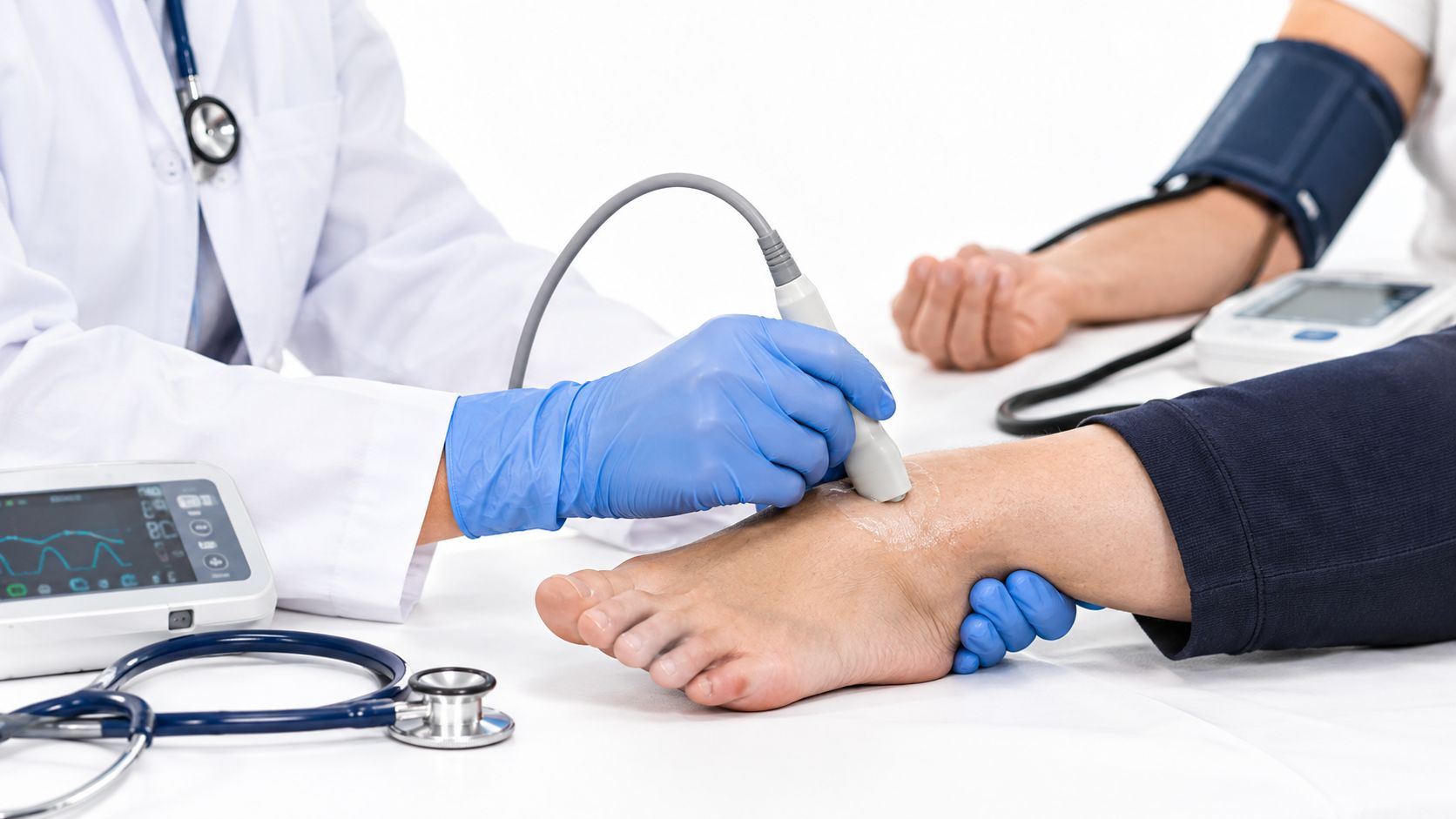
A 58-year-old executive with diabetes, a smoking history, or high blood pressure may ask for an ankle-brachial index even without leg pain. Should every asymptomatic adult receive one, or does the value of the test depend on the clinical question behind it?
That distinction matters. The ankle-brachial index, or ABI, isn't a universal screening number. It is a decision pathway that starts with symptoms, examination findings, and vascular risk, then determines whether resting ABI, exercise ABI, or toe-based testing is appropriate. The test can identify peripheral artery disease, reveal a higher systemic atherosclerotic-risk phenotype, and clarify unexplained walking limitations, but it shouldn't automatically lead to imaging or intervention.
The following framework is educational, not individualized medical advice. It explains how current guidance from the USPSTF and the 2024 ACC/AHA lower-extremity PAD guideline can help patients and physicians decide when ABI testing makes sense.
Table of Contents
- When an Ankle Brachial Index Actually Matters
- How ABI Is Calculated and What the Numbers Mean
- Symptom Driven Indications for ABI Testing
- Risk Based Indications in Adults Without Leg Symptoms
- Why a Normal ABI Is Not the End of the Story
- Adding Exercise ABI When Resting Results Disagree With Symptoms
- The Noncompressible ABI Trap and Toe Brachial Index
- The Full ABI Decision Pathway Step by Step
- How ABI Fits the Broader Executive Cardiovascular Workup
- Who Should Consider ABI and How to Take the Next Step
When an Ankle Brachial Index Actually Matters
Could an ABI result change what happens next for a patient? That is the practical question. Testing has value when it clarifies a diagnosis, alters risk assessment, or guides treatment, rather than just adding another measurement.
A resting ABI is appropriate to consider when exertional leg discomfort, ischemic rest pain, a nonhealing foot wound, or diminished lower-extremity pulses raises concern for peripheral artery disease. It may also inform evaluation before a lower-extremity intervention. In selected adults without leg symptoms, age and atherosclerotic risk can make previously unrecognized PAD plausible, particularly when the medical history, examination, and overall risk profile point in the same direction.
Targeted rather than population-wide testing is the current approach. The USPSTF recommendation statement on ABI screening addresses the uncertainty around testing asymptomatic adults. The clinical decision still depends on what question the ABI is meant to answer and what action would follow from the result.
A decision sequence, not a single cutoff
A clinician should work through four questions:
- Are symptoms present? Walking-related leg pain, ischemic rest pain, or a wound lowers the threshold for testing.
- Does the examination suggest PAD? Absent or abnormal pulses support obtaining a resting ABI.
- Is vascular risk substantial despite no symptoms? Age, diabetes, smoking, hypertension, hyperlipidemia, and established atherosclerotic disease all influence the decision.
- Will the result affect management? An abnormal value should prompt risk-factor treatment and functional assessment, not automatic imaging.
Borderline, noncompressible, or symptom-discordant results may require a different test or further evaluation. The number matters only after the indication and next decision are clear.
How ABI Is Calculated and What the Numbers Mean
Could a single ratio clarify whether leg arteries are delivering enough blood? The ankle brachial index, or ABI, compares systolic blood pressure at the ankle with systolic pressure in the arm. For each leg, the calculation divides the higher ankle systolic pressure by the higher brachial systolic pressure, following the method described in the USPSTF evidence review.
During a resting measurement, the patient lies flat while a clinician places cuffs on the arms and ankles. A Doppler device detects arterial flow as the cuffs inflate and deflate. Lower ankle pressure relative to arm pressure can indicate an obstruction in the arteries supplying the leg.
The 2024 ACC/AHA guideline materials classify ABI results into four principal categories. The 2024 ACC/AHA lower-extremity PAD guideline materials define 0.90 or lower as abnormal, 0.91–0.99 as borderline, 1.00–1.40 as normal, and above 1.40 as noncompressible.
| ABI Value | Category | Clinical Meaning |
|---|---|---|
| ≤0.90 | Abnormal | Supports PAD when interpreted with the clinical findings |
| 0.91–0.99 | Borderline | May matter when symptoms or vascular risk remain concerning |
| 1.00–1.40 | Normal | Supports normal resting ankle pressure but does not resolve every exertional question |
| >1.40 | Noncompressible | Arterial stiffness may make the ABI unreliable |
Why the category matters
An ABI of 0.90 or lower supports PAD, but the value still requires clinical correlation with symptoms, pulses, wounds, and cardiovascular risk. A borderline result can also matter when exertional symptoms persist or risk is substantial.
A normal resting ABI is reassuring, not definitive. Disease that limits blood flow during walking may be missed at rest. An ABI above 1.40 is not unusually favorable. It may reflect stiff or calcified arteries, so a toe-based measurement or another vascular test may be more informative.
Resting ABI also has diagnostic limits. Reported sensitivity ranges from approximately 68% to 84%, and specificity from approximately 84% to 99%, depending on the population and reference standard, according to the USPSTF recommendation statement. The result should therefore guide the next question, rather than end the evaluation.
Symptom Driven Indications for ABI Testing
Symptoms create the clearest indication for ABI because they provide a clinical question the test can answer.
The classic pattern is intermittent claudication, discomfort, aching, fatigue, or heaviness in the buttock, thigh, calf, or foot that appears with exertion and improves with rest. Patients may describe it as a walking limitation rather than pain. A clinician should distinguish it from arthritis, spinal disease, muscular injury, or generalized deconditioning, but a predictable exertional pattern should prompt vascular assessment.
Match the finding to the next action
- Exertional leg symptoms: Begin with a resting ABI. If the resting result is normal or borderline but the symptom pattern remains convincing, exercise ABI may reveal flow-limiting disease.
- Rest pain: Pain occurring without exertion, particularly in the foot, needs prompt clinical evaluation. ABI may be part of the assessment, but concerning findings can require vascular referral and additional testing.
- Nonhealing wounds: A foot or leg wound that doesn't heal normally can reflect inadequate arterial supply. ABI, pulse examination, and often toe-based measurements help assess perfusion.
- Abnormal pulses: Diminished or absent pedal pulses should not be dismissed as an incidental examination finding. A resting ABI can provide objective hemodynamic information.
- Planned lower-extremity intervention: ABI may help establish the vascular picture before a procedure involving the leg.
Practical rule: A wound, rest pain, or a markedly abnormal pulse examination deserves clinical attention even when a patient has no classic walking pain.
A busy executive may normalize symptoms by blaming age, travel, long hours at a desk, or an old orthopedic problem. That explanation may be correct, but clinicians shouldn't assume it without considering vascular causes when the pattern is reproducible or progressive.
A resting ABI is usually the starting point, not the entire evaluation. Depending on the result and the clinical picture, the next step may be exercise testing, toe-brachial index testing, vascular consultation, or imaging.
Risk Based Indications in Adults Without Leg Symptoms
The question “Who should receive an ABI when they have no leg symptoms?” has a more nuanced answer than either “everyone” or “no one.”
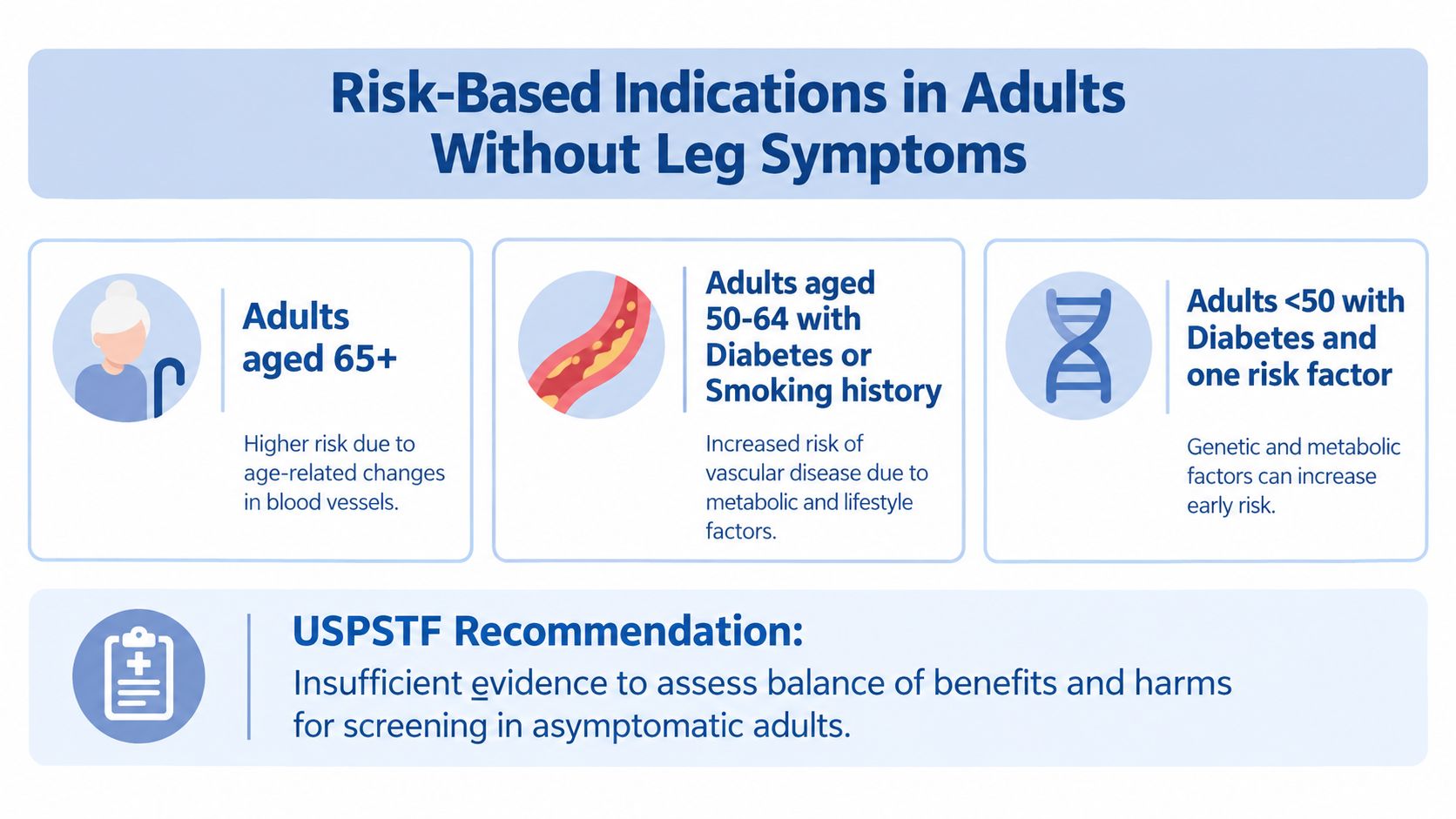
The USPSTF doesn't support routine population screening because evidence remains insufficient to determine whether screening asymptomatic adults produces a favorable balance of benefits and harms. Contemporary guidance still supports targeted consideration in higher-risk groups, particularly when ABI results would influence cardiovascular risk management.
Groups that merit a focused discussion
- Adults aged 65 or older: Age alone increases the likelihood that clinically silent PAD may be present.
- Adults aged 50–64 with atherosclerotic risk factors: Diabetes, smoking, hypertension, hyperlipidemia, or a family history of PAD can strengthen the indication.
- Adults younger than 50 with diabetes plus another atherosclerotic risk factor: Diabetes combined with another risk driver is different from low-risk young adulthood.
- People with established atherosclerotic disease elsewhere: Known coronary or carotid disease can make lower-extremity assessment clinically relevant even without leg complaints.
The decision should include more than a checklist. A clinician considers smoking status, diabetes duration and control, blood pressure, lipid-related risk, family history, pulse examination, and known disease in another vascular bed. A family history may also prompt a broader conversation about family history and heart disease screening.
The value of targeted testing is its ability to connect a result to an action. An abnormal ABI can identify previously unrecognized PAD and signal a higher systemic atherosclerotic-risk phenotype. That finding may support more intensive attention to lipid management, blood pressure, smoking cessation, diabetes care, and physical function.
Why blanket testing can disappoint
Indiscriminate testing can produce borderline or noninterpretable results without a clear plan for what follows. In an executive-health setting, requesting “everything” may feel proactive, but a test has greater value when the clinician can explain how each possible result would alter care.
Why a Normal ABI Is Not the End of the Story
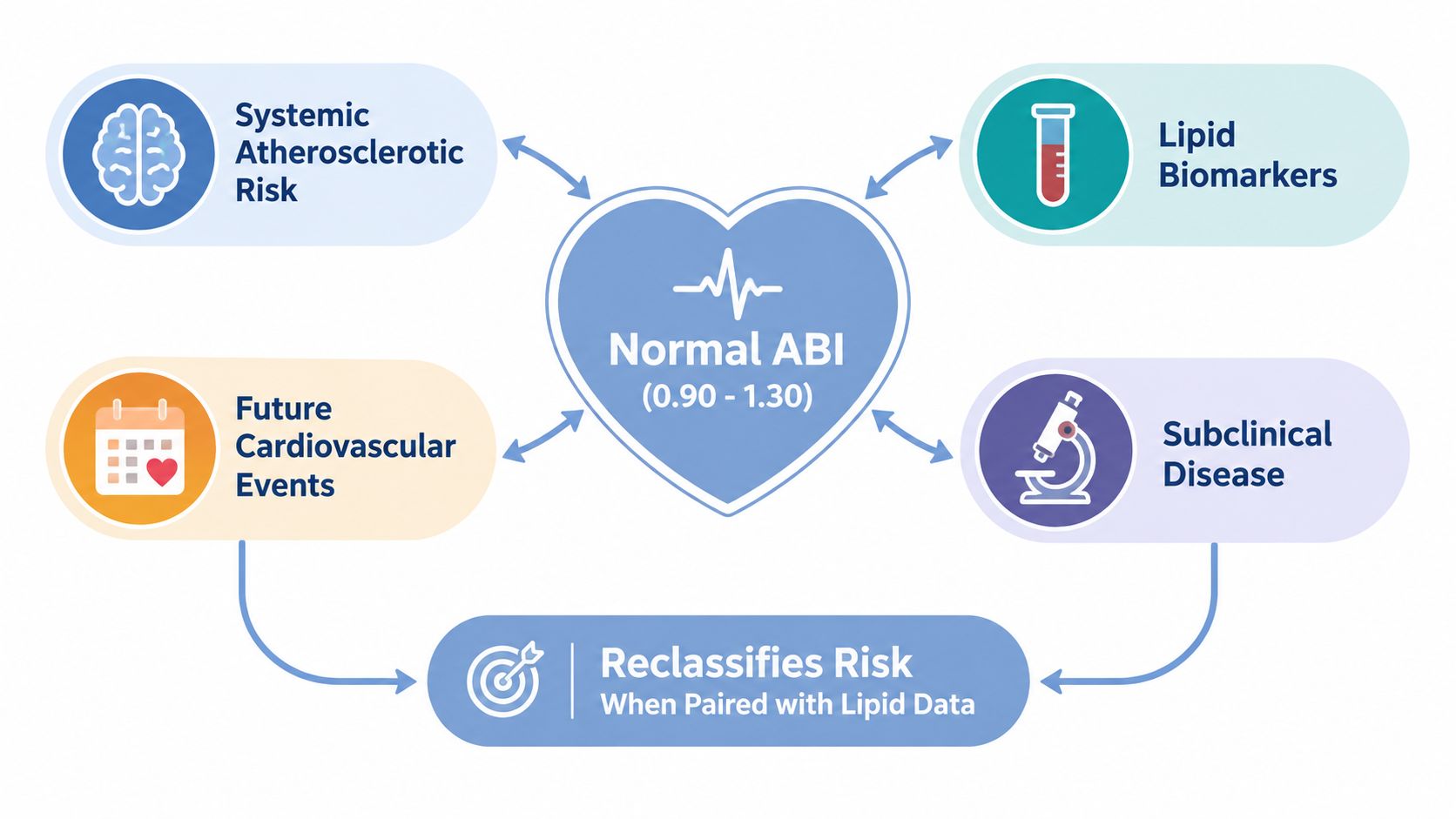
A normal resting ABI answers a narrow question: whether ankle pressure appears reduced relative to arm pressure at rest. It doesn't erase the patient's broader cardiovascular risk, and it doesn't guarantee that exertion will produce normal blood flow.
An asymptomatic patient may still face increased risk associated with diabetes, smoking, hypertension, hyperlipidemia, family history, or known atherosclerotic disease elsewhere. ABI becomes more informative when interpreted alongside blood pressure status, smoking history, family history, and lipid biomarkers such as Lp(a) and ApoB.
What the result can and cannot establish
A normal ABI may be reassuring about resting lower-extremity hemodynamics. It doesn't establish that the coronary arteries are free of plaque, that carotid disease is absent, or that future cardiovascular risk is negligible.
The right response is integration rather than escalation by reflex. A clinician may decide that the result supports continued risk-factor management and functional observation, while another patient with persistent symptoms may need exercise ABI or toe-based assessment. Neither case automatically requires advanced imaging or an intervention.
A normal ABI is useful evidence, not a certificate of zero cardiovascular risk.
This distinction is especially important for patients who pursue preventive care because they want precise data. Data improve decisions only when the test's limitations remain visible.
Adding Exercise ABI When Resting Results Disagree With Symptoms
Exertion changes the circulatory demand on the legs. A patient may have adequate pressure at rest but develop a meaningful pressure gradient across an arterial narrowing while walking. That is why exercise ABI is particularly useful when exertional symptoms persist despite a resting ABI above 0.90 and up to 1.40, as described in the 2024 ACC/AHA lower-extremity PAD guideline.
The guideline recommends treadmill ABI testing in this situation. Exercise increases limb blood flow and can expose flow-limiting disease that remains unapparent during a resting measurement.
What the assessment records
A practical protocol uses a motorized treadmill, Doppler device, and blood-pressure cuff. The clinician should document:
- The symptom that begins during walking.
- The character and location of the symptom.
- The maximal walking time or exercise limitation.
- Ankle pressures measured within 1 and 5 minutes after exercise.
- Additional recovery measurements when needed.
The important result isn't merely whether a number falls. The clinician connects the postexercise hemodynamic change with the patient's actual walking limitation. That relationship helps distinguish vascular limitation from competing explanations.
Exercise ABI also has value when PAD is already confirmed and the resting ABI is abnormal. In that setting, exercise testing can quantify functional impairment and establish an objective baseline for an exercise prescription and later follow-up.
A normal resting ABI with persistent, reproducible exertional symptoms shouldn't end the evaluation. It should prompt a more physiologic test when the clinical picture remains persuasive.
The Noncompressible ABI Trap and Toe Brachial Index
An ABI above 1.40 can look reassuring to a patient who assumes that a higher ratio means better circulation. Clinically, it often means the ankle arteries are noncompressible, so the cuff can't adequately measure their true pressure.
Medial arterial calcification can make tibial arteries stiff. This problem is more common in people with diabetes, chronic kidney disease, or advanced age. The result may be falsely high, and ABI sensitivity can fall, which can lead to underestimation of PAD prevalence, as explained in the American Academy of Family Physicians review of ABI interpretation.
When ABI stops being the right measurement
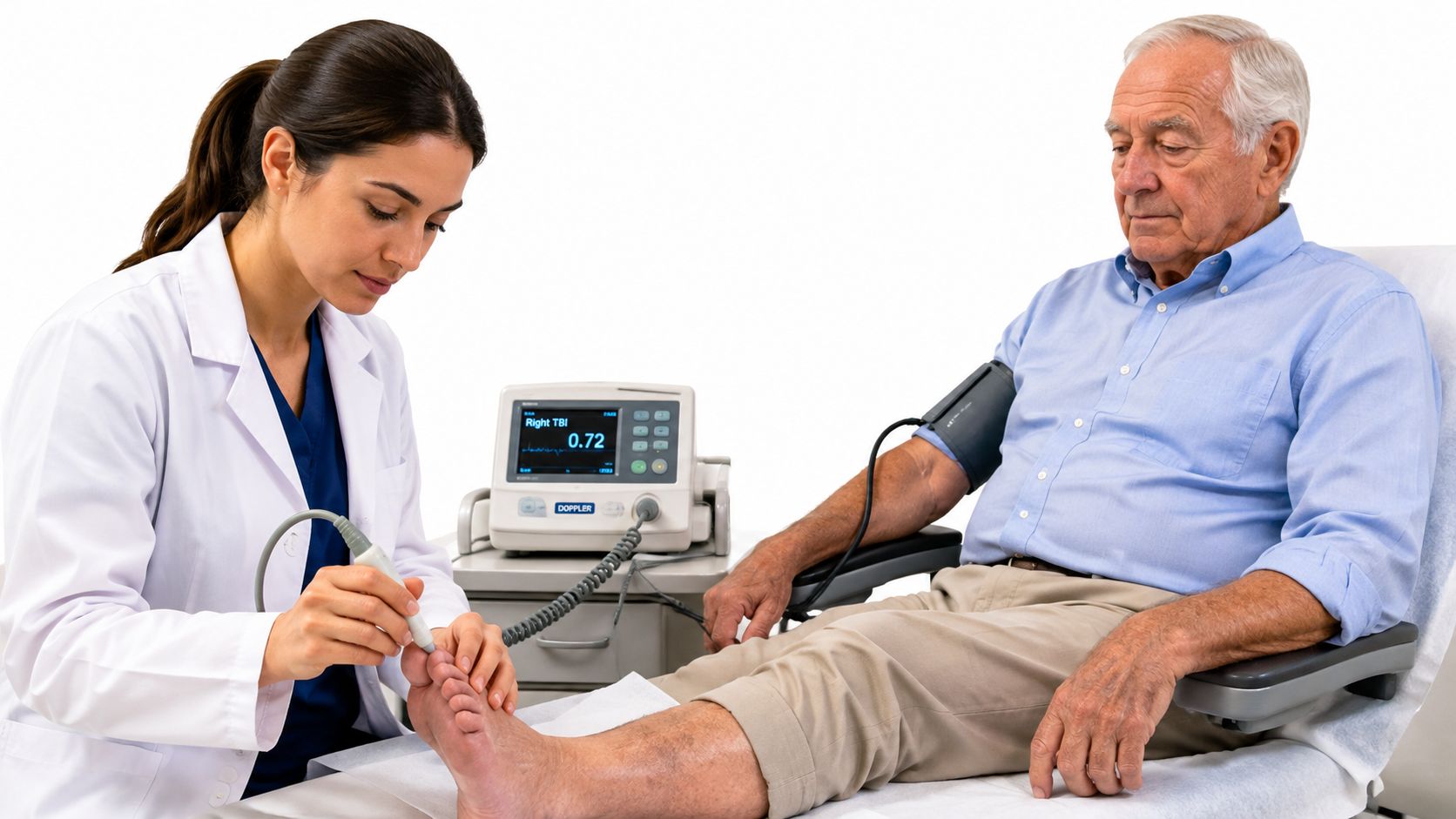
If the resting ABI is above 1.40, tibial arteries are considered noncompressible and ABI becomes unreliable. The recommended response is not to repeat the same test without a plan. Toe pressure or a toe-brachial index, or TBI, with waveforms should be performed when available.
Toe arteries are often more suitable for pressure assessment when ankle vessels resist compression. The TBI doesn't make the clinical question disappear, but it can provide a more interpretable measure of distal perfusion in this setting.
A patient in Lewes, Wilmington, or nearby Pennsylvania or Maryland with diabetes, chronic kidney disease, advanced age, unexplained foot symptoms, or a nonhealing wound should understand this distinction. A high ABI may be the reason to investigate further, not the reason to close the case.
The same principle applies to borderline results. A value that falls near a category boundary should be interpreted with symptoms, examination, and risk rather than treated as an isolated verdict.
The Full ABI Decision Pathway Step by Step
A useful ABI pathway answers one question at each decision point: does this patient need resting measurement, exercise testing, toe pressure, treatment, or referral?
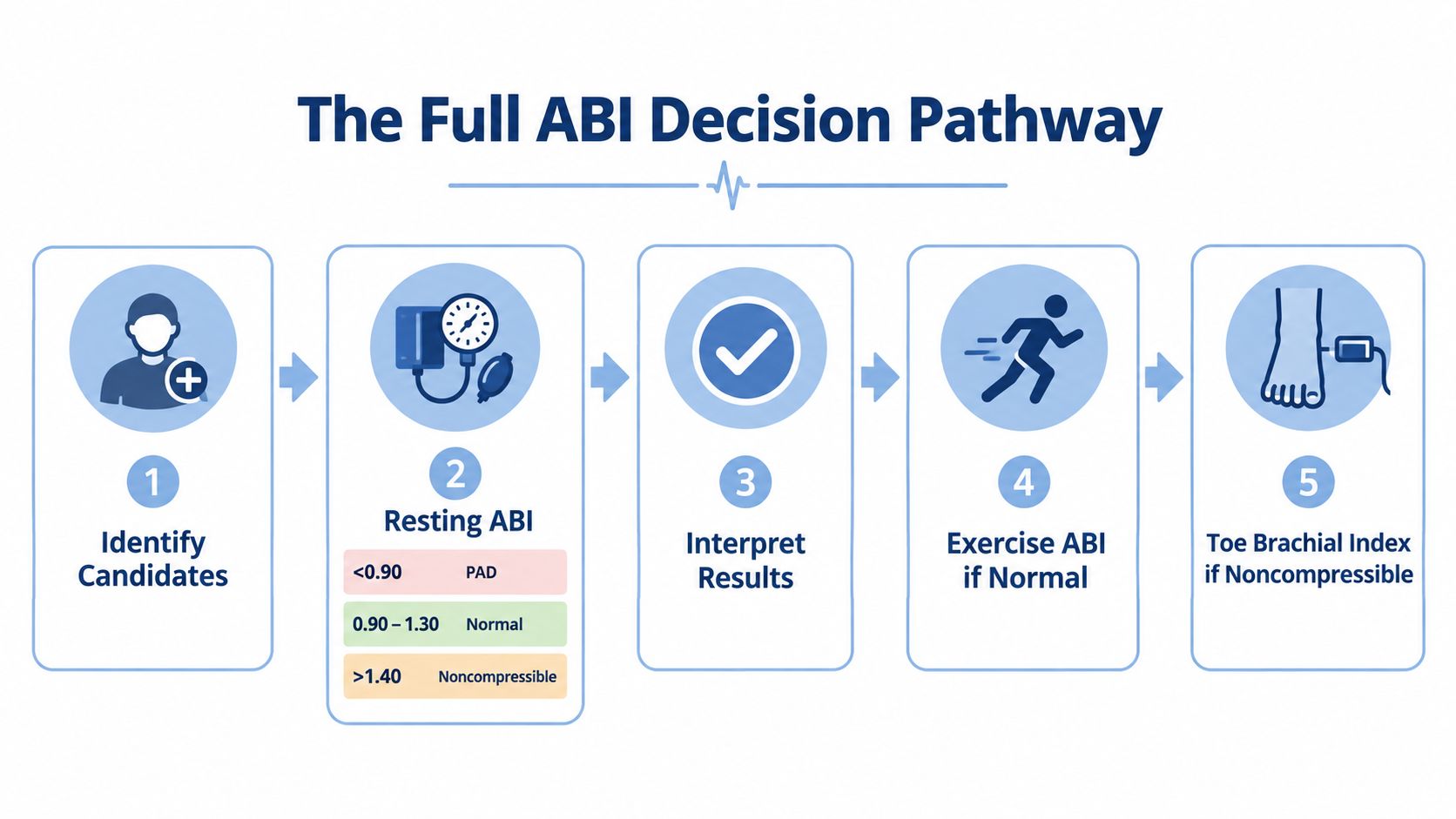
Follow the result, not just the cutoff
Consider a 62-year-old with diabetes and reproducible calf pain during walking. His resting ABI is 0.96, so the resting result does not establish PAD. Because his symptoms remain clinically suggestive, the next decision is exercise ABI rather than reassurance or immediate imaging.
After exercise, his ankle pressure falls by 28 mmHg and the same calf pain returns. That combination supports a hemodynamically relevant exercise limitation. A vascular referral and supervised exercise program are appropriate next steps, while immediate anatomical imaging is reserved for situations in which revascularization is being considered or symptoms and findings warrant it.
The case also shows why the pathway is sequential:
- Define the question. Symptoms, pulse changes, wounds, planned vascular treatment, or selected high-risk status can justify resting ABI. The 2024 ACC/AHA guideline supports ABI when history or examination suggests PAD.
- Test both legs. Record ankle and brachial pressures with Doppler, calculate each ratio, and document symptoms and pulse findings.
- Resolve disagreement. A borderline or normal resting value does not settle persistent exertional symptoms. Exercise ABI can connect symptoms with post-exercise pressure changes.
- Change methods when needed. An ABI above 1.40 indicates noncompressible ankle arteries. Toe pressure or a toe-brachial index, or TBI, with waveforms may provide a more interpretable assessment of distal perfusion.
- Choose the response. Management may involve risk-factor treatment and walking therapy, additional physiologic testing, vascular referral, or imaging when intervention is under consideration.
Follow-up depends on the original question, symptom course, risk profile, treatment changes, and whether exercise or toe-based testing was required. A normal result can support observation, but it does not erase a changing clinical picture.
How ABI Fits the Broader Executive Cardiovascular Workup
ABI evaluates lower-extremity arterial pressure. It doesn't replace tests that answer different questions.
An executive health evaluation may use coronary artery calcium scoring to assess calcified coronary plaque, carotid intima-media thickness to examine carotid structure, and stress echocardiography to evaluate cardiac function under stress. Abdominal aortic ultrasound addresses aortic structure, while ambulatory blood pressure monitoring examines blood pressure patterns outside the office. Advanced lipid and inflammatory biomarkers, including Lp(a) and ApoB, add biochemical context.
A useful workup matches the test to the decision:
- ABI: Is lower-extremity arterial pressure reduced, or is the ankle measurement unreliable?
- Exercise ABI: Do exertional symptoms correspond to abnormal hemodynamics?
- Coronary calcium assessment: Is there evidence of calcified coronary plaque?
- Stress echocardiography: Does exertion reveal a cardiac functional abnormality?
- ApoB and Lp(a): Do lipid-related markers add risk information beyond a standard lipid panel?
- Ambulatory blood pressure monitoring: Does out-of-office measurement clarify the patient's blood pressure burden?
A physician-led program can reduce the risk of collecting disconnected results that no one interprets together. At Hosmane Longevity Center, ABI with exercise is among the advanced cardiovascular assessments available within an integrated preventive cardiology setting, and testing is available to people who aren't enrolled in a broader program when clinically indicated. Further background on how imaging choices fit together appears in this overview of advanced cardiovascular imaging.
Who Should Consider ABI and How to Take the Next Step
ABI is reasonable to discuss when a patient has exertional leg symptoms, rest pain, a nonhealing foot or leg wound, abnormal lower-extremity pulses, or a planned lower-extremity intervention. Without leg symptoms, targeted consideration is more appropriate for adults aged 65 or older, adults aged 50–64 with factors such as diabetes, smoking, hypertension, or hyperlipidemia, younger adults with diabetes plus another atherosclerotic risk factor, and people with established atherosclerotic disease elsewhere.
A consultation becomes more productive when the patient brings:
- Symptom details: What activity triggers discomfort, where it occurs, and whether rest relieves it.
- Risk history: Diabetes, smoking, blood pressure, lipid results, kidney disease, and family history.
- Prior testing: ABI values, vascular imaging, cardiac testing, and relevant laboratory results.
- Functional context: Walking limitations, exercise habits, work travel, and changes in physical capacity.
Patients in Delaware can schedule an educational discussion at the Lewes or Wilmington clinics without a referral. The practice uses a cash-pay model, with limitations involving Medicare and Medicaid enrollment, so financial and coverage questions should be addressed before testing. Readers seeking additional context about physician-led local care can review this guide to finding a preventive cardiologist near me.
This article doesn't provide individualized medical advice. Dr. Vinay Hosmane can help determine whether ABI, exercise ABI, toe-brachial index, or another cardiovascular assessment fits the patient's history and goals.
Hosmane Longevity Center offers physician-interpreted ABI and exercise ABI testing as part of preventive cardiology and executive health evaluation. Visit Hosmane Longevity Center to request a consultation with Dr. Vinay Hosmane and discuss the most appropriate next step for vascular and cardiovascular risk assessment.