
A busy professional in their early 50s can leave a routine physical with reassuring results, including a “normal” LDL cholesterol level, and still wonder whether the assessment captured the full picture. That question becomes more important when there's a family history of early heart disease, high blood pressure, diabetes, smoking exposure, inactivity, stress, or unexplained risk in close relatives.
Searching for a preventive cardiologist near me isn't only a credentials exercise. It's often an access and coordination problem. Lipid testing, coronary calcium scoring, vascular ultrasound, blood-pressure monitoring, and physician interpretation may be spread across different facilities, schedules, referral pathways, and billing systems. A qualified specialist should help connect those pieces into a clinical plan rather than produce more isolated results.
Table of Contents
- Why Searching for a Preventive Cardiologist Near Me Matters Now
- What a Preventive Cardiologist Actually Does
- Core Services and On-Site Testing to Look For
- How Advanced Risk Markers Change the Picture
- Credentials and Program Quality to Verify Locally
- Practical Steps for Finding One in Your Area
- Questions to Ask and How to Prepare for the Visit
Why Searching for a Preventive Cardiologist Near Me Matters Now
A professional in Lewes, Wilmington, Rehoboth, or nearby Pennsylvania or Maryland may have a primary care physician, a laboratory, and a hospital within driving distance, yet still struggle to find one coordinated location for advanced preventive cardiac evaluation. That local gap matters because testing only becomes useful when an appropriately trained clinician selects it, interprets it, and explains what should happen next.
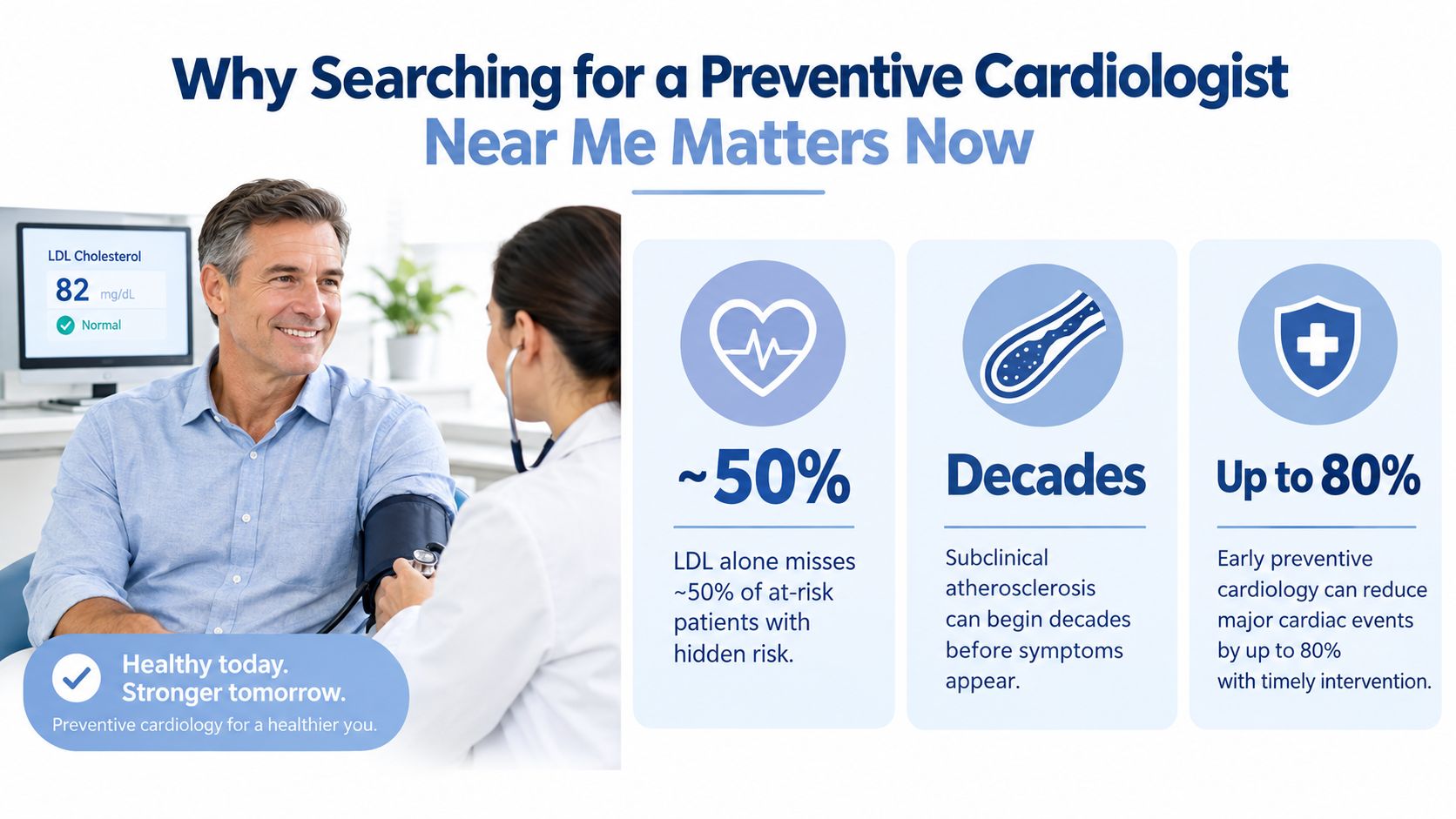
Cardiovascular disease remains the leading cause of death globally. The World Health Organization's cardiovascular disease fact sheet) estimates 19.8 million deaths in 2022, about 32% of all deaths worldwide, with heart attack and stroke responsible for 85% of those deaths. The age-standardized mortality rate fell by 34.9%, from 358.4 per 100,000 people in 1990 to 233.2 per 100,000 in 2022, but total deaths increased from 12.4 million to 19.8 million as populations grew and aged. More than three quarters of cardiovascular deaths occur in low- and middle-income countries, reinforcing that prevention is a global clinical priority.
Why normal results can still leave questions
A standard lipid panel is important, but it doesn't describe every dimension of cardiovascular risk. LDL cholesterol can look acceptable while other factors, such as lipoprotein(a), apolipoprotein B, blood pressure patterns, insulin resistance, kidney health, or existing plaque, call for a different conversation.
That doesn't mean every asymptomatic adult needs every available test. Broad, indiscriminate screening can create false positives, incidental findings, cost, anxiety, and unnecessary follow-up. The better model is selective testing guided by personal risk and a clear management question.
Practical rule: The right local program isn't the one offering the longest menu. It's the one that can explain why a test is appropriate and what decision will follow from the result.
For a busy executive, geography and coordination are clinical considerations, not mere conveniences. A program that combines physician evaluation, advanced cardiac testing, lifestyle planning, and follow-up can reduce the risk of fragmented interpretation. Testing is available to anyone who meets the clinical and logistical requirements, not only to executive health program members.
What a Preventive Cardiologist Actually Does
Preventive cardiology focuses on estimating, communicating, and reducing cardiovascular risk before a heart attack, stroke, heart failure diagnosis, or other major event occurs. General cardiology often evaluates symptoms, abnormal tests, or established cardiovascular disease. Preventive cardiology may work with people who feel well but have risk factors or early disease that conventional screening hasn't clarified.
An executive physical can organize a substantial amount of testing, but a collection of reports isn't the same as longitudinal prevention. The clinician must connect family history, blood pressure, lipid particles, glucose metabolism, imaging, medication tolerance, exercise capacity, sleep, nutrition, and personal priorities into a sequence of decisions.
The clinical workflow
A prevention-focused evaluation commonly includes:
- Risk history: Family history of premature atherosclerotic cardiovascular disease, arrhythmia, stroke, diabetes, smoking, kidney disease, sleep disorders, and prior pregnancy-related risk factors where relevant.
- Risk estimation: Use of established calculators, including PREVENT or MESA when clinically appropriate, alongside direct evidence of plaque and the patient's broader history.
- Advanced laboratory interpretation: Lp(a), apoB, triglyceride-related risk, glycemic markers, inflammatory markers, and renal measures may add context beyond LDL-C.
- Imaging-based assessment: Selective CAC scoring, plaque-focused vascular imaging, echocardiography, or other studies can answer specific questions.
- Risk reduction: Nutrition, exercise, sleep, tobacco cessation, blood-pressure management, lipid-lowering therapy, and medication review are integrated rather than handled as unrelated tasks.
Treatment decisions can include discussion of statins, ezetimibe, PCSK9 inhibitors, bempedoic acid, or prescribing aspirin when its risk outweighs its likely benefit. Medication selection depends on the individual clinical picture, not on a blanket promise that more treatment is better.
Who may benefit most
Adults over 40 with a strong family history, borderline or intermediate estimated risk, high Lp(a), premature atherosclerosis, diabetes, hypertension, abnormal triglycerides, or cardiometabolic disease often have a more meaningful reason to consult a preventive cardiologist. The same applies when a person has received conflicting interpretations from multiple clinicians.
| Focus | Typical Patient | Care Integration |
|---|---|---|
| Preventive cardiology | Asymptomatic adult with uncertain or elevated long-term risk | Physician-led risk modeling, selective testing, treatment, and follow-up |
| General cardiology | Patient with symptoms, abnormal cardiac testing, or established disease | Diagnosis and management of active or known cardiovascular conditions |
| Executive physical | Professional seeking organized health screening | Broad testing may be available, but integration depends on the clinician and program |
The key distinction is accountability. A prevention specialist should be able to state which finding matters, which finding doesn't, and how the plan will be reassessed over time.
Core Services and On-Site Testing to Look For
For a busy professional, local access matters before test selection. Only a minority of adults can conveniently find advanced preventive evaluation, imaging, laboratory work, blood-pressure monitoring, and lifestyle support in one coordinated setting. A strong program connects each service to a clinical decision rather than presenting testing as separate products.
Imaging that answers a clinical question
Coronary artery calcium scoring uses a non-contrast CT scan to detect calcified coronary plaque. The 2018 American Heart Association cholesterol guideline summary supports selective CAC use in adults aged 40 to 75 years without diabetes, with LDL-C from 70 to 189 mg/dL, and a 10-year ASCVD risk of 7.5% to 19.9% when the statin decision remains uncertain. CAC can also clarify selected borderline and intermediate-risk discussions.
Carotid plaque ultrasound or CIMT may add vascular information, but neither should automatically serve as a universal screening test. Resting echocardiography, stress echocardiography, coronary CT angiography, abdominal aortic ultrasound, and ankle-brachial index testing fit selected patients when symptoms, risk factors, or a specific clinical question justify them. Ask whether the study is performed or coordinated locally, how results are interpreted, and who will act on an abnormal finding.
Biomarkers beyond the standard panel
A focused evaluation may consider apoB, Lp(a), high-sensitivity CRP, HbA1c, fasting insulin or HOMA-IR, NT-proBNP, uric acid, TSH, and kidney assessment that includes cystatin C or a urine albumin-to-creatinine ratio. These tests are not necessary for everyone. Their value depends on whether the result changes risk classification, treatment, or follow-up.
The ACC and AHA lipid guidance supports measuring Lp(a) at least once in adulthood and recognizes apoB as potentially useful when LDL-C understates residual risk.
Monitoring and intervention
Validated home or ambulatory blood-pressure monitoring can identify masked or white-coat hypertension. The 2021 European Society of Cardiology prevention guidance supports out-of-office measurement when feasible. ECG, ambulatory telemetry, and wearable-data review may help when rhythm symptoms or other clinically relevant concerns exist.
Lifestyle care should fit a demanding schedule. Services may include Mediterranean or DASH dietary counseling, structured aerobic and resistance exercise, sleep screening, stress assessment, and tobacco cessation. Medication discussions can address statins, ezetimibe, PCSK9 or siRNA agents, bempedoic acid, icosapent ethyl, SGLT2 therapy, or GLP-1 therapy when clinically indicated.
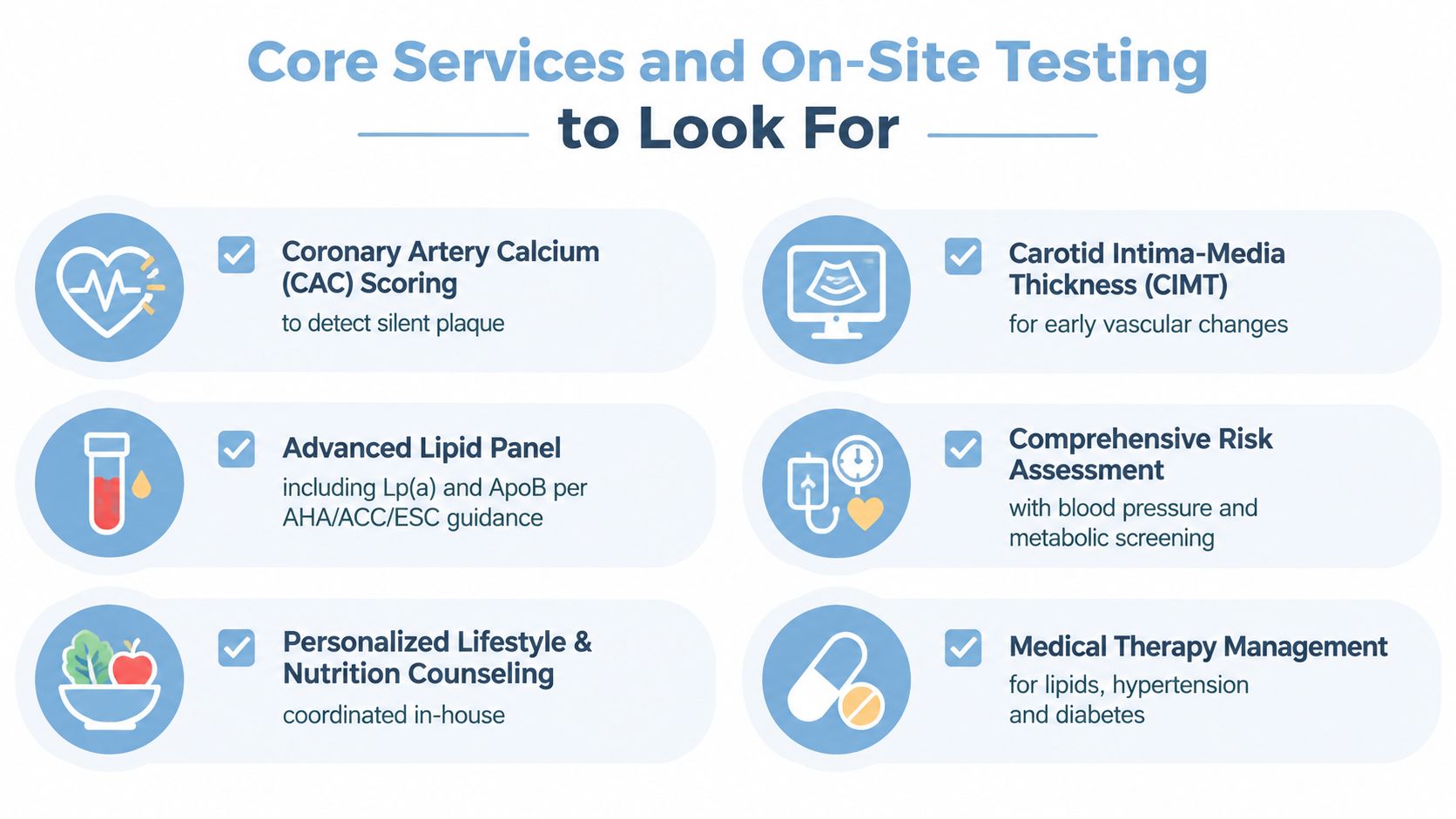
Review the advanced cardiac testing overview to see how testing options may be organized. The practical question is whether the local program links each test to physician interpretation, a clear recommendation, and scheduled reassessment.
How Advanced Risk Markers Change the Picture
Advanced markers earn a place in the evaluation when they can change a decision. A local preventive cardiology program should explain what each test measures, what uncertainty it addresses, and what action might follow.
CAC, Lp(a), and apoB
CAC detects calcified coronary plaque and can clarify whether preventive medication is more or less compelling. A CAC score of zero may support lifestyle-focused management and deferred medication for selected patients. CAC above 100 strongly supports statin therapy, based on established cholesterol guidance. Interpret the result with age, diabetes status, smoking, family history, and other risk factors, rather than treating the scan as a stand-alone prescription.
Lp(a) is largely inherited and may reveal residual risk that LDL-C does not show. Lp(a) of at least 50 mg/dL or 125 nmol/L is a meaningful risk-enhancing level. That result can lead to tighter management of modifiable risks and a discussion about testing first-degree relatives. 250 nmol/L is associated with at least a two-fold increase in long-term heart attack or stroke risk, while a level at the lower threshold is associated with about a 1.4-fold higher long-term risk. These figures need clinical context, including the patient's broader risk profile and treatment goals.
ApoB estimates the number of atherogenic lipoprotein particles. The published ACC/AHA cholesterol guideline identifies apoB of at least 130 mg/dL as a risk-enhancing factor and notes that triglycerides of 200 mg/dL or higher are a relative indication to measure it. The practical value is greatest when LDL-C appears acceptable but the overall lipid pattern suggests residual atherogenic burden.
Interpreting vascular and rhythm findings
CIMT and carotid plaque can show early vascular change, but they answer different questions and have limits. A meta-analysis of CIMT and cardiovascular outcomes found that each 0.1 mm increase in CIMT predicted higher myocardial infarction risk, with a hazard ratio of 1.15, and stroke risk, with a hazard ratio of 1.17. A one-standard-deviation increase predicted myocardial infarction with a hazard ratio of 1.26 and stroke with a hazard ratio of 1.31. Expert reviews also find limited added value beyond standard risk models. CIMT therefore works best as supporting context, not a decisive screening answer.
Continuous ECG monitoring can identify clinically relevant arrhythmias in selected patients. It cannot replace a careful symptom history, examination, and appropriate diagnostic reasoning. Cardiac MRI with stress perfusion is generally reserved for specific clinical questions, rather than routine screening in every asymptomatic adult.
| Marker | What It Measures | Typical Decision Impact |
|---|---|---|
| CAC | Calcified coronary plaque burden | Helps clarify whether preventive medication is more or less compelling when risk is uncertain |
| Lp(a) | Inherited atherogenic lipoprotein risk | Encourages tighter control of modifiable risks and may support family discussions |
| ApoB | Number of atherogenic particles | Can reveal residual risk when LDL-C appears acceptable |
| CIMT or carotid plaque | Early arterial wall change or plaque | Adds context when interpreted with history and other markers |
| Rhythm monitoring | Intermittent or sustained electrical abnormalities | Guides selected evaluations for palpitations, fainting, or suspected arrhythmia |
Credentials and Program Quality to Verify Locally
A nearby physician should be evaluated on both clinical qualifications and the practice's ability to deliver coordinated prevention. Board certification in cardiovascular disease is a meaningful foundation. Additional training in clinical lipidology, fellowship training in cardiovascular prevention, or diplomate status with a recognized clinical lipidology board can be relevant when advanced lipid interpretation is central to the visit.
A practical verification checklist
- Board certification: Confirm current certification in cardiovascular disease and review the physician's stated prevention training.
- Lipid expertise: Look for meaningful qualifications in clinical lipidology, particularly when Lp(a), apoB, familial lipid disorders, or complex medication decisions are involved.
- Diagnostic capability: Ask whether CAC scoring, vascular ultrasound, echocardiography, ambulatory blood-pressure monitoring, and rhythm monitoring are coordinated through the practice.
- Team structure: An in-house registered dietitian, exercise physiologist, physical therapist, or pharmacist can make the plan more practical.
- Quality transparency: Ask about imaging accreditation, hospital privileges, medical-board history, peer-reviewed work, and participation in relevant quality or professional programs.
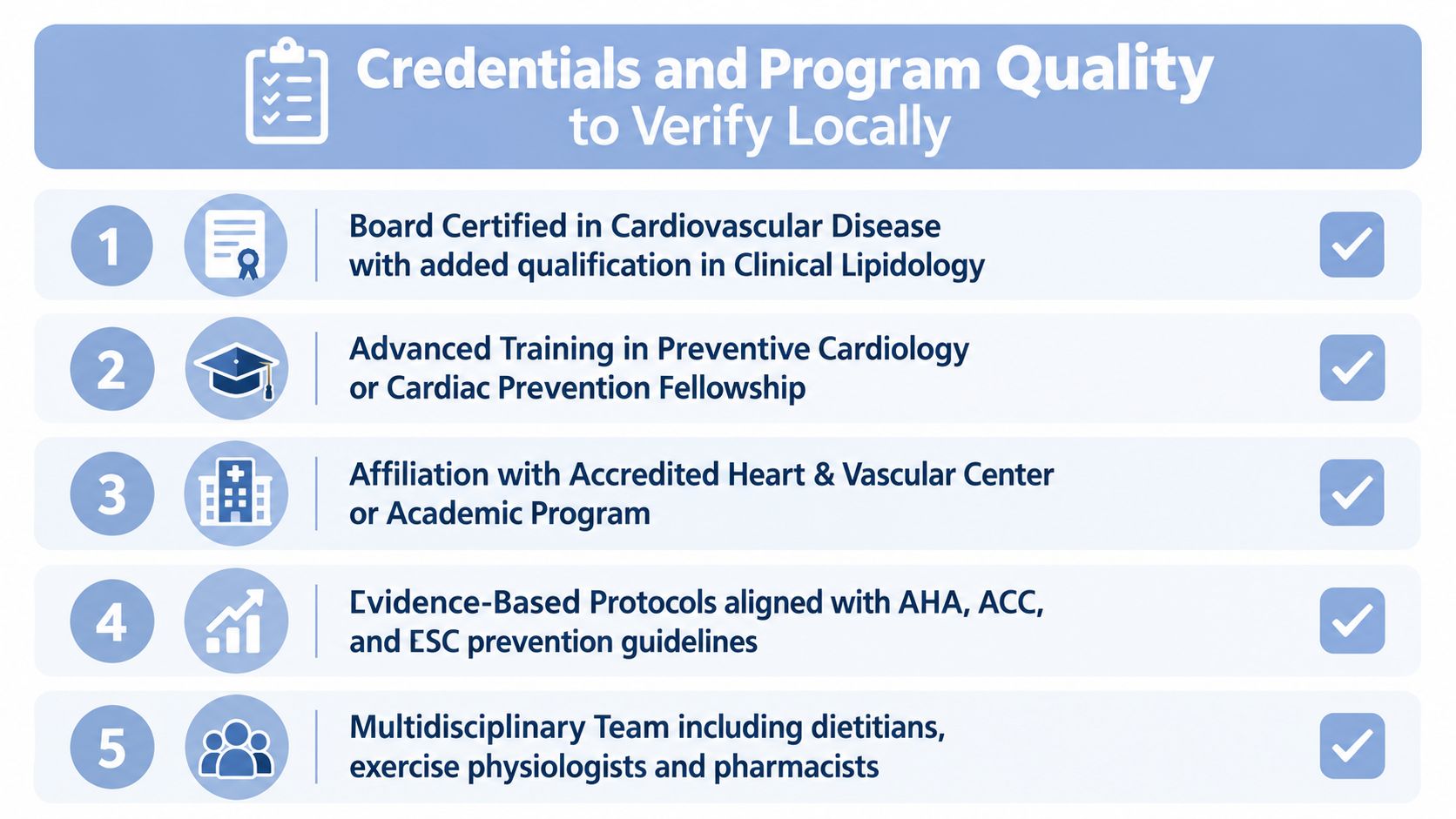
The executive health program details illustrate the type of program information a prospective patient should expect to find, including care setting, testing scope, team structure, and payment pathway. Hosmane Longevity Center is one local option, led by Dr. Vinay Hosmane, whose stated credentials include triple board certification and prevention-centered public health training.
Red flags deserve attention
A practice that sells unproven supplements as a substitute for risk reduction, can't explain who interprets imaging, or won't disclose imaging accreditation deserves careful scrutiny. The absence of an on-site laboratory isn't automatically disqualifying, but the practice should explain how outside results are verified, shared, and incorporated into the plan.
The highest-quality program isn't defined by the number of tests performed. It is defined by whether the physician can prioritize findings and coordinate appropriate next steps without turning every abnormality into a treatment obligation.
Practical Steps for Finding One in Your Area
Searching locally works best as a short verification process rather than a broad internet sweep. Start by clarifying the payment route. Some preventive programs operate through insurance, while others use self-pay or concierge structures, and advanced testing may follow a different billing pathway from the physician consultation.
A five-step local search
Check coverage first. Ask the insurer whether preventive cardiology consultations, CAC scoring, echocardiography, vascular ultrasound, laboratory testing, and ambulatory monitoring are covered separately. If the program is self-pay, request a written outline of what the evaluation includes.
Build a local candidate list. Review professional cardiology directories, clinical lipidology listings, and prevention programs associated with nearby hospitals. Include Lewes, Wilmington, Rehoboth, and practical driving options in Pennsylvania and Maryland.
Verify the clinician. Confirm cardiovascular board certification, prevention training, lipidology qualifications, hospital affiliations, and the specific services the practice provides.
Call with focused questions. Ask whether CAC and Lp(a) testing are performed or coordinated in-house, who reads imaging, whether same-day testing is available, how long new-patient scheduling takes, and whether a single-day evaluation is possible.
Prepare records before scheduling. Request prior laboratory results, ECGs, stress tests, imaging, and medication lists. Ask whether records can be uploaded before the visit so duplicate testing can be avoided.
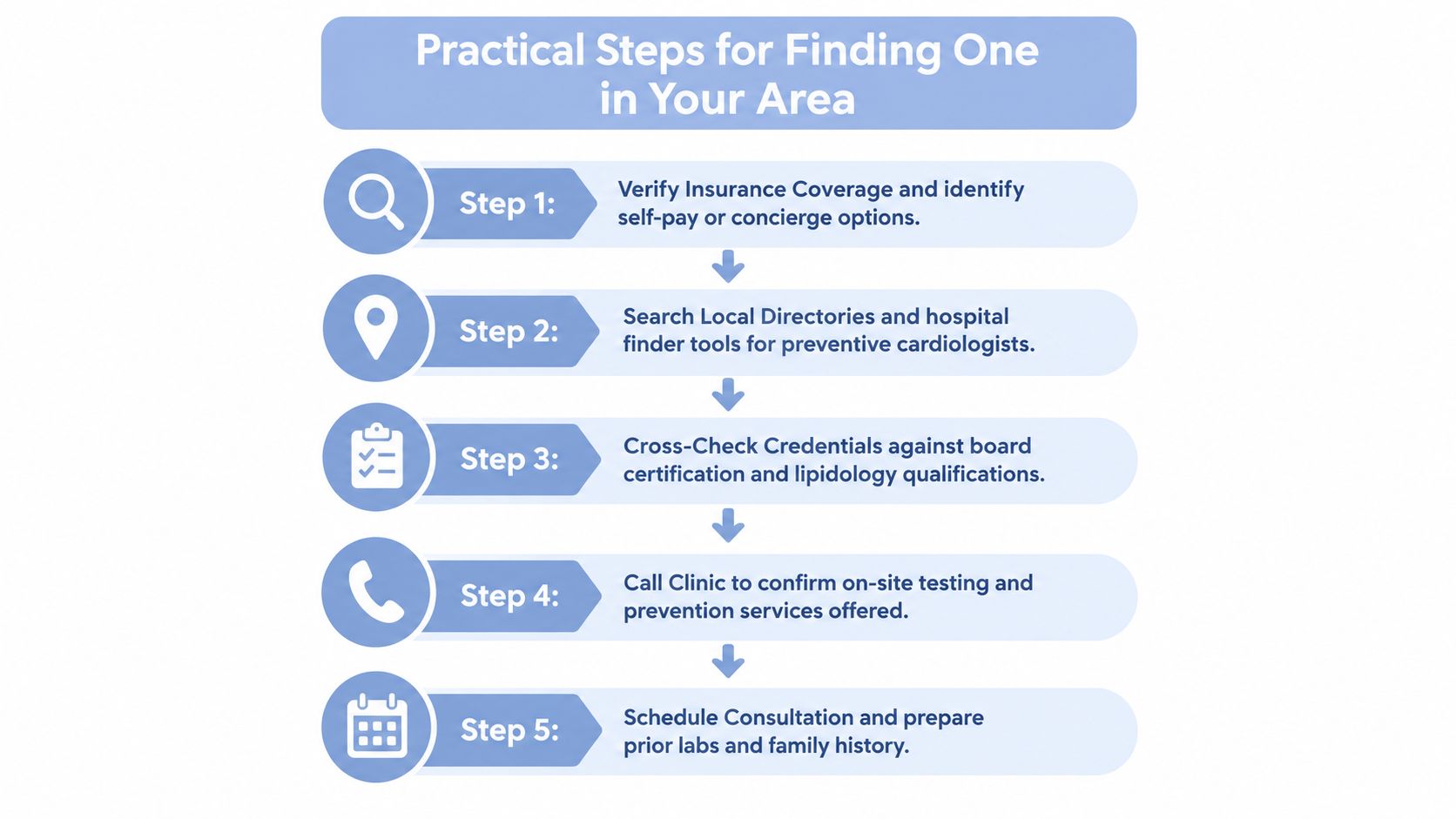
For professionals traveling from suburban or rural areas, a coordinated evaluation may reduce repeated travel, but the schedule still needs to allow adequate physician interpretation. Same-day imaging can be convenient, yet speed shouldn't replace informed consent, appropriate selection, or time to discuss what the findings mean.
Ask the practice to confirm CT accreditation through the American College of Radiology accreditation information. A facility should also explain how results are reported, how urgent findings are communicated, and how the final plan is shared with the primary physician.
Readers seeking local scheduling details can use the Hosmane Longevity Center contact page. Availability, testing sequence, and payment arrangements should be confirmed directly with the practice.
Questions to Ask and How to Prepare for the Visit
A first consultation should answer more than “Are the results normal?” It should clarify the patient's current risk, the uncertainty that remains, the tests that could reduce that uncertainty, and the actions that would follow.
Bring recent lipid panels, blood-pressure logs, family history of premature coronary disease or arrhythmia, current medications and supplements, prior ECGs or stress tests, and a short written list of priorities. A professional concerned about travel, business meals, exercise time, sleep, or medication preferences should say so early. Those constraints affect the feasibility of a prevention plan.
Questions that reveal program depth
- Are CAC scoring, coronary CT angiography, carotid or coronary plaque imaging, Lp(a), and apoB interpreted by the practice's own clinicians?
- How will the findings affect a personalized 10-year and lifetime ASCVD risk assessment?
- Which lifestyle, nutrition, sleep, and exercise services are available within the same care plan?
- Who reviews follow-up labs and imaging, and on what timeline?
- Can the final assessment be shared with the primary care physician?
- Is the visit structured as one evaluation, or will testing and consultation require separate appointments?
- What are the insurance, self-pay, or concierge pathways?
| Ask the Practice | Bring With You |
|---|---|
| Which tests are clinically appropriate and who interprets them? | Recent lipid and metabolic laboratory results |
| How will CAC, Lp(a), apoB, or imaging alter management? | Family history, especially early heart attack, stroke, or arrhythmia |
| What follow-up is included after testing? | Home blood-pressure readings and prior ECGs |
| Which nutrition and exercise services are coordinated? | Medication and supplement list |
| How are records shared with primary care? | Written goals, concerns, and schedule limitations |
A single-visit model can be efficient when testing, physician consultation, and preliminary planning are coordinated appropriately. It isn't automatically better if the schedule is rushed or the patient leaves without clear explanations. The meaningful outcome of an evaluation is a prioritized plan that states what to do, what not to do, and when to reassess.
Hosmane Longevity Center offers physician-led preventive cardiology, advanced cardiac testing, risk modeling, and coordinated lifestyle and nutrition support for adults seeking a more integrated local evaluation. Visit Hosmane Longevity Center to review the care model and request a consultation focused on practical, evidence-based cardiovascular prevention.