
A chief executive finishes a late dinner after a board meeting, checks messages before bed, and schedules an annual physical because nothing feels wrong. The routine looks responsible, yet a standard checkup may not show how inherited lipid risk, vascular changes, blood pressure, sleep, meal timing, and work demands interact. For many adults in their 40s, 50s, and 60s, cardiovascular risk develops without symptoms.
That's where the question what is personalized nutrition becomes clinically important. It isn't a subscription meal plan, an expensive supplement protocol, or a promise that one test can identify the perfect diet. In preventive cardiology, it means using relevant clinical data and real-life constraints to adapt sound dietary principles into a plan a person can follow and evaluate over time.
Table of Contents
- The Executive Approach to Heart Health
- Defining Personalized Nutrition in Clinical Practice
- Understanding the Diagnostic Foundation
- From Guidelines to Individualized Plans
- The Role of Registered Dietitian Consultations
- Measuring Success Through Longitudinal Data
- Taking the Next Step in Preventive Care
The Executive Approach to Heart Health
A senior professional in Wilmington may exercise between meetings, eat well at home, and still spend much of the week traveling, dining with clients, or working through interrupted sleep. A business owner in Lewes may know that a parent had premature heart disease but assume normal energy and the absence of chest discomfort indicate low risk. A physician-led executive health evaluation begins from a different premise: absence of symptoms doesn't equal absence of disease.
Traditional care remains essential, but an annual visit can leave important questions unanswered. A routine lipid panel may not fully clarify particle-related risk. A blood pressure reading taken in a quiet office may not reflect a demanding workday. A family history may deserve more attention than a risk estimate based on population averages alone.

Prevention requires a usable model
Proactive care connects several domains:
- Risk detection: Advanced cardiac testing can identify subclinical atherosclerosis and vascular abnormalities that symptoms won't reveal.
- Risk interpretation: Lipid, inflammatory, metabolic, and blood pressure findings need clinical context rather than isolated reactions to a single flagged result.
- Lifestyle translation: Nutrition and exercise recommendations must fit travel, business meals, family responsibilities, sleep patterns, and available time.
- Longitudinal review: Repeated measurements help determine whether a plan is changing the relevant risk markers, not merely producing a short-lived change on the scale.
The business analogy is straightforward. A company doesn't protect its future by reviewing one quarterly number without examining cash flow, operations, staffing, and market exposure. Biological maintenance requires a similarly integrated view.
A structured executive health program can therefore serve as a risk-management process rather than a collection of disconnected tests. Personalized nutrition belongs inside that process, alongside preventive cardiology, advanced cardiac testing, movement, sleep assessment, and physician interpretation.
Defining Personalized Nutrition in Clinical Practice
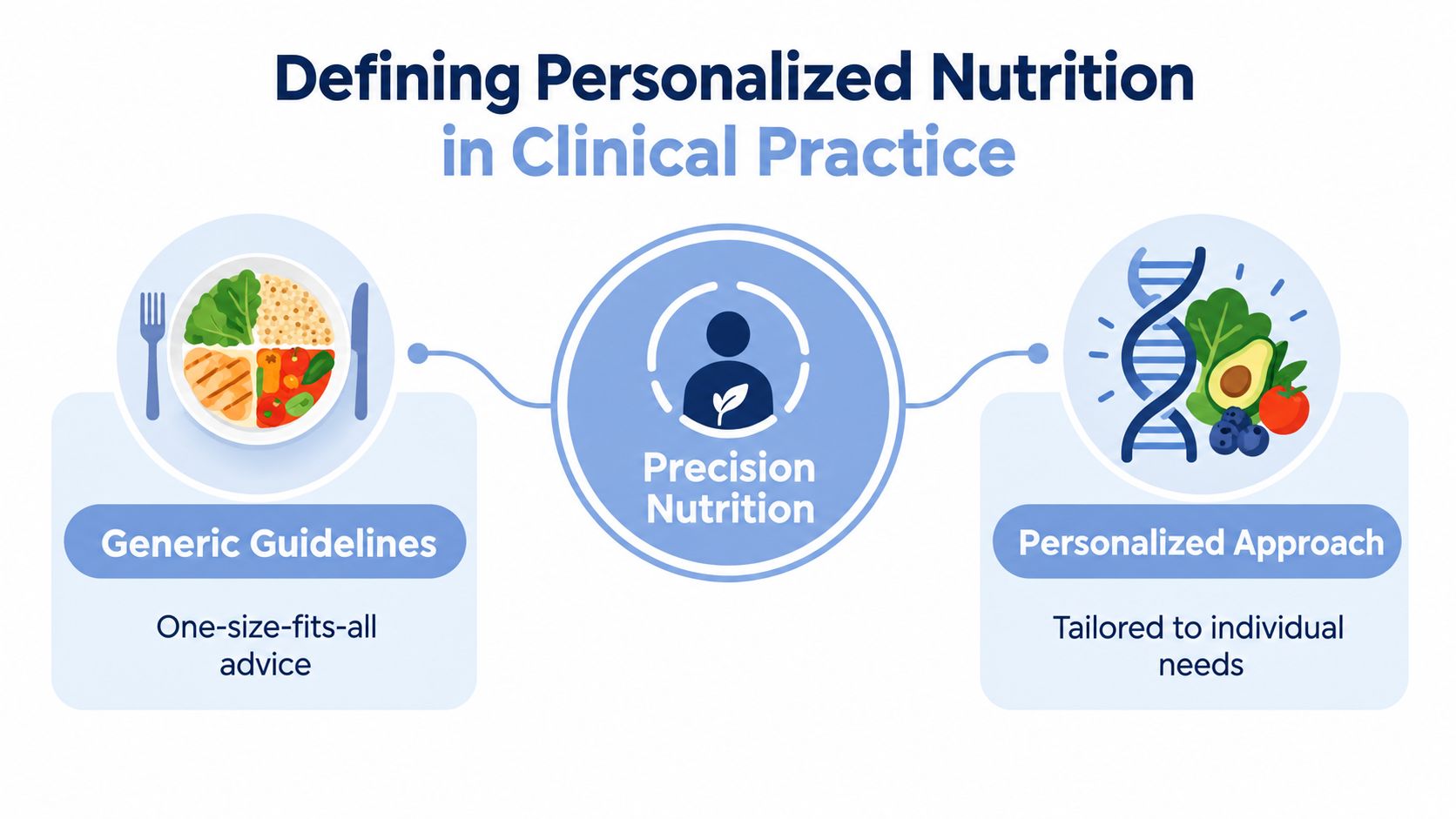
Personalized nutrition is the clinical adaptation of dietary guidance to an individual's medical data, physiology, preferences, and circumstances. General guidelines provide the fabric. Personalization changes the cut, fit, and construction so the finished plan suits the person who must wear it.
The distinction matters. A population guideline may recommend more vegetables, whole grains, healthy protein, and less saturated fat. Those principles remain valuable. Personalized nutrition asks how to apply them when a patient has high ApoB, a high Lp(a), impaired glucose regulation, medication considerations, limited time for cooking, frequent restaurant meals, or cultural food preferences.
The clinical workflow
A useful process generally follows four questions:
- What risk needs attention? Laboratory markers, imaging, medical history, medications, and family history establish the clinical priorities.
- What does the person eat now? A realistic review includes meals, snacks, alcohol, restaurant patterns, travel, timing, and portion habits.
- What can the person sustain? The plan has to account for schedule, cooking access, household preferences, budget, and social obligations.
- What will confirm progress? Relevant biomarkers, blood pressure, glucose measures, symptoms, and adherence provide feedback for refinement.
This approach also clarifies what personalized nutrition isn't. It doesn't require genetic testing for every patient. It doesn't assume that a microbiome report can identify one universally superior menu. It shouldn't replace prescribed treatment or established cardiovascular prevention guidance.
Clinical principle: Personalization should change the implementation of sound nutrition, not remove the need for sound nutrition.
The modern evidence base supports a measured view. A 2026 review of randomized controlled trials reported improvements in dietary quality and significant changes in HbA1c, triglycerides, and insulin sensitivity, while a 2024 systematic review of technology-delivered interventions reported lower energy and fat intake alongside higher vegetable intake. Those findings support individualized behavior change, but they don't justify every commercial claim made under the precision nutrition label. A plan earns credibility through relevant data, professional interpretation, and follow-up.
Understanding the Diagnostic Foundation
Nutrition becomes personalized only after the clinical problem has been defined. A person with visible coronary calcium, high ApoB, high Lp(a), insulin resistance, or abnormal vascular findings may need a different emphasis than someone whose primary challenge is blood pressure, sleep, or sustained dietary adherence.
Advanced cardiovascular assessment can include Coronary Artery Calcium scoring, carotid imaging, stress echocardiography, abdominal aortic ultrasound, Ankle-Brachial Index testing, ambulatory blood pressure monitoring, and advanced lipid and inflammatory biomarkers. Each test answers a different question. No single result should dictate a diet in isolation.
Advanced cardiovascular biomarkers
| Biomarker | Clinical significance | Impact on nutrition strategy |
|---|---|---|
| ApoB | Reflects the number of atherogenic lipoprotein particles and helps clarify lipid-related risk beyond standard cholesterol measures. | Supports focused attention to saturated fat, dietary pattern, fiber-rich foods, and the overall lipid-lowering strategy, interpreted with the complete risk profile. |
| Lp(a) | Represents an inherited lipoprotein-related risk factor that may remain important even when conventional cholesterol appears acceptable. | Encourages rigorous management of modifiable risks, including dietary quality, blood pressure, glucose regulation, and other atherogenic markers. |
| Triglycerides | Can provide information about metabolic health and dietary patterns when considered with other findings. | May prompt review of alcohol, refined carbohydrates, energy balance, meal composition, and physical activity. |
| Inflammatory biomarkers | Add context to the broader cardiovascular risk picture when interpreted alongside clinical history and imaging. | Helps prioritize an overall dietary pattern centered on minimally processed foods and appropriate cardiometabolic management. |
| Glucose-related markers | Help assess glycemic regulation and the relevance of postprandial responses. | Can guide carbohydrate quality, meal composition, timing, and monitoring rather than imposing a blanket carbohydrate restriction. |
A detailed discussion of ApoB testing and cardiovascular risk can help patients understand why particle-related information may matter. The practical point is not to collect every available measurement. It's to select studies that can answer a clinical question and alter management.
Why imaging changes the conversation
Laboratory results describe circulating risk factors. Imaging can show whether atherosclerotic disease has already begun. That distinction affects urgency, monitoring, and the level of coordination required between nutrition, exercise, medication decisions, and follow-up.
Personalized nutrition also has limits. A 2026 review found that many recommendation systems still rely heavily on age, sex, weight, and broad preferences while omitting medical history, medication use, and socioeconomic context. The same review described an evidence base often dominated by small, homogeneous, short-term studies. High-tech presentation doesn't correct weak inputs.
From Guidelines to Individualized Plans
The strongest personalized plans begin with public-health guidance rather than rejecting it. The 2019 ACC/AHA Primary Prevention Guideline identifies the DASH dietary pattern as the recommended template for lowering ASCVD risk, emphasizing vegetables, fruits, whole grains, and reduced saturated fat (ACC/AHA guideline).
The American Heart Association's dietary guidance adds practical targets: healthy body weight, varied fruits and vegetables, whole grains, healthy protein sources, liquid plant oils, minimally processed foods, limited added sugars, little or no salt, and limited alcohol. The guidance applies whether meals are prepared at home, at work, while traveling, or in restaurants (AHA dietary guidance).
The pattern stays, the application changes
A patient with high atherogenic particle levels may need a more deliberate approach to saturated fat, soluble fiber, and food substitutions. Another patient with high blood pressure may need greater attention to sodium exposure in restaurant meals and packaged foods. Someone with abnormal glucose markers may benefit from examining carbohydrate quality, meal structure, physical activity, and the response after eating.
European prevention guidance offers concrete reference points, including at least 200 g of vegetables daily, at least 200 g of fruit daily, 30 to 45 g of fiber daily, 30 g of unsalted nuts daily, fish one to two times weekly, saturated fat under 10% of total energy, and salt under 5 g daily (ESC-based clinician guide). These are population-oriented targets, not individualized prescriptions. A clinician and registered dietitian determine how to translate them safely into a particular person's needs.
The evidence supports that balance. A 2025 systematic review describes personalized nutrition for people with heightened cardiovascular risk as an approach based on individual traits such as biomarkers, preferences, or genetics, while retaining standard goals such as reducing saturated fat and sodium and increasing fruits, vegetables, whole grains, and omega-3-rich foods (Nutrition Reviews systematic review).
Post-meal physiology adds useful detail
People can show different postprandial glucose responses to the same meal. A clinical review found that personalized interventions commonly combine clinical data, body measurements, blood biomarkers, and sometimes microbiome data. In diabetes and prediabetes studies, one synthesis reported a median HbA1c reduction of about 0.925% and postprandial glucose response improvement of about 14.85 mg/dLxh (clinical review of personalized interventions).
Those findings don't mean every patient needs continuous glucose monitoring or microbiome testing. They show why a uniform meal prescription can miss meaningful physiological variation. The appropriate intervention depends on the question, the quality of the measurement, and whether the result changes a sustainable behavior.
The Role of Registered Dietitian Consultations
A registered dietitian consultation should feel less like a lecture and more like a clinical working session. The dietitian reviews medical history, medications, allergies, current eating patterns, cultural preferences, travel, alcohol, sleep, exercise, and the practical limits of the patient's calendar.
The first conversation should identify friction points. A professional may have excellent weekday discipline but rely on airport meals during travel. Another may prepare healthy dinners but eat quickly at a desk, skip breakfast, or consume most daily sodium through restaurant and packaged foods. These details determine whether a recommendation can survive outside the clinic.
A plan is built around decisions
The consultation typically turns broad goals into specific choices:
- Breakfast: Select a repeatable option that supports the patient's metabolic and lipid priorities without adding morning complexity.
- Business meals: Create ordering rules that work across restaurants, including protein selection, vegetable intake, sauces, portions, and alcohol decisions.
- Travel: Identify portable foods and airport strategies that reduce dependence on highly processed choices.
- Home environment: Adjust grocery routines and household meals so adherence doesn't depend on constant willpower.
- Monitoring: Choose a small set of behaviors and clinical markers that can be reviewed rather than tracking everything.
The dietitian also coordinates with the physician when medication interactions, kidney function, diabetes, gastrointestinal symptoms, or other medical conditions affect the plan. Technology can record meals or display trends, but it can't independently weigh an incomplete history, a medication list, a patient's priorities, and the consequences of an overly restrictive approach.
A plan that works only on ideal days isn't personalized enough for an executive schedule.
Follow-up makes the process iterative. If a patient's work travel increases, the strategy may need revision. If laboratory results change, the clinical emphasis may shift. The purpose isn't perpetual dietary monitoring. It's to establish a practical pattern, evaluate its effect, and adjust with judgment.

Measuring Success Through Longitudinal Data
A nutrition plan should be judged by more than initial enthusiasm or a short-term change in body weight. Weight can fluctuate for many reasons, while cardiovascular risk depends on a broader set of variables, including atherogenic lipoproteins, blood pressure, glucose regulation, vascular findings, fitness, sleep, and treatment adherence.
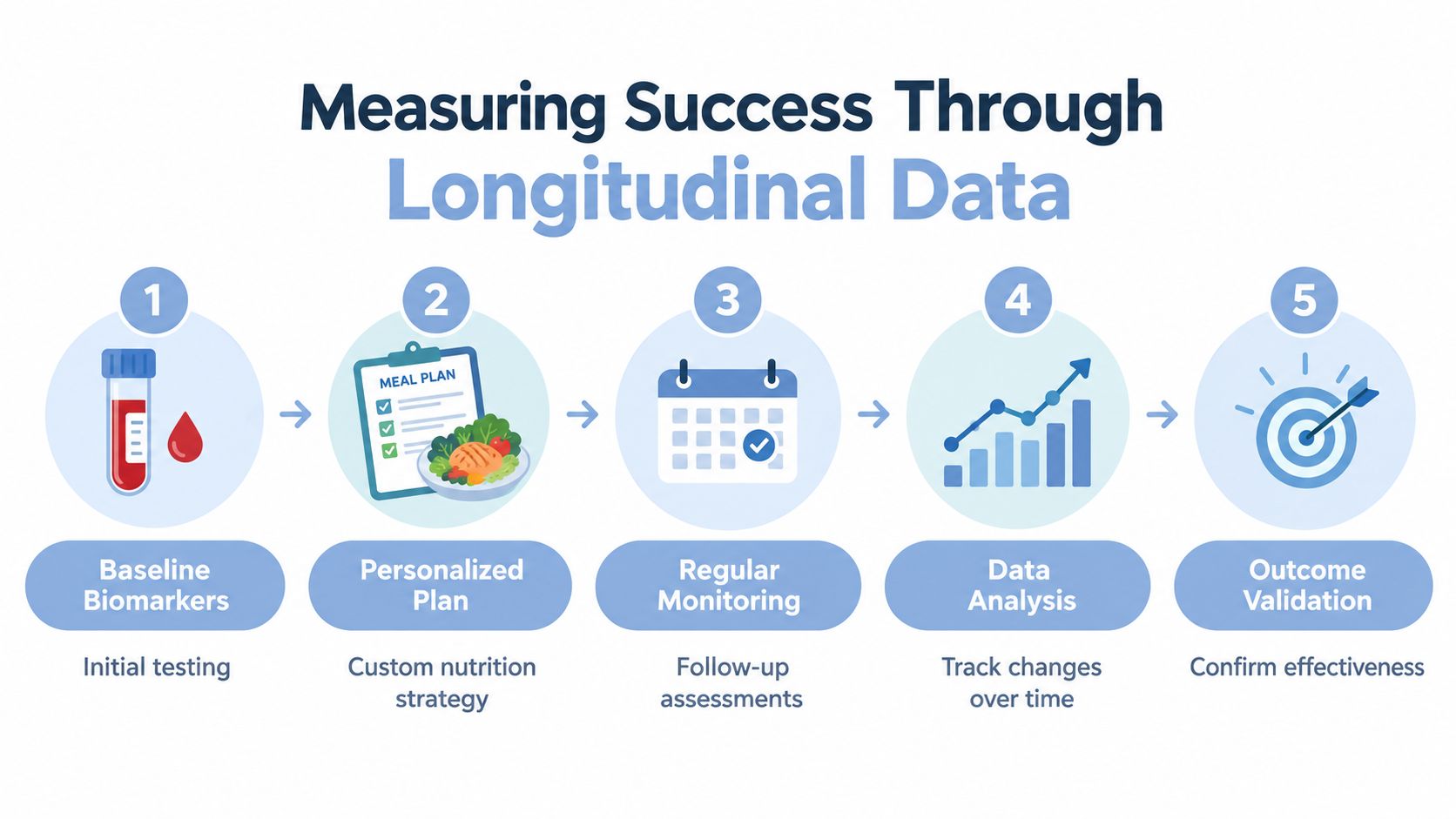
Longitudinal care creates a feedback loop. Baseline testing defines the starting point. A personalized intervention targets the relevant behaviors. Follow-up testing then shows whether the intended markers are moving in the desired direction, remaining stable, or requiring a different approach.
What meaningful measurement includes
A disciplined review may consider:
- Baseline risk: Document the relevant laboratory, imaging, blood pressure, and lifestyle findings.
- Implementation: Determine which recommendations the patient followed and under what conditions.
- Physiological response: Review appropriate repeat measurements rather than relying on impressions.
- Clinical context: Consider medication changes, illness, travel, stress, sleep, and exercise before interpreting a result.
- Next decision: Keep, simplify, intensify, or replace the intervention based on the evidence.
This is the bridge between generic advice and clinical necessity. A physician-led practice such as Hosmane Longevity Center can combine cardiovascular diagnostics with registered dietitian planning, exercise guidance, and follow-up within one preventive framework. Testing is available to people who aren't enrolled in a broader program as well, subject to the practice's evaluation process.
The approach also protects against overinterpretation. If a biomarker doesn't improve, the answer may be adherence, an incomplete intervention, medication needs, measurement variability, or an incorrect assumption about the underlying risk driver. Data should refine clinical reasoning, not replace it.
Taking the Next Step in Preventive Care
Personalized nutrition is most useful when it answers a defined clinical question. Someone with a family history of heart disease may need a more detailed assessment than a generic diet handout. A person with high Lp(a) or ApoB may need a coordinated plan that addresses lipids, blood pressure, glucose, activity, and diet together. A professional with a demanding schedule may need a strategy designed around travel and client meals rather than an idealized home kitchen.
A practical evaluation can proceed in stages:
- Start with history: Gather family history, medications, prior diagnoses, symptoms, exercise, sleep, and current eating patterns.
- Select appropriate testing: Use advanced cardiac testing and laboratory assessment when the results can clarify risk or guide management.
- Define priorities: Identify the few dietary and lifestyle decisions most likely to fit the patient's health profile and circumstances.
- Review over time: Reassess relevant biomarkers, blood pressure, behavior, and clinical findings with the treating team.
Readers concerned about inherited risk can review the considerations involved in family history and heart disease screening. A consultation doesn't guarantee a particular outcome, and it shouldn't. Its purpose is to replace assumptions with clinically relevant information and a plan that can be evaluated responsibly.
For adults in Delaware and nearby Pennsylvania or Maryland, preventive cardiology can be arranged around a high-demand professional life. An assessment at the Hosmane Longevity Center may include physician-led risk modeling, advanced cardiovascular testing, nutritional evaluation, and coordinated lifestyle planning. Medical decisions should be discussed with qualified clinicians who understand the patient's complete history.
Hosmane Longevity Center provides physician-led preventive cardiology, advanced cardiac testing, and registered dietitian nutrition planning built around clinical findings and real schedule constraints. Visit Hosmane Longevity Center to request a consultation and begin a structured evaluation of cardiovascular risk and personalized nutrition.