
You've reviewed a clean lipid panel, calculated a 7% ten-year ASCVD risk, and still feel uneasy because a parent or sibling developed heart disease earlier than expected. A search for “Heart scan near me” can seem like the obvious next step, especially in Lewes, Wilmington, Rehoboth, and nearby Pennsylvania or Maryland. The difficult part isn't finding an imaging center. It's determining which test answers the actual clinical question and whether anyone will translate the result into a prevention decision.
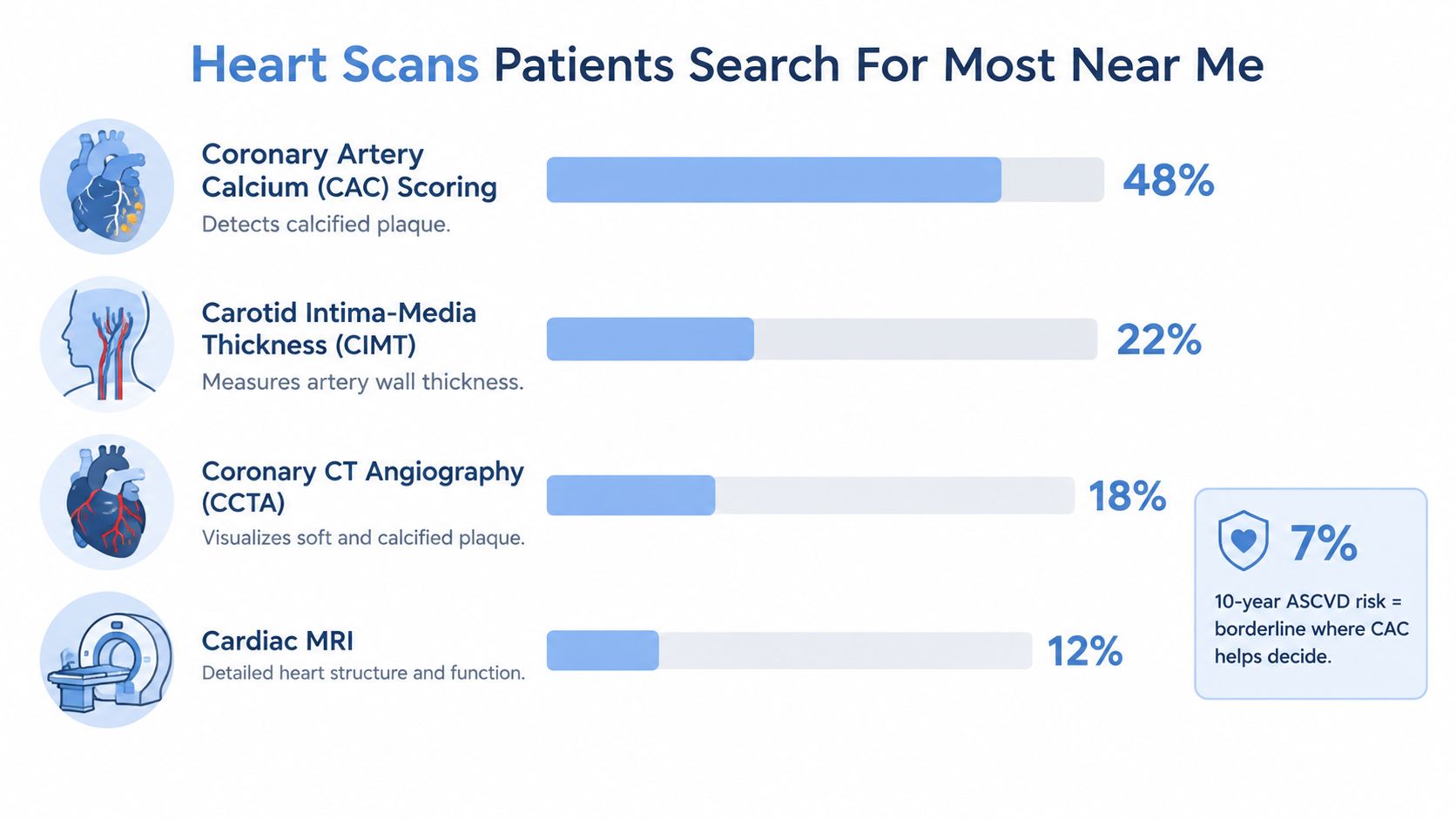
Four tests often dominate local search results: coronary artery calcium scoring, carotid intima-media thickness, coronary CT angiography, and cardiac MRI. They don't answer the same question, and marketing sometimes presents advanced imaging as a general-purpose heart check. The more reliable premise is straightforward: the right test for the right person at the right time is more valuable than location alone.
A strong encounter begins with an ASCVD risk discussion, considers CAC only when it can resolve a treatment decision, establishes a sensible follow-up cadence, and produces a written interpretation connected to cholesterol, blood pressure, sleep, exercise, and other prevention priorities. A number without that context is just a number.
Table of Contents
- Why You Are Searching for a Heart Scan Near Me
- What a CAC Score Measures and Means
- What to Expect When You Schedule a Heart Scan
- Matching the Right Test to Your Risk Profile
- How to Judge a Heart Scan Provider Beyond Location
- When a Heart Scan Is Not the Right Next Step
- Your Next Step Toward a Preventive Heart Plan
Why You Are Searching for a Heart Scan Near Me
The search usually begins with uncertainty
An executive with acceptable laboratory results may still hesitate about prevention. A parent or sibling developed heart disease early. Lipoprotein(a) is high, blood pressure is inconsistent, smoking exposure is part of the history, or the benefit of a statin remains unclear. Searching for a heart scan near me is understandable, but proximity does not determine whether imaging will change the plan.
CAC has a defined role in selected patients. The 2026 ACC/AHA dyslipidemia update recommends considering it for men aged 40 and older and women aged 45 and older with borderline or intermediate 10-year risk when the result could change treatment, according to the ACC/AHA dyslipidemia update. It is not a universal reassurance test or a replacement for a complete risk assessment.
Four scans, four different jobs
Coronary artery calcium scoring uses non-contrast cardiac CT to detect calcified plaque and refine risk in selected asymptomatic adults.
Carotid intima-media thickness, or CIMT, measures neck-artery wall thickness and provides structural vascular information, but it is not interchangeable with CAC.
Coronary CT angiography, or CCTA, uses contrast to show coronary anatomy, including calcified and non-calcified plaque, and fits diagnostic questions more than general screening.
Cardiac MRI answers questions about tissue characteristics and specific disease states. It is not a screening substitute for CAC.
The global cardiac imaging market is projected to grow from USD 11.9 billion in 2026 to USD 16.0 billion by 2031, a 6.1% projected CAGR, according to this cardiac imaging market analysis. Greater availability does not make every test appropriate.
Practical rule: Before recommending imaging, a provider should explain which prevention decision the result could change.
A useful visit may lead to CAC, a decision against imaging, ApoB or Lp(a) testing, blood-pressure treatment, or a different evaluation for symptoms. The provider should connect that choice to a written prevention plan, not deliver a scan result. The right question is not which center is closest. It is whether the test answers the decision in front of you.
What a CAC Score Measures and Means
A CAC scan is a non-contrast cardiac CT that measures calcified plaque in the coronary arteries. Results usually use the Agatston scoring system, the standard way to report coronary calcium burden. A report may also include volume or mass measurements, but prevention decisions generally begin with the Agatston score, its age, sex, and race percentile, and the patient's broader risk profile.
Calcium indicates atherosclerosis. It does not show every type of plaque. A score of zero means the scan detected no calcified coronary plaque. It does not exclude non-calcified plaque or remove inherited risk, high blood pressure, diabetes, smoking exposure, or an adverse ApoB or Lp(a) profile.
The 2018 ACC/AHA cholesterol guideline assigns CAC a focused role when the statin decision remains uncertain for asymptomatic adults with borderline or intermediate 10-year ASCVD risk, defined as 5% to less than 7.5% and 7.5% to less than 20%, respectively, according to the ACC/AHA cholesterol guideline.
The score is a treatment dial
| Agatston Score | Plaque Burden | Typical Response |
|---|---|---|
| 0 | No detectable calcified plaque | Risk may move downward in the right context. Continue managing risk factors, and consider repeat scoring in 3 to 7 years if treatment was deferred, consistent with updated guidance. |
| 1 to 99 | Low but measurable calcified plaque | Individualize statin and LDL-lowering decisions using age, risk enhancers, family history, and patient preferences. |
| 100 to 299 | Moderate plaque burden | The result generally supports more assertive prevention, including LDL reduction, blood-pressure control, and a systematic review of adherence. |
| 300 or higher | Extensive plaque burden | Treat the finding as a serious marker of established coronary atherosclerotic burden and consider aggressive prevention with specialist interpretation. |
The score must be interpreted with the rest of the patient's profile. A score of 100 Agatston units or higher, or a score at or above the 75th age, sex, and race percentile, can move risk upward and support more intensive prevention under the guideline framework. Aspirin requires its own bleeding-risk discussion. CAC alone does not justify aspirin for everyone.
CAC history also helps explain how the test fits prevention. A review of its development describes the progression of coronary calcium from a specialized research measure to an established prevention tool. A 2023 review reported pooled CAC prevalence of 52%, with a 95% confidence interval of 46% to 58%, across the studies it analyzed in this indexed review. In adults aged 30 to 45, one JACC study found any CAC in 21%, showing why age alone does not settle whether scanning is appropriate.
The practical question is whether the result will change treatment. A zero score may support a carefully monitored deferral in a suitable patient, while measurable calcium can strengthen the case for medication and closer risk-factor control. Neither result replaces clinical judgment.
What to Expect When You Schedule a Heart Scan
A useful CAC experience starts before the scan. The first step is confirming the indication. The clinician should review the ASCVD estimate, risk enhancers, family history, current treatment, and whether the result could alter the plan. Repeating an unnecessary scan isn't better prevention, and ordering CAC without deciding how each possible result would be handled creates avoidable confusion.
The operational sequence
Clarify the clinical question. The question might be whether statin therapy should begin, whether treatment intensity should increase, or whether a zero score could support a carefully monitored deferral.
Obtain physician-led interpretation. A self-pay imaging order can produce an image and a score, but the value comes from connecting that score to a prevention plan. A preventive cardiologist should review the result rather than leaving the patient to interpret an isolated report.
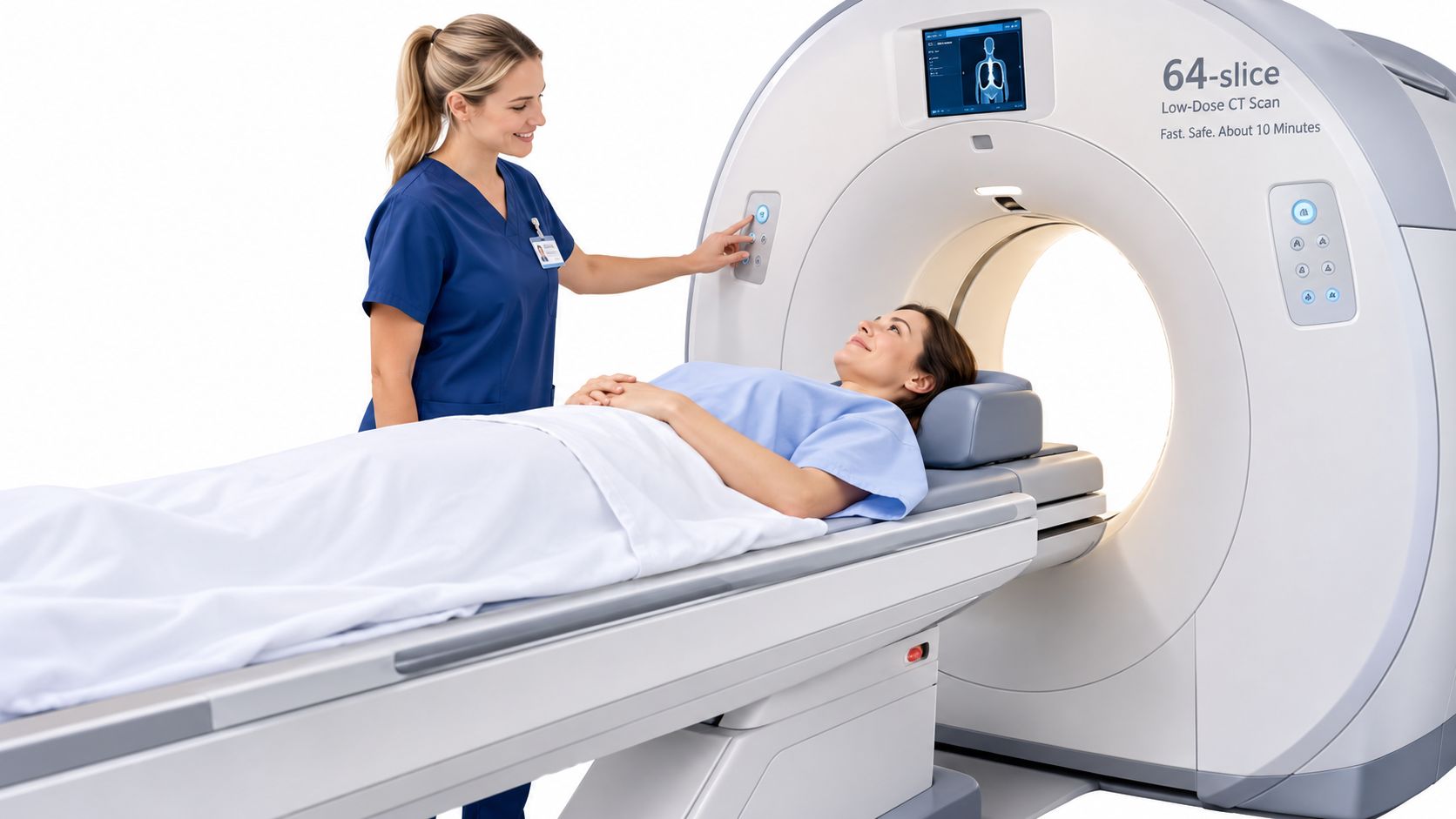
Verify the imaging protocol. A suitable center should use an accredited multidetector CT system, typically 64-slice or higher, a standardized CAC protocol, low-dose technique, and physician overread. Reproducible calibration matters if future scans are considered.
Arrive prepared for a simple procedure. CAC generally uses no contrast injection and usually requires no fasting or special preparation. The patient lies on the CT table while the scanner acquires cardiac images, often within a brief appointment.
Schedule the interpretation, not just the scan. A practical program should provide results within 24 to 72 hours, along with a written explanation and an update covering lipids, blood pressure, sleep, exercise, and risk reclassification.
The patient should also ask about incidental findings. CT images can reveal abnormalities outside the coronary arteries, and the provider needs a documented process for deciding which findings require follow-up and which do not.
Patient experience can affect follow-through. In a study comparing CT coronary calcium scoring with exercise ECG in primary care, almost half of CT-CCS patients rated the test “very easy” and “very satisfied,” while none of the exercise ECG patients rated it “very easy” and only 10% were “very satisfied,” as reported in this peer-reviewed patient-experience study. That doesn't make CAC the right test for every person, but it reinforces why a clear, efficient workflow matters.
Matching the Right Test to Your Risk Profile
The best test depends on the question, not the sophistication of the equipment. An asymptomatic adult asking whether hidden coronary atherosclerosis should change preventive treatment has a different need from a patient reporting exertional chest pressure.
A clinical-question framework
| Test | Clinical Question It Answers | Best-Fit Patient Profile |
|---|---|---|
| CAC scoring | Is there detectable calcified plaque in the coronary arteries, and could that finding change prevention intensity? | Selected asymptomatic adults, especially those aged 40 to 75 with borderline or intermediate risk and uncertainty about treatment. |
| CIMT | Is there evidence of structural thickening in the carotid artery wall? | Selected patients needing additional vascular context when a clinician believes the result will affect management. |
| ABI | Is there evidence of peripheral arterial disease or systemic atherosclerosis? | Selected asymptomatic adults without known PAD, CVD, or severe chronic kidney disease, within the scope described by the ABI screening recommendation. |
| Stress echocardiography | Does exercise or physiologic stress produce evidence of inducible ischemia? | Patients with symptoms or functional questions, not routine screening of healthy asymptomatic adults. |
| CCTA | What does the coronary anatomy show, including calcified and non-calcified plaque? | Symptomatic or diagnostically complex patients when anatomical visualization is needed. |
| ApoB, Lp(a), hs-CRP | Is there residual lipid-related or inflammatory risk not fully represented by standard LDL-C? | Patients with family history, premature disease, high triglycerides, or uncertainty about treatment intensity. |
CAC is commonly the first-line imaging consideration for an asymptomatic adult aged 40 to 75 with intermediate 10-year ASCVD risk when the treatment decision remains unresolved. CCTA and stress imaging answer different questions and shouldn't be folded into routine screening because they provide more images.
When biomarkers deserve priority
ApoB can refine risk when triglycerides are high or residual risk remains despite LDL-C and non-HDL-C treatment goals. Lp(a) is especially relevant when premature cardiovascular disease runs in the family or when the apparent LDL-C picture doesn't explain the clinical concern. The 2018 guideline identifies Lp(a) as a risk-enhancing factor at 50 mg/dL or 125 nmol/L, and its AHA summary describes approximately 1.4-fold higher long-term heart attack or stroke risk at that level, with 250 nmol/L associated with at least a two-fold higher long-term risk, as detailed in the AHA guideline summary.
When CAC is zero but family history or premature disease remains concerning, biomarkers may provide useful context rather than prompting an automatic dismissal of risk. More testing only helps when the clinician has defined how it will change treatment.
For patients seeking a physician-led evaluation in Delaware, the advanced testing services at Hosmane Longevity Center describe available cardiovascular imaging and biomarker assessment.
How to Judge a Heart Scan Provider Beyond Location
A convenient address is useful, but it's a weak quality signal by itself. A generic outpatient imaging center may offer CAC as a cash-pay add-on, while a preventive cardiology program should explain why the test is being considered, what each score would mean, and who will manage the next decision.
The clinical standards that matter
A named interpreting physician should be part of the process. The report should include the Agatston score and relevant percentile interpretation, with a preventive cardiologist available to explain how the result fits the patient's risk profile. A generic radiology read may be technically adequate yet clinically incomplete if no one connects it to statin therapy, blood pressure, or follow-up.
Timely consultation matters for executives with demanding schedules. The provider should offer a same-visit or within-72-hour discussion when possible, rather than requiring a second referral loop after the scan.
Integrated follow-on testing can prevent fragmentation. Depending on the clinical question, that may include ApoB, Lp(a), hs-CRP, CIMT, ABI, stress echocardiography, or CCTA. The presence of every test isn't the point. The question is whether the provider can choose among them rather than applying the same package to everyone.
Transparent pricing should identify what the patient receives. A quoted scan price may exclude physician interpretation, a written prevention plan, follow-up communication, or management recommendations. Those components should be clear before booking.
Technical and safety checks
The imaging center should be able to describe its CT accreditation, low-dose protocol, and quality assurance process. ACR or IAC accreditation can be part of that review. If repeat scoring is considered, the center should use reproducible Agatston calibration and document the protocol so future results can be interpreted fairly.
Incidental findings also deserve a process. Aortic abnormalities or pulmonary nodules may appear on cardiac CT images, and patients should know who reviews them, how clinically important findings are communicated, and which clinician coordinates follow-up.
A provider earns trust by explaining what the scan cannot answer, not only by advertising what it can detect.
Red flags include no physician consultation, pressure to purchase full-body imaging, bundled packages that stack CAC, CIMT, ABI, and unrelated scans without a stated clinical question, or concierge language without named board-certified preventive cardiology oversight. A Delaware patient considering an executive health program can review potential testing with the Hosmane Longevity Center clinical team and ask directly who interprets each test.
When a Heart Scan Is Not the Right Next Step
More imaging isn't automatically better medicine. CAC is intended for selected risk-reclassification decisions, not universal screening, and a scan can distract from a more important intervention when blood pressure, smoking, medication adherence, or diabetes prevention remains poorly addressed.
The 2018 ACC/AHA cholesterol guideline does not position CAC as a routine test for every adult. CAC is generally a poor next step for an adult under 40 without meaningful risk factors, for an adult over 75 already receiving optimal therapy when the result won't change management, or for anyone with active symptoms such as exertional chest pain, dyspnea, palpitations, or syncope. Symptoms require a diagnostic pathway, which may involve stress imaging, CCTA, or invasive evaluation depending on the presentation and clinical assessment.
A patient with chest discomfort shouldn't search for a screening scan and wait for a self-pay appointment. The clinical priority is prompt evaluation by an appropriate medical team.
Why package testing can mislead
An “executive” package that combines CAC, CIMT, ABI, full-body CT, and multiple unrelated tests in one afternoon may produce a large report without producing a coherent decision. Incidental findings can generate anxiety, repeat imaging, specialist referrals, and invasive workups that were never connected to the original risk question.
Access also has an equity dimension. Research has found that CAC use is uneven by region, income, and race, with higher utilization among White and higher-income populations and lower use among under-represented ethnic groups despite greater cardiovascular disease burden, as described in this study of CAC access and use. Availability near a patient's home doesn't guarantee affordability or appropriate access, particularly when insurance coverage for asymptomatic CAC remains inconsistent.
A scan should earn its place by changing management. It shouldn't be purchased simply because it is available.
The most valuable prevention plan may involve no imaging at all. Blood pressure control, statin adherence when indicated, smoking cessation, sleep treatment, exercise, and nutrition can matter more than adding another test. CAC is one data point inside that plan, not the plan itself.
Your Next Step Toward a Preventive Heart Plan
A high-demand schedule doesn't require a rushed decision. It requires a concise clinical summary and a defined sequence so the scan, if appropriate, is interpreted in context.
Prepare a one-page risk summary
Before a consultation, assemble:
- Blood pressure information: Include recent office readings and home or ambulatory measurements if available.
- Lipid details: Bring the complete lipid panel, plus ApoB and Lp(a) when already measured or when family history makes them relevant.
- Glucose status: Include fasting glucose or A1c results.
- Family history: Record which relatives had cardiovascular disease and whether disease appeared prematurely.
- Smoking history: Include current use, former use, and relevant exposure.
- Medication list: Include prescriptions, supplements, dose changes, and any previous intolerance.
This preparation allows the physician to calculate and interpret risk rather than starting with a scan request alone.
Choose the order of care
The next appointment may be a preventive cardiology consultation, CAC imaging, or both. For an asymptomatic adult with borderline or intermediate risk, the usual sequence is to establish the clinical question first, obtain CAC when the result could change treatment, and then review the score with a physician who can adjust the prevention plan.
A physician-led executive health program may coordinate imaging, advanced lipid testing, blood pressure monitoring, sleep assessment, exercise planning, and nutrition support. Information about the Hosmane Longevity Center executive health program describes this type of integrated preventive evaluation.
Bring questions that force clarity
The interpreting physician should be able to answer:
- Which CAC threshold would intensify lipid-lowering therapy?
- How should a zero score be interpreted alongside family history, ApoB, or Lp(a)?
- What does the scan show about calcified plaque, and what can't it show about non-calcified plaque?
- How will blood pressure, sleep, exercise, and medication adherence change after the result?
- What follow-up interval is appropriate, and what would trigger earlier reassessment?
- If symptoms develop, which diagnostic pathway replaces screening?
Prevention decisions succeed through follow-through, not through imaging alone. The value of a local heart scan depends on who reads it, how the result changes management, and whether the plan remains active over the next one to three years.
Hosmane Longevity Center offers physician-led preventive cardiology, CAC and other advanced cardiac testing, and interpretation tied to an individualized prevention plan for patients in Lewes, Wilmington, and surrounding regions. Visit Hosmane Longevity Center to schedule a consultation and determine whether a heart scan is the appropriate next step.