
A familiar version of this happens every week. A professional in the early 50s has no chest pain, exercises often enough to feel responsible, and has been told the cholesterol panel is “not bad.” The resting ECG is unremarkable. The annual physical doesn't produce urgency.
Then a coronary artery calcium scan shows established plaque.
That moment is where preventive cardiology becomes useful. Not because it promises certainty, and not because every asymptomatic adult needs every advanced test, but because standard office screening often stops one step before the questions that matter most. Is atherosclerosis already present? Is risk being underestimated by inherited lipoprotein biology? Is there silent vascular disease outside the heart? Which findings change treatment, and which add noise?
For executives and professionals in Delaware, southeastern Pennsylvania, and nearby Maryland, the challenge usually isn't motivation. It's signal-to-noise ratio. Time is limited. Testing has to be sequenced well, interpreted in context, and tied to decisions that are realistic inside a full work calendar.
Table of Contents
- What Preventive Cardiology Actually Solves for Busy Adults
- How Preventive Cardiology Became Its Own Discipline
- The Core Philosophy of Modern Heart Prevention
- Advanced Cardiac Testing and What Each Image Tells You
- Blood Biomarkers That Catch Risk Standard Panels Miss
- When Normal Risk Calculators Get It Wrong
- Building a Personalized Multidisciplinary Prevention Plan
- Common Misconceptions and Your Next Step
What Preventive Cardiology Actually Solves for Busy Adults
Consider a common scenario. A 52-year-old executive has no symptoms, an LDL-C of 118 mg/dL, a normal resting ECG, and nothing in the chart that creates obvious alarm. Then a coronary artery calcium scan returns a score of 187.
That result doesn't fit the reassuring story suggested by the routine visit. It shows that plaque is already present in the coronary arteries, even though the person feels well and standard screening looked acceptable. This is exactly the gap preventive cardiology addresses.
The problem isn't lack of data
Most busy adults already know some of their numbers. They track blood pressure, review cholesterol, try to exercise, and may even wear a device that estimates recovery or sleep. Useful information, but still incomplete.
Preventive cardiology goes one layer deeper by asking different questions:
- Is there silent plaque already present? CAC scoring can answer that directly.
- Is LDL-C telling the whole story? ApoB may reveal a higher burden of atherogenic particles than LDL-C suggests.
- Is there inherited risk hiding in plain sight? Lp(a) can explain premature heart disease even when standard cholesterol looks reasonable.
- Is vascular disease showing up outside the coronaries? ABI can uncover peripheral arterial disease or arterial stiffness.
What the discipline actually does
Preventive cardiology isn't a luxury add-on to a standard physical. It's the structured evaluation of subclinical atherosclerosis, lipoprotein-driven risk, and vascular dysfunction before a heart attack, stroke, or revascularization becomes the first unmistakable sign of disease.
Practical rule: A normal office workup can rule out some immediate problems. It often can't rule out silent atherosclerosis.
That distinction matters for adults between 40 and 65 who function at a high level and often assume that no symptoms means low risk. In practice, the most valuable second-layer assessment usually isn't “more testing” in a vague sense. It's targeted testing that answers a management question.
A good preventive approach also respects trade-offs. Not every person needs imaging first. Not every high biomarker requires medication intensification. Not every borderline result justifies repeat scanning. The discipline is useful because it organizes these choices rather than treating prevention as a loose collection of labs, apps, and generic lifestyle advice.
How Preventive Cardiology Became Its Own Discipline
Preventive cardiology didn't appear overnight. It developed over decades as cardiology moved from treating late consequences of vascular disease to detecting risk earlier and managing it more precisely.
A major starting point was the Framingham Heart Study, launched in 1948, which identified modifiable cardiovascular risk factors including hypercholesterolemia, hypertension, diabetes, and smoking. That work laid the foundation for modern risk scoring and primary prevention, and later statin trials transformed prevention into a treatment-centered discipline. The Scandinavian Simvastatin Survival Study in 1994 helped establish cholesterol management as a core preventive strategy by showing that lowering LDL-C reduced recurrent atherosclerotic events and ASCVD mortality. The American College of Cardiology later described preventive cardiology as a distinct subspecialty and noted that statins had been in clinical use since lovastatin entered the market in 1987 in its JACC review on preventive cardiology as a distinct subspecialty.
Why formal recognition mattered
Once risk scores became common, an unintended problem emerged. Many adults who later had events didn't look especially high risk beforehand. The older framework was useful, but incomplete. It estimated probability from population patterns. It couldn't directly see plaque.
That's why the field expanded beyond risk-factor counting into imaging, vascular testing, and lipid subfraction analysis. Asymptomatic adults needed a clinical home for questions that sit between primary care and interventional cardiology. Not “Are you having angina?” but “Are you building disease that deserves action now?”
What changed for patients
For a time-pressed adult, the creation of a distinct prevention-focused discipline means this work no longer has to be pieced together from disconnected visits. Risk modeling, advanced testing, and treatment planning can sit under one framework.
Prevention became its own field because standard screening was good at spotting some risk, but not good enough at finding the person who looked fine until the first event.
That shift matters most for people who are asymptomatic, functioning well, and busy enough that vague reassurance can persist for years.
The Core Philosophy of Modern Heart Prevention
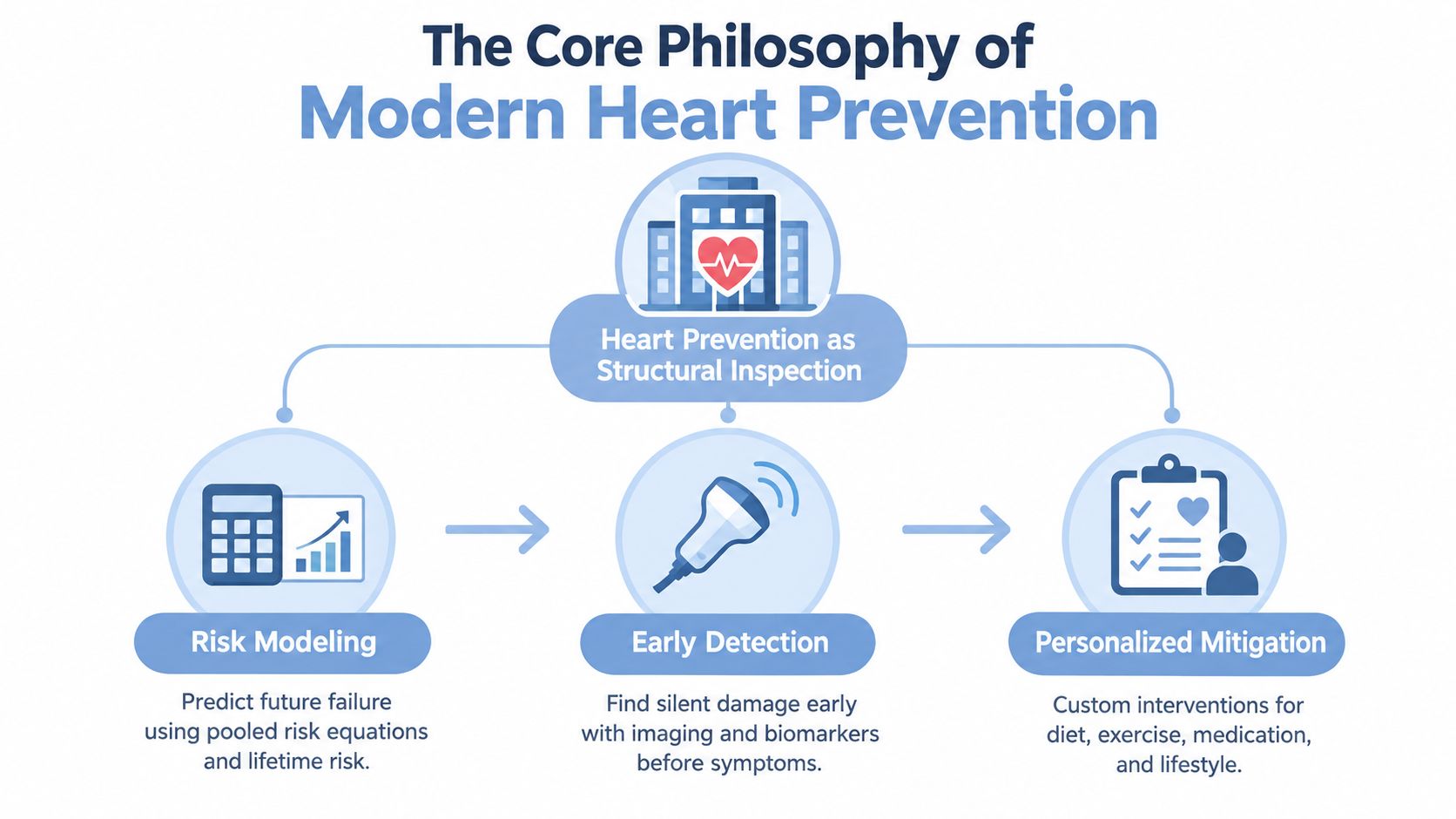
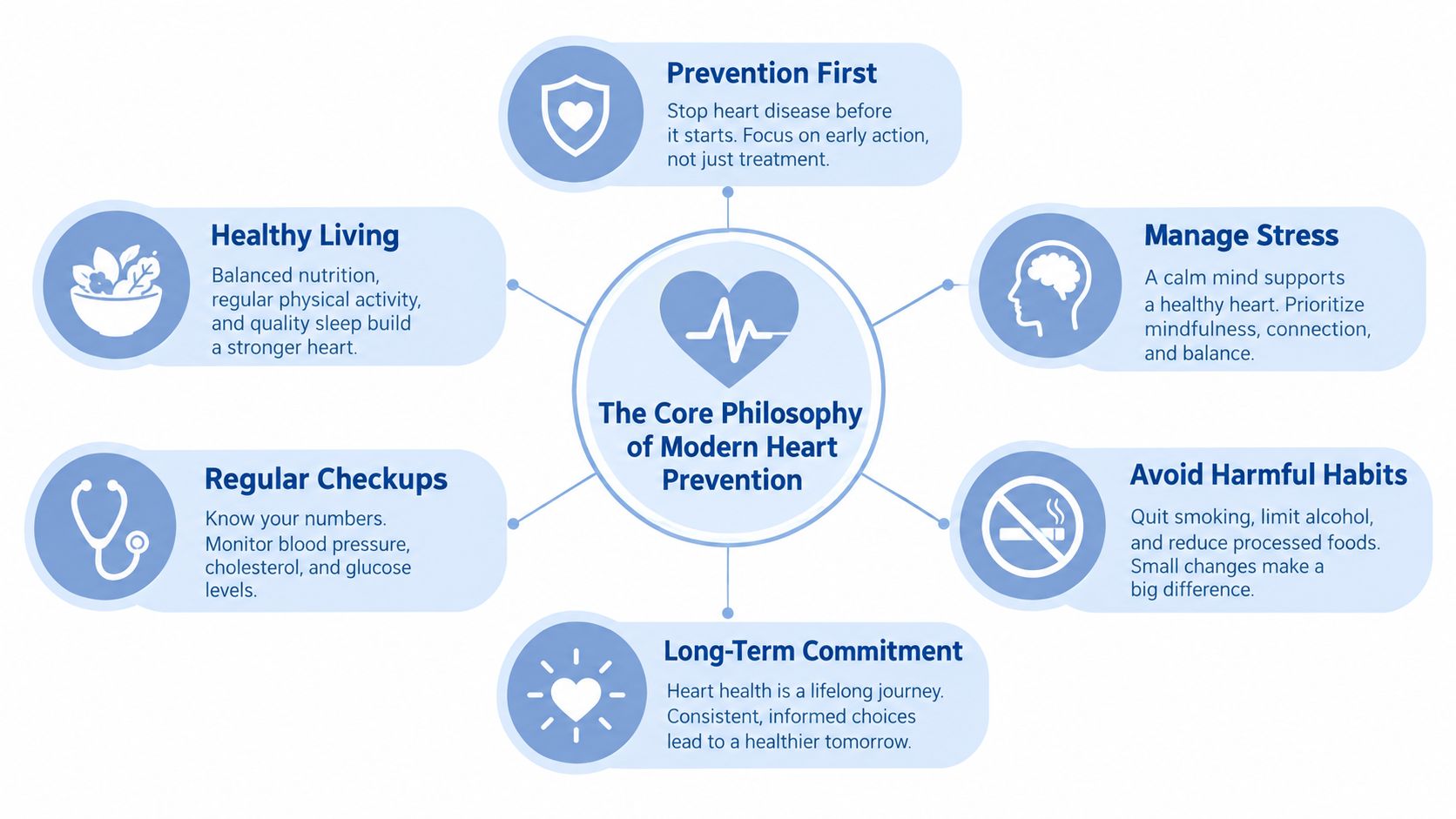
Modern prevention rests on three operational pillars. Risk modeling, early detection, and personalized mitigation.
A building engineer doesn't wait for a visible foundation crack before deciding whether reinforcement is needed. Heart prevention works the same way. The aim isn't to react dramatically after symptoms begin. It's to identify structural risk before an event forces the issue.
Risk modeling
Risk modeling uses validated tools to estimate the likelihood of a future event over a shorter and longer horizon. That estimate still matters. It frames pretest probability, helps prioritize next steps, and keeps testing from becoming random.
Its limitation is equally important. A calculator estimates risk. It doesn't measure plaque, inherited particle burden, or arterial disease already present.
Early detection
Early detection answers what the calculator can't. It looks for evidence of disease that is already there but still silent.
That may involve:
- Anatomic plaque assessment with CAC
- Particle-based lipid assessment with ApoB
- Genetic risk refinement with Lp(a)
- Peripheral vascular assessment with ABI
A normal symptom review doesn't replace those tools. It addresses a different question.
Personalized mitigation
Prevention either becomes practical or falls apart. Findings have to translate into a coherent plan. If CAC is increased, the lipid strategy may need to become more intensive. If ApoB is discordant with LDL-C, treatment shouldn't stop at “the LDL looks okay.” If ABI is abnormal, the conversation widens beyond the heart to systemic vascular disease.
The goal isn't to produce more numbers. The goal is to lower the probability that the first unmistakable sign of disease is a crisis.
This philosophy rejects one-size-fits-all prevention. It treats lifetime exposure, plaque burden, and lipoprotein biology as clinically meaningful, even when a patient still feels perfectly well.
Advanced Cardiac Testing and What Each Image Tells You
Advanced testing only helps when each test answers a specific question. In asymptomatic adults, the useful issue isn't whether a test sounds advanced. It's whether the result changes management.
Coronary artery calcium and what it adds
A coronary artery calcium scan is a non-contrast CT that measures calcified plaque burden in the coronary arteries. It does not measure blockage severity directly, and it doesn't evaluate symptoms in the way a stress test does. Its value is risk reclassification.
Major guidelines support selective CAC use in adults at borderline or intermediate risk, especially when the result will affect statin decisions. A CAC score of zero is consistently associated with very low future event rates, while the presence of CAC has been associated with substantially higher risks of major adverse cardiovascular events, myocardial infarction, all-cause mortality, and revascularization over 8.6 years in a large observational analysis summarized in the ACC/AHA updated lipid guideline press release.
ABI, CIMT, and symptom-driven tests
Ankle-brachial index, or ABI, is simpler than most patients expect. It compares blood pressure at the ankle with blood pressure in the arm. An ABI of 0.90 or lower confirms lower-extremity peripheral artery disease. Values above 0.90 with ongoing suspicion may justify post-exercise ABI or other noninvasive evaluation, and values above 1.4 often reflect vessel stiffening rather than healthy flow, as summarized in the AAFP review of peripheral artery disease diagnosis with ABI.
CIMT can add vascular context, but it's more selective in routine prevention practice. Stress echocardiography and coronary CT angiography serve a different role. They're usually better reserved for symptom evaluation or more specific diagnostic questions rather than broad screening in everyone who feels well.
Advanced Cardiac Imaging at a Glance
| Test | What It Measures | Concerning Result | Guideline Support | Radiation |
|---|---|---|---|---|
| CAC | Calcified coronary plaque burden | Presence of CAC, especially higher burden relative to age and context | Supported selectively for borderline or intermediate risk when it changes management | Yes |
| CIMT | Carotid arterial wall structure | Abnormal thickening or plaque on carotid imaging | Selective use, less central than CAC in most current prevention pathways | No |
| ABI | Peripheral perfusion and evidence of PAD | ABI ≤0.90 or abnormally high values suggesting stiff vessels | Recognized as a risk-enhancing vascular finding | No |
| Stress echo or CCTA | Inducible ischemia or coronary anatomy when clinically indicated | Abnormal ischemia findings or anatomic disease | Best used when symptoms or specific diagnostic questions justify testing | Varies by test |
For readers considering a broader review of imaging options, this overview of advanced cardiovascular imaging is a useful companion.
The practical sequence matters more than the menu. In most asymptomatic adults, CAC or ABI is often more informative than jumping straight to a symptom-oriented test.
Blood Biomarkers That Catch Risk Standard Panels Miss
A standard lipid panel remains useful. It just isn't complete.
The two blood markers that most often change the conversation in preventive cardiology are Lp(a) and ApoB. They answer different questions, and both can expose risk that LDL-C alone misses.
Lp(a) and inherited risk
Lipoprotein(a) is largely genetically determined. It can explain why a family has clustered premature cardiovascular disease despite ordinary-looking cholesterol numbers. The 2018 ACC/AHA cholesterol guideline treats Lp(a) of 50 mg/dL or higher, or 125 nmol/L or higher, as a risk-enhancing factor, and more recent ACC/AHA-related summaries describe measuring Lp(a) at least once in all adults for ASCVD risk assessment in selected guidance pathways, as outlined in the AHA guideline publication on cholesterol management and Lp(a).
For an executive-health audience, that matters because inherited risk won't improve just because someone exercises hard, travels often for work, or keeps body weight in a reasonable range.
ApoB and residual particle burden
ApoB measures the number of atherogenic particles, not just the cholesterol carried within them. The ACC/AHA framework identifies ApoB of 130 mg/dL or higher as a risk-enhancing factor and notes that measurement is particularly indicated when triglycerides are 200 mg/dL or higher because ApoB can reflect total particle burden better than LDL-C concentration alone, according to the AHA scientific statement on risk-enhancing biomarkers including ApoB and Lp(a).
That's why a patient can hear “your LDL isn't that high” and still carry a particle pattern that deserves more aggressive prevention.
What's strong evidence and what's secondary
The strongest day-to-day clinical utility sits with Lp(a) and ApoB. Other advanced lipid and inflammatory markers can help in selected cases, but they shouldn't be treated as automatic add-ons for everyone.
A practical sequence usually looks like this:
- Start with Lp(a) for inherited baseline risk that won't fluctuate much over time.
- Add ApoB when triglycerides are high, metabolic risk is present, or LDL-C and clinical context don't match.
- Use the result to change decisions, not just to accumulate more data.
For readers who want a focused explanation of particle-based testing, this guide to the ApoB test goes deeper.
Insurance coverage varies considerably by plan and indication. That's one reason efficient sequencing matters. The best biomarker panel is the one that answers a treatment question, not the one with the longest list of analytes.
When Normal Risk Calculators Get It Wrong
A low estimated risk score is useful. It isn't the final word.
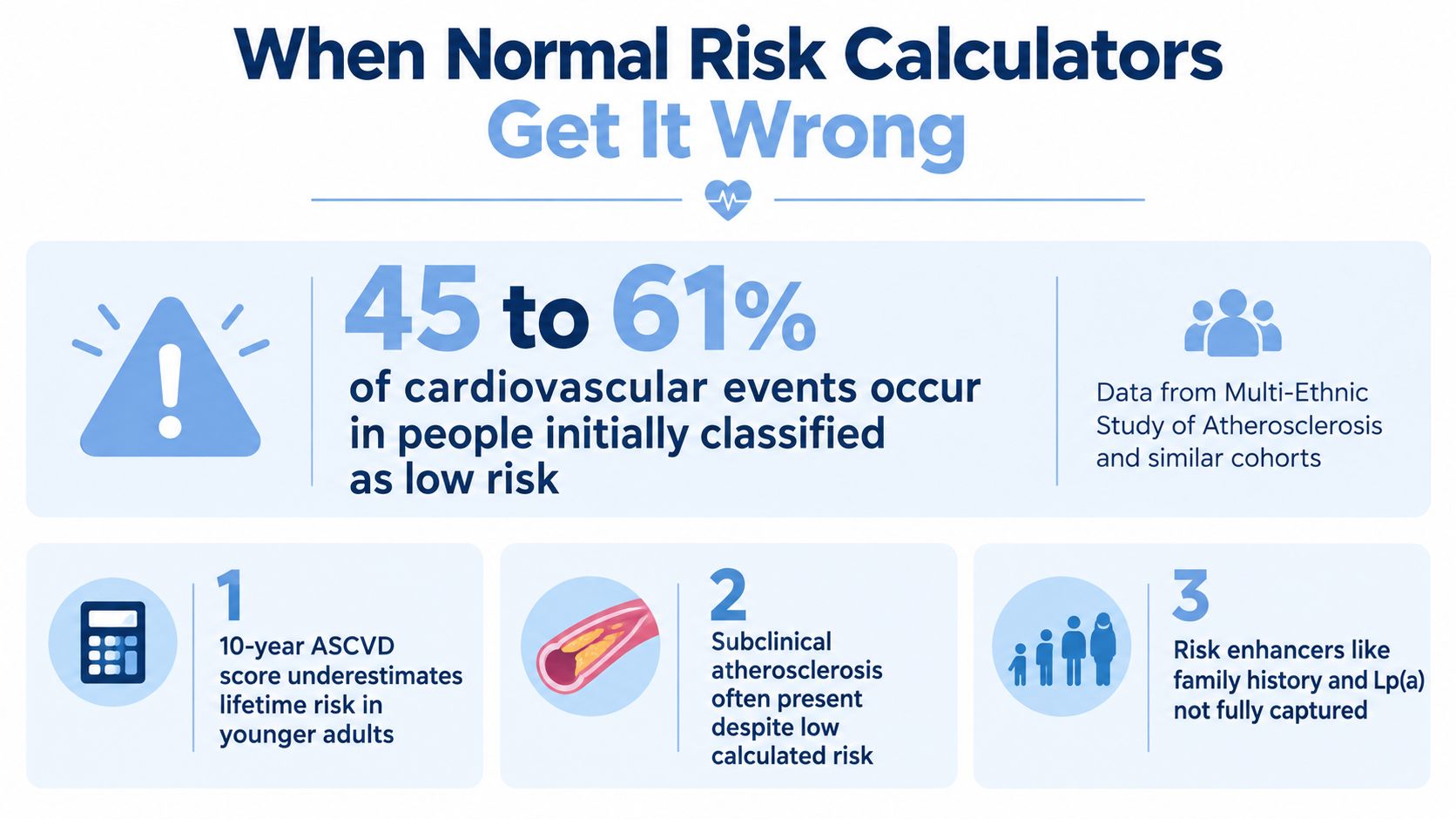
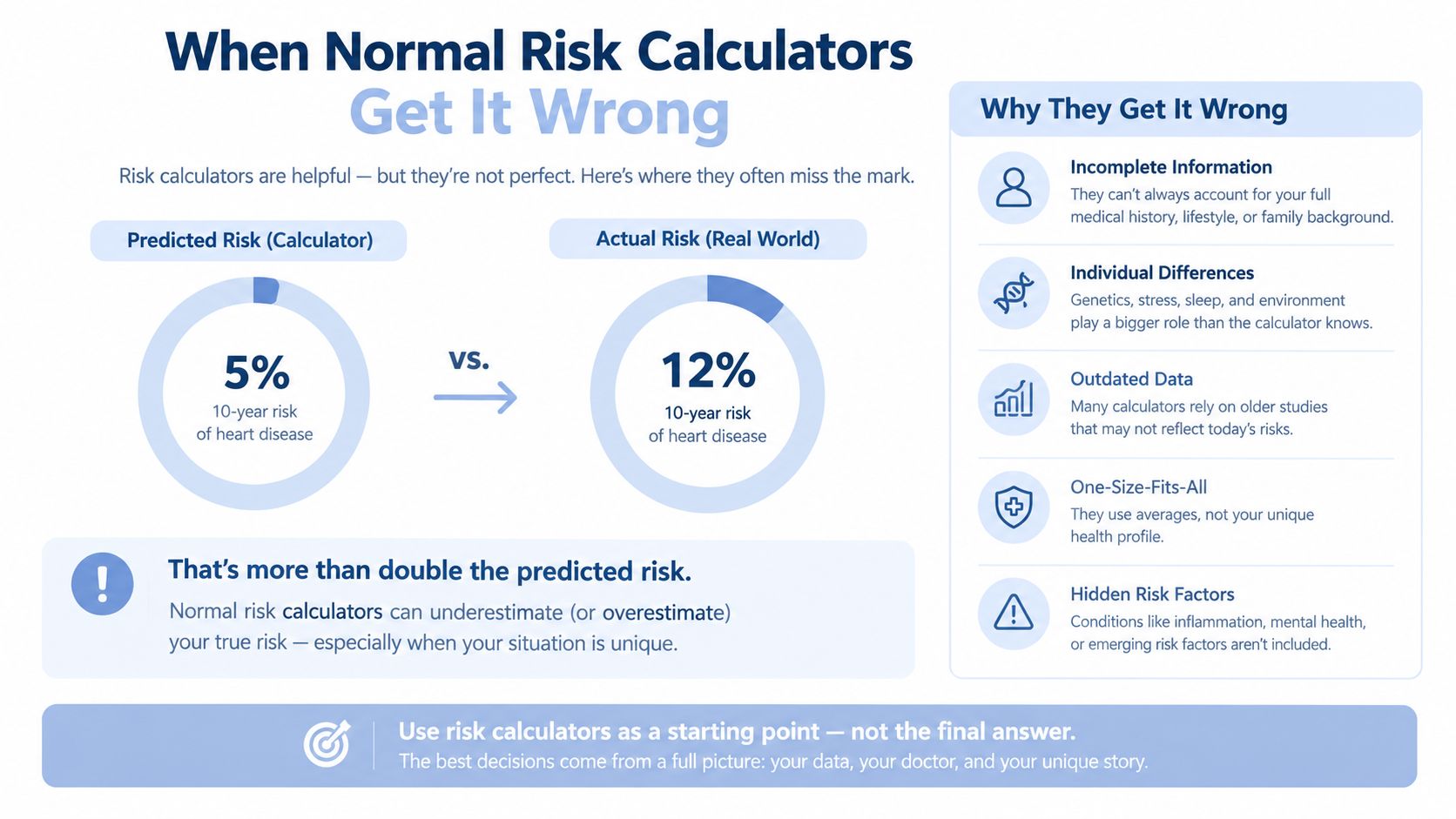
A Mount Sinai-led analysis reported that about 45% of patients who later had a heart attack would not have been recommended for preventive therapy or further testing under ASCVD-based guidelines, and this rose to 61% using the newer PREVENT model, according to the ScienceDaily summary of the Mount Sinai analysis on missed heart attack risk. That finding captures a problem many patients intuitively sense. Population equations can miss the person with hidden plaque, inherited lipoprotein risk, or silent vascular disease.
Why calculators miss real people
Risk equations are built from averages. They're helpful at a population level, but they don't directly measure the biologic details that often drive individual outcomes.
Three blind spots show up repeatedly:
- Subclinical plaque that exists before symptoms
- Inherited risk markers such as high Lp(a)
- Residual particle burden or vascular disease not obvious from standard screening
What a second-layer assessment changes
Selective advanced testing earns its place. If a person's estimated risk looks modest but the clinical story feels incomplete, a second layer can sharpen the picture.
That second layer may include:
- CAC to identify coronary plaque already present
- Lp(a) to uncover genetically mediated risk
- ABI to detect peripheral arterial disease or arterial stiffness
“Low calculated risk” should often mean “pause and verify,” not “case closed.”
This doesn't mean every low-risk score is wrong. It means some are falsely reassuring, especially in adults with suggestive family patterns, metabolic risk, or discordant lipid findings. Preventive cardiology exists to sort those patients more carefully, without drifting into indiscriminate testing.
Building a Personalized Multidisciplinary Prevention Plan
Once risk is mapped, the work begins. The strongest prevention plans are not built around a one-time test result. They're built around a repeatable care process that fits normal life.
What a practical team looks like
A prevention plan often works best when several roles are coordinated instead of operating in parallel:
- Preventive cardiologist for risk interpretation, medication decisions, and follow-through on imaging or biomarker findings
- Registered dietitian for a sustainable eating pattern adapted to travel, business meals, and cardiometabolic goals
- Exercise or physical therapy support for a program that reflects baseline fitness, orthopedic limits, and work schedule
- Behavioral or coaching support for sleep, stress, and adherence when logistics become the barrier
This model matters because prevention usually fails at the handoff points. The scan gets done, but no one translates it into a practical food strategy. The lipid marker is high, but exercise remains generic. The statin is prescribed, but nobody checks whether the treatment intensity matches the plaque burden.
How an efficient first year can look
For a busy adult, the right cadence is usually deliberate rather than frequent. One thorough intake can be far more effective than scattered appointments over many months.
A realistic sequence often includes:
- Initial consultation and testing plan based on symptoms, family history, current labs, and baseline risk
- Targeted imaging or vascular testing when the expected result could change management
- Focused follow-up to review findings and decide what is worth treating now versus monitoring
- Repeat biomarker assessment when medication or lifestyle changes should produce a measurable shift
One physician-led option in Delaware is Hosmane Longevity Center, where Dr. Vinay Hosmane integrates advanced cardiac testing, biomarker review, and executive health planning under a single prevention-focused framework. Testing is available to non-members as well as participants in an executive health program.
What changes after the testing
The best plans are specific. If plaque is present, lipid-lowering intensity may need to increase. If ApoB remains high, “acceptable LDL” may no longer be a convincing endpoint. If ABI suggests vascular disease, treatment moves beyond cholesterol alone toward broader vascular risk reduction.
For readers evaluating how a structured program can fit into a demanding schedule, this overview of executive health programs is a useful starting point.
A prevention plan should reduce ambiguity. If testing doesn't clarify what to do next, the problem usually isn't the patient. It's the workflow.
Coordination with the primary physician remains important. Good preventive cardiology should reduce fragmentation, not add another isolated layer of care.
Common Misconceptions and Your Next Step
One objection is cost. Another is overuse. A third is the idea that a statin alone solves the whole problem. All three deserve a calm answer.
Cost and overuse are both real concerns
Advanced testing should never become reflexive screening for everyone who happens to be curious about longevity. The right use case is narrower than that. It's most defensible when standard assessment leaves uncertainty, when family or lipid history suggests hidden risk, or when a result would clearly change treatment.
That distinction matters because overtesting creates noise. But undertesting creates a different problem. It leaves asymptomatic, higher-risk adults with false reassurance and generic advice.
Why “just give me a statin” is often incomplete
Statins remain a cornerstone of cardiovascular prevention. That isn't in question. What's incomplete is the idea that the prescription alone tells the whole story.
A statin doesn't reveal whether plaque is already present. It doesn't identify high Lp(a). It doesn't detect peripheral arterial disease. And it doesn't solve the practical barriers that usually determine whether prevention works over time, including diet quality, exercise structure, sleep, stress load, and adherence.
Fear of finding something
This is understandable, especially in people who feel well and have spent years assuming the basics were enough. But ignored risk doesn't become safer because it stays unnamed.
Cardiovascular prevention remains globally important because the disease burden is still enormous. The World Heart Federation reports that about 20.5 million people die from cardiovascular disease each year, close to one-third of all deaths worldwide. More than four out of five of these deaths are due to heart attacks and strokes, and one-third occur before age 70. A separate analysis using Global Burden of Disease 2021 data found that from 1990 to 2021, the absolute number of prevalent ASCVD cases increased by 115.6%, ASCVD mortality rose by 63.9%, and ASCVD DALYs increased by 56.6%, even though age-standardized rates generally declined, as summarized in the Global Heart Journal review of the global burden of cardiovascular disease.
The point isn't alarm. It's clarity. A normal physical is good. A thoughtful second-layer assessment is sometimes better. Education can guide the decision, but individualized advice should come from a clinician who can place the findings in context.
Hosmane Longevity Center offers physician-led preventive cardiology, advanced cardiac testing, and executive health evaluation designed for adults who want a clearer view of hidden cardiovascular risk before symptoms appear. Dr. Vinay Hosmane and the clinical team help patients sequence tests such as CAC, ApoB, Lp(a), and ABI into a practical plan that fits real schedules. To explore whether that kind of baseline assessment makes sense, visit Hosmane Longevity Center.