
A stress echocardiogram can cost anywhere from $463 to $3,230 in median hospital stress-test pricing, depending on payer and setting, while an office-based cash-pay model may provide a clearly defined single fee. The right price, however, depends first on whether the test is clinically appropriate and exactly what the quoted package includes.
Why do executives often pay more for a heart test without receiving more useful information? The answer usually lies less in the ultrasound itself than in clinical need, site of service, billing structure, and interpretation.
Stress echocardiography combines ultrasound imaging with exercise or medication-induced cardiac stress. It can help answer a focused question about inducible ischemia or exercise-related cardiac function, but it isn't automatically a better preventive test just because it is more thorough or more expensive. For adults in Delaware, southeastern Pennsylvania, and Maryland, the most useful cost discussion begins before scheduling, with the question: What decision will this test change?
Table of Contents
- Why Cost Comparison Starts With Clinical Need
- Decoding the Billing Codes and Fees
- Hospital Outpatient Versus Office-Based Testing
- The Hidden Costs of Indiscriminate Testing
- Insurance Coverage and Medicare Rules
- Questions to Ask Before Scheduling
- The Value of Physician-Led Preventive Care
Why Cost Comparison Starts With Clinical Need
A stress echocardiogram isn't a commodity like a standard office supply. Its value depends on the clinical question, the quality of the images, the supervision of the stress portion, and the physician's interpretation. A low price for an unnecessary test is still wasted spending, while a higher bundled price may be reasonable when it answers an important question and produces an actionable plan.
The first distinction is between diagnostic testing and screening. A person with exertional chest discomfort, unexplained breathlessness, a concerning baseline evaluation, or a meaningful risk profile may need testing to investigate a specific possibility. An asymptomatic, low-risk adult seeking reassurance may not benefit from stress imaging at all. History, examination, baseline ECG, risk estimation, exercise capacity, and prior findings should shape the decision.
Family history can also change the conversation, but it doesn't automatically dictate a stress echo. A focused review of family history and heart disease screening can help clarify whether the appropriate next step is risk assessment, laboratory evaluation, imaging, or no additional testing.
The price range reflects the payment system
A cross-sectional analysis of publicly available prices at 20 highly ranked U.S. hospitals found median echocardiogram prices ranging from $204 to $2,588, while median stress-test prices ranged from $463 to $3,230. Within individual hospitals, payer-specific prices also differed, with interquartile ranges of $470 to $3,022 for echocardiography and $776 to $3,473 for stress tests (peer-reviewed pricing analysis).
Those figures describe separate echocardiography and stress-test pricing rather than every component of a stress echocardiogram. They still show why “stress echocardiography cost” isn't one nationally fixed amount. The final responsibility can depend on the physician office, independent diagnostic facility, or hospital outpatient department, as well as deductible status, coinsurance, negotiated rates, and whether technical and professional services are combined.
Clinical rule: The most economical stress echocardiogram is the one that answers the right question at the right site of care, not necessarily the one with the lowest advertised line item.
Why appropriateness protects finances
Current utilization guidance places emphasis on symptoms, risk profile, prior findings, and the likelihood that a result will change management. In an asymptomatic person, indiscriminate testing can produce an abnormal or inconclusive result that leads to further imaging, consultation, anxiety, or invasive evaluation.
That is why a preventive strategy shouldn't equate more testing with better prevention. A clinician-led assessment can determine whether stress echocardiography belongs in the plan, whether another test is more suitable, or whether the most valuable action is risk-factor treatment and follow-up.
Decoding the Billing Codes and Fees
A quoted “stress echo” fee can describe several different billing arrangements. The central question is whether the amount covers only ultrasound acquisition and interpretation or also includes exercise supervision, ECG monitoring, facility resources, contrast, and a consultation.
Two common codes help explain the distinction. CPT 93350 reports stress transthoracic echocardiography with imaging, interpretation, and report. CPT 93351 includes the stress echo along with continuous ECG monitoring and physician supervision when the same physician provides that work. The exact claim depends on who performs each component and where the service occurs.
For readers who want a plain-language overview of the coding structure, these cardiovascular stress test code tips can provide additional administrative context. A billing reference shouldn't replace a written estimate, because a code alone doesn't reveal every downstream facility or consultation charge.
Technical and professional components
Medicare fee-schedule data for the 2026 stress transthoracic echocardiography benchmark show approximately $186.15 for the global service, including about $118.64 for the technical component and $67.51 for the professional component.
| Component | What it generally represents |
|---|---|
| Technical | Equipment, image acquisition, sonographer time, and related testing resources |
| Professional | Physician supervision where applicable, interpretation, and report generation |
| Global | Technical and professional work billed together by one entity |
These figures are national benchmarks, not guaranteed patient prices. Geographic practice-cost indices, contracts, payer rules, and the place of service can change the allowed amount. A hospital outpatient department may also add a facility component that isn't represented by a single professional CPT line.
What a complete quote should say
A transparent estimate should identify whether it includes:
- Exercise or pharmacologic stress: Treadmill supervision or medication-induced stress, if applicable.
- Ultrasound acquisition: Sonographer time, equipment, image storage, and required imaging.
- ECG monitoring: Continuous monitoring and physician supervision when included.
- Interpretation: Cardiologist review, formal report, and explanation of findings.
- Additional charges: Contrast agent, pharmacologic agent, consultation, or facility fee.
The patient should request the exact code or codes, the site-of-service designation, and the inclusion and exclusion rules. A professional fee can look attractive until a separate technical or facility charge arrives.
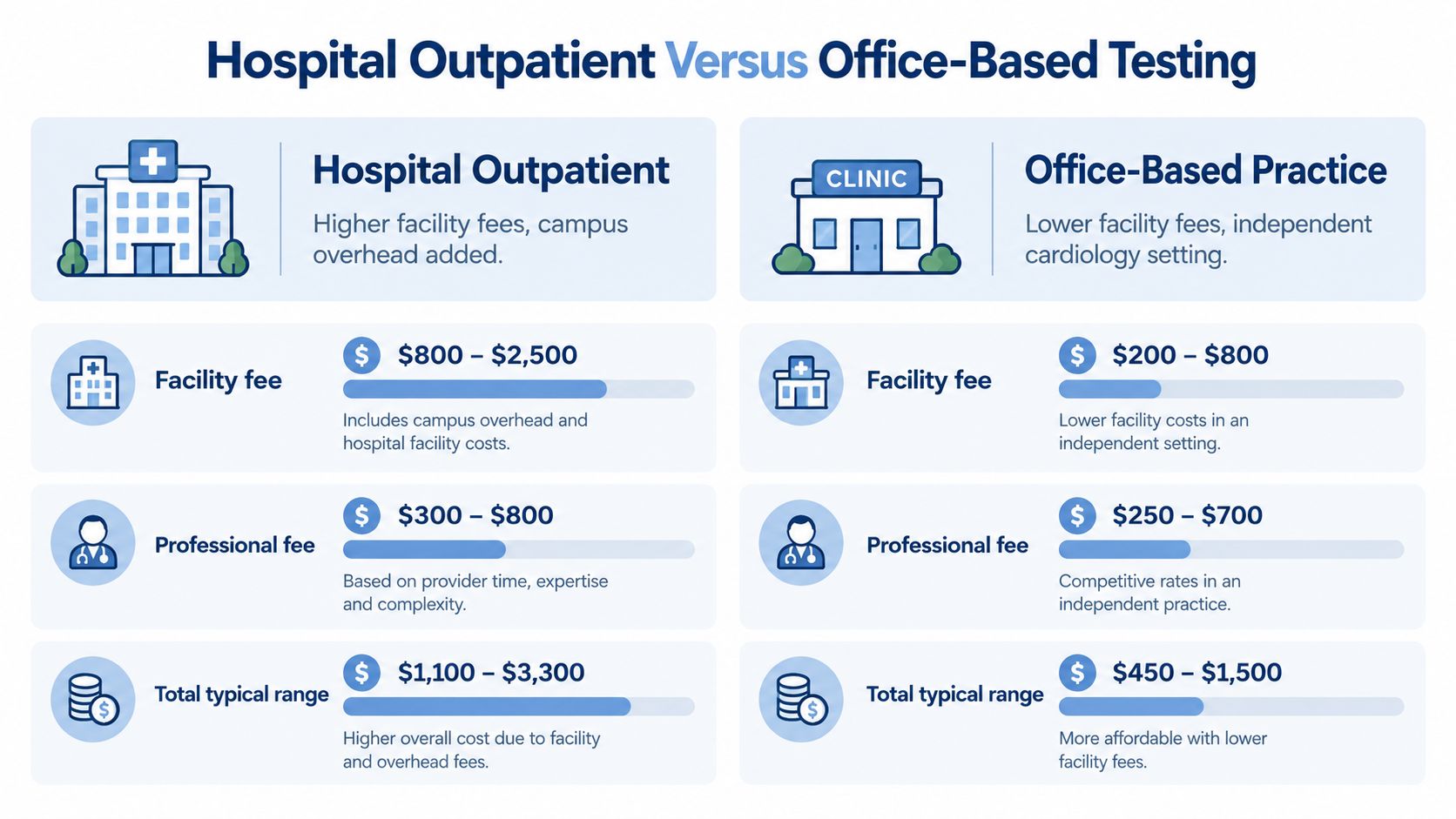
Hospital Outpatient Versus Office-Based Testing
The same clinical test can carry a very different financial experience depending on where it occurs. Hospital outpatient departments may involve separate facility and professional billing, while an independent cardiology office may consolidate equipment, sonography, interpretation, and reporting into one package.
The difference isn't about comfort or convenience. A hospital's campus infrastructure, facility billing system, and payer contract can influence the final amount even when the physician performs a similar clinical examination. A private office may have fewer billing layers and can often state exactly what a cash-pay fee includes before the appointment.
A Harvard Health summary of 2022 research reported a 10-fold difference in median echocardiogram prices across 20 leading U.S. hospitals. It also noted that, at one hospital, the negotiated price of a stress test varied fivefold by commercial insurer, while approximately 20% of the hospitals reviewed didn't provide usable pricing information (Harvard Health pricing summary).
Side-by-side decision factors
| Feature | Hospital Outpatient | Office-Based Practice |
|---|---|---|
| Facility billing | May generate a separate facility charge | Often consolidated into a global or bundled fee |
| Professional interpretation | May be billed separately | May be included in the quoted package |
| Price visibility | Can depend on insurer and hospital department | Cash-pay pricing may be stated in advance |
| Administrative path | Often involves scheduling, authorization, and multiple billing offices | Usually coordinated through one practice |
| Clinical context | Interpretation may occur separately from the consultation | Testing and physician review may be coordinated |
| Best comparison method | Request the full episode estimate | Confirm every included service and any exclusions |
The convenience question
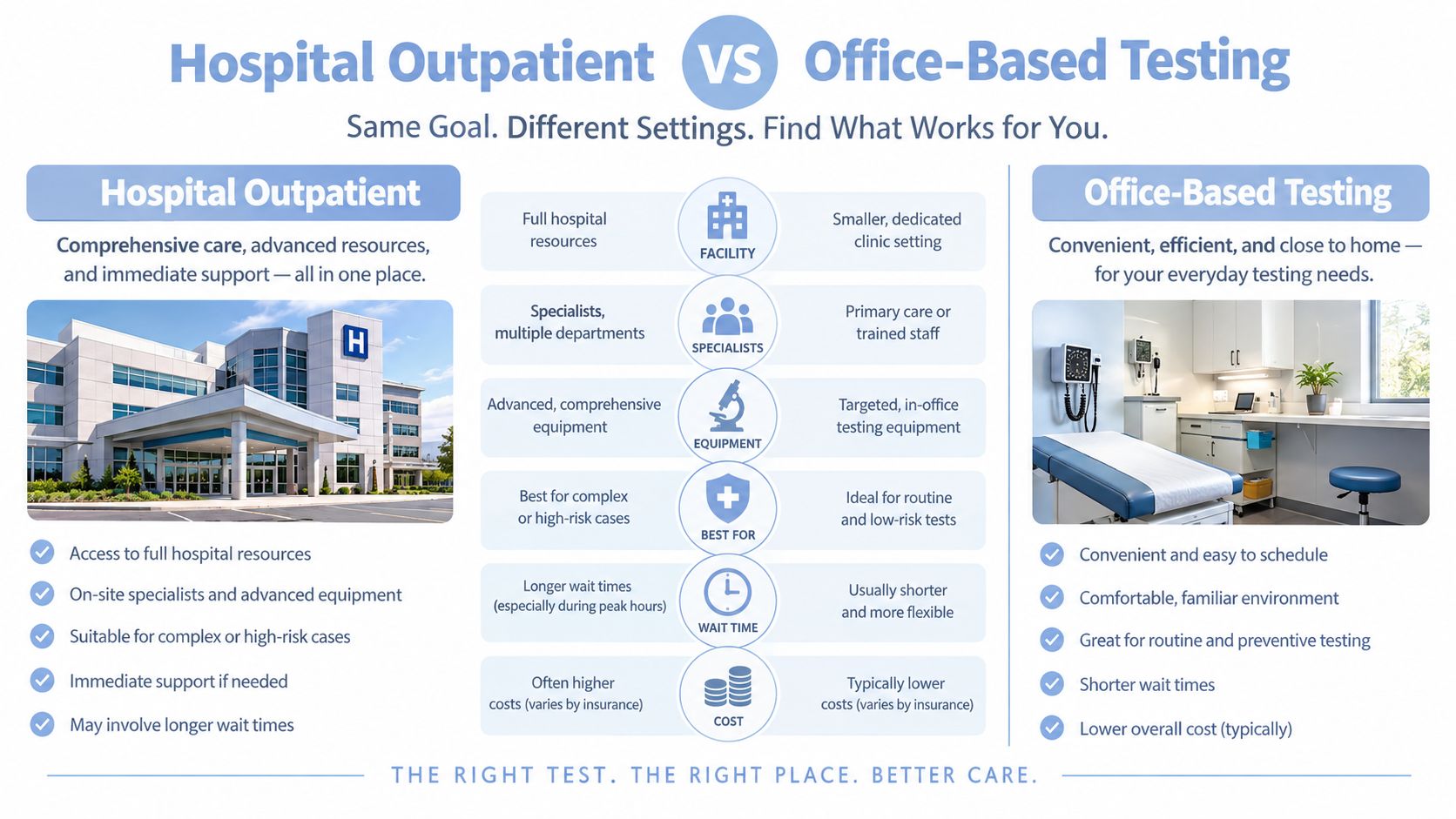
Hospital systems can be appropriate when a patient needs resources that an office setting doesn't provide. Office-based testing may be practical when the patient is stable and the test can be safely completed in an outpatient cardiology environment. The decision should follow clinical need rather than a blanket preference for one setting.
For Delaware patients, the important question is whether the office has appropriate equipment, trained cardiovascular sonography staff, physician oversight, emergency protocols, and a clear process for communicating results. A lower facility burden is useful only when clinical quality and interpretation remain strong.
A bundled fee is meaningful only when the bundle is written down.
Patients evaluating advanced cardiovascular testing options should ask whether the service is available to anyone or restricted to a specific executive health program. Testing can be appropriate for an individual appointment even when a patient doesn't enroll in a broader program.
The Hidden Costs of Indiscriminate Testing
A higher price doesn't guarantee higher clinical value. For a low-risk, asymptomatic adult, the financial exposure may begin with the initial test and continue through follow-up imaging, specialist visits, repeat testing, and procedures triggered by an uncertain finding.
Stress echocardiography can be valuable when a clinician needs to evaluate a focused question. It becomes less defensible when ordered as a routine “full checkup” without a symptom, risk feature, abnormal baseline evaluation, or management decision attached to the result.
False positives create a decision cascade
A false-positive or equivocal result doesn't mean the original test was performed incorrectly. It means the finding may not represent clinically important disease, yet it can still require clarification. That clarification may involve another imaging study, additional consultation, temporary activity restrictions, or invasive evaluation.
For a high-income adult, the cost isn't limited to the invoice. Time away from work, travel between facilities, uncertainty before follow-up, and the risk of fragmented interpretations can also matter. A test that doesn't change management may consume substantial resources without improving the care plan.

What appropriateness criteria show
ACC/AHA appropriateness criteria evaluated 51 indications for stress echocardiography. 22 were rated appropriate, 10 uncertain, and 19 inappropriate, with routine follow-up of asymptomatic or stable patients among the scenarios requiring appropriateness review (ACC/AHA appropriateness criteria).
The criteria use a 1-to-9 scale. Scores of 7 to 9 indicate that a test is generally acceptable and reasonable, while scores of 1 to 3 indicate that it is generally not acceptable or reasonable. These standards don't replace individualized judgment, but they provide a disciplined way to ask whether the test has a clear purpose.
A practical decision framework includes:
- Define the question. Is the concern ischemia, exercise tolerance, cardiac function, or another issue?
- Review the baseline information. Symptoms, examination, ECG, risk factors, and prior imaging matter.
- Estimate the management impact. What would change if the result were normal, abnormal, or inconclusive?
- Discuss alternatives. Another test, observation, risk-factor treatment, or specialist review may be more suitable.
The financially responsible choice is often the test that narrows uncertainty without creating unnecessary uncertainty afterward.
Insurance Coverage and Medicare Rules
Insurance changes the meaning of a quoted price. A hospital's published charge isn't the same as the negotiated amount, and the negotiated amount isn't necessarily the patient's responsibility. Deductibles, coinsurance, plan design, site-of-service rules, authorization requirements, and separate professional billing can all affect the final statement.
For covered medically necessary diagnostic testing under Medicare Part B, beneficiaries commonly owe 20% of the Medicare-approved amount after meeting the applicable deductible. The approved amount isn't the same as an undiscounted hospital list price, and supplemental coverage may change the patient's responsibility.
How to read the estimate
Before scheduling, the patient should request a written answer to these questions:
- Is the test covered? Ask whether the plan recognizes the exact stress echocardiography code.
- Is authorization required? Confirm that approval is complete before the appointment.
- What is the site of service? Office, independent diagnostic facility, and hospital outpatient billing can differ.
- What remains on the deductible? The plan should state how the remaining deductible affects responsibility.
- Is coinsurance based on the allowed amount? Ask for the estimated patient portion, not only the billed charge.
- Are there separate bills? Confirm technical, professional, facility, interpretation, consultation, and medication charges.
Patients comparing coverage for diagnostic procedures often encounter the same distinction between medical necessity, plan rules, and out-of-pocket responsibility discussed in this insurance coverage guide for imaging. The specific rules for stress echocardiography still need to be verified with the patient's insurer and provider.
Cash-pay requires precision
A cash-pay model can avoid the uncertainty of negotiated hospital pricing, but it doesn't eliminate the need for careful questions. The practice should state one all-inclusive amount or provide an itemized package that identifies every included component.
Billing safeguard: Patients should compare the total episode price, not a single CPT line.
The estimate should also explain what happens if images are technically limited, if contrast is needed, or if a separate consultation is recommended. A cash price isn't automatically a clinical recommendation, and a covered insurance test isn't automatically the best value.
Questions to Ask Before Scheduling
Consider an executive in Wilmington who receives a hospital estimate for a stress echocardiogram. The first number appears manageable, but the scheduling representative can't confirm whether the quote includes the cardiologist's interpretation, the facility fee, ECG monitoring, or a separate consultation. The insurer provides a different estimate based on the negotiated rate, and the patient still doesn't know the likely responsibility after the deductible.
That patient doesn't need more price advertisements. The patient needs a short administrative script that forces the quote to become specific.
The scheduling conversation
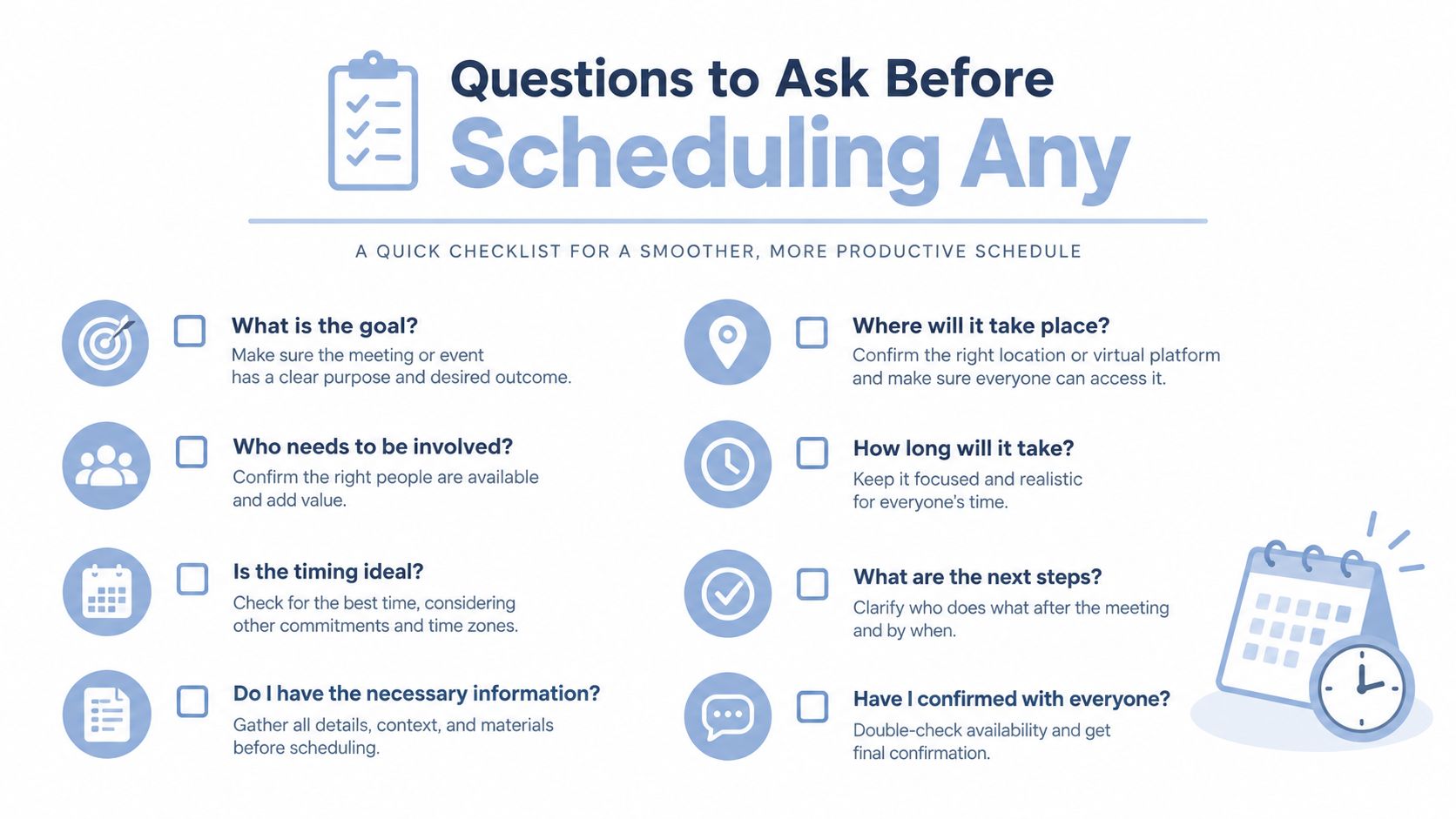
The following questions can be asked by phone or sent in writing:
- What exact CPT code or codes will be billed?
- Does the quoted amount include the technical and professional components?
- Is physician stress supervision included?
- Is continuous ECG monitoring included?
- Are image acquisition, sonographer time, interpretation, and report generation included?
- Will a facility fee be billed separately?
- Could contrast or a pharmacologic stress agent create an additional charge?
- Who will interpret the images, and will the interpreting cardiologist review the result with the patient?
- Does the practice accept the patient's specific insurance plan?
- If the patient pays cash, what is the complete bundled fee?
- What happens if the study is inconclusive or requires another clinical appointment?
A smoother cash-pay example
An office-based practice may respond with a written package that names the test, stress method, monitoring, interpretation, report, and follow-up discussion. The patient can then compare that complete amount with the estimated insurance responsibility rather than comparing an office fee with a hospital charge that excludes facility services.
That transparency doesn't prove that the office is clinically preferable. It does make the financial decision more intelligible. A responsible practice should also explain whether testing is available to anyone, not only members of an executive health program, and whether the physician recommends the test after reviewing the patient's history.
The Value of Physician-Led Preventive Care
The cost of cardiac care includes more than the initial charge. It includes whether the test was appropriate, whether the images were interpreted by a qualified specialist, whether the result was explained in context, and whether the patient leaves with a prioritized plan.
A physician-led preventive cardiology model coordinates those decisions. Advanced cardiac testing can sit alongside risk modeling, lipid evaluation, blood pressure assessment, exercise planning, nutrition support, and follow-up rather than appearing as an isolated purchase. That coordination may reduce fragmented appointments and repeated administrative work, but it doesn't guarantee a particular health outcome.
For adults seeking a preventive cardiologist near them, the practical standard is straightforward: testing should have a clinical purpose, the price should describe the complete episode, and the interpretation should connect the result to the patient's overall cardiovascular risk.
The most useful stress echocardiography cost is therefore not the lowest number. It is the transparent cost of an appropriate test, specialist interpretation, and an actionable next step.
Hosmane Longevity Center offers physician-led preventive cardiology, stress echocardiography, advanced cardiovascular testing, and coordinated executive health evaluations in Lewes and Wilmington, Delaware. Adults can schedule testing and consultation without assuming that a stress echo is automatically necessary, with Dr. Vinay Hosmane placing cost, indication, and results in clinical context. Visit Hosmane Longevity Center to request a consultation.