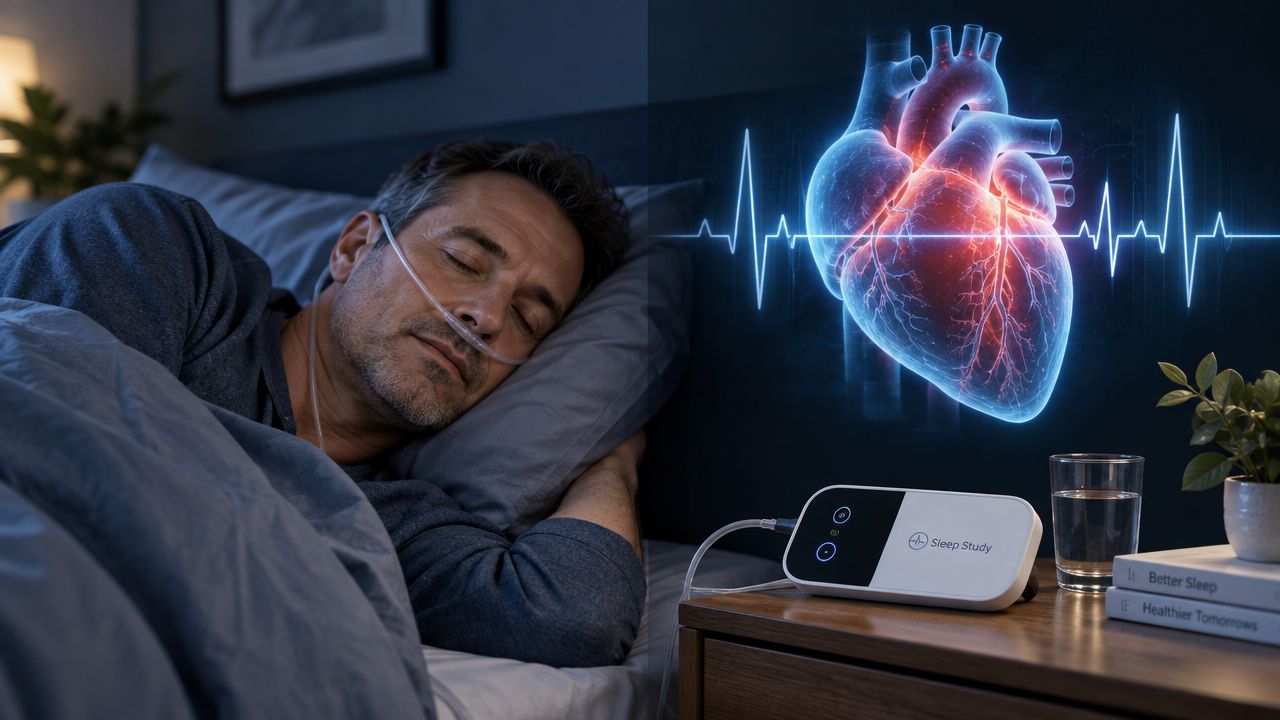
Untreated severe obstructive sleep apnea is associated with a 2.6-fold higher risk of myocardial infarction, heart failure, stroke, or cardiovascular death. Sleep apnea can therefore affect cardiovascular risk even when a person doesn't feel unusually tired or recognize repeated nighttime breathing interruptions.
For an executive who travels, leads teams, and remains productive under sustained pressure, the absence of obvious symptoms can be misleading. A person may wake, answer emails, exercise, and attend meetings while the cardiovascular system has spent the night responding to repeated oxygen drops and surges in blood pressure. That hidden burden is why sleep apnea deserves attention in preventive cardiology, not only in sleep medicine.
Table of Contents
- The Hidden Connection Between Sleep Apnea and Heart Disease
- Understanding How Sleep Apnea Damages Cardiovascular Health
- What Major Cardiology Guidelines Say About Screening
- Why Oxygen Desaturation Matters More Than Event Count
- Does Treating Sleep Apnea Actually Protect Your Heart
- How to Approach Sleep and Cardiac Screening at Hosmane Longevity Center
The Hidden Connection Between Sleep Apnea and Heart Disease
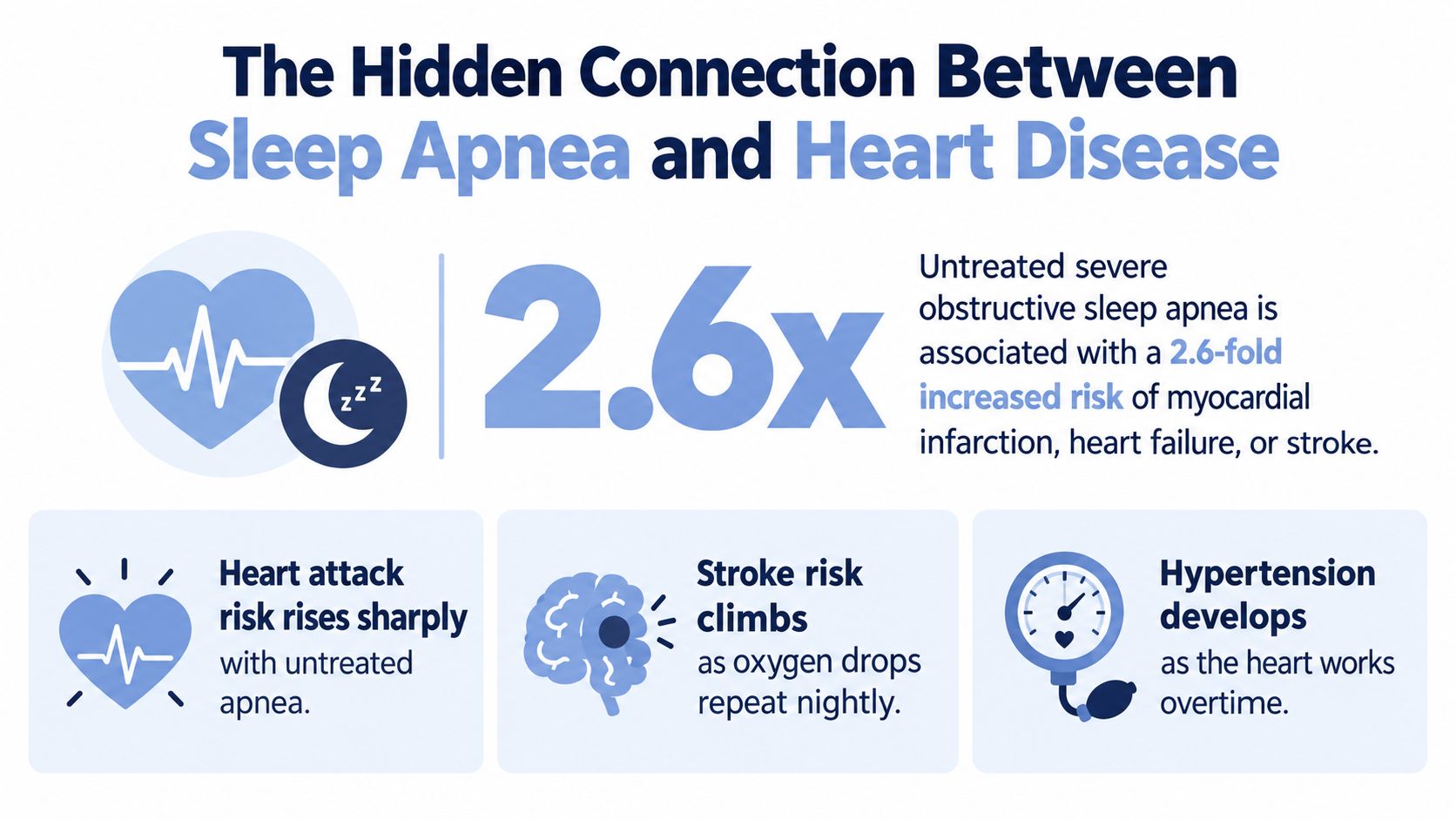
A review of clinical outcome data reports that severe untreated obstructive sleep apnea is associated with a 2.6-fold increased risk of incident myocardial infarction, coronary revascularization, congestive heart failure, or cardiovascular death after adjustment for confounding factors. The association is described in this clinical review of sleep apnea and cardiovascular outcomes.
Consider a Wilmington executive who wakes at a predictable time, rarely misses a morning commitment, and assumes that snoring is an inconvenience. A partner may notice pauses in breathing, gasping, or restless sleep, but the executive remembers none of it. Blood pressure begins to require closer attention, and an occasional irregular heartbeat appears during a period of otherwise normal daytime performance.
That scenario illustrates the central problem. Sleep apnea heart disease risk can develop without dramatic daytime symptoms, because the principal stress occurs during sleep. Each obstructive event can produce an oxygen decline, a brief arousal, a faster heart rate, and a blood-pressure surge. Repeated night after night, those episodes can place persistent stress on the vascular system.
Why symptom perception can mislead
Daytime sleepiness matters, but it isn't a reliable gatekeeper for cardiovascular evaluation. Some professionals interpret fatigue as a workload issue, attribute poor concentration to travel, or assume that waking during the night reflects normal aging. Others sleep alone and have no observer to report breathing pauses.
The practical signs may be less obvious:
- Difficult blood-pressure control: Repeated nighttime sympathetic activation can make hypertension harder to manage.
- Recurrent rhythm problems: Sleep apnea deserves attention when atrial fibrillation is present.
- Unexplained oxygen stress: A sleep study can reveal physiologic strain that a person can't detect consciously.
Broader patient education about the risks of sleep apnea can help readers recognize why the issue extends beyond snoring.
For adults in Lewes, Rehoboth, Wilmington, and nearby Pennsylvania or Maryland, proactive screening can fit naturally into an executive health evaluation. The relevant question isn't whether sleep apnea feels disruptive. It's whether repeated breathing interruptions, oxygen stress, and cardiovascular comorbidities are creating a preventable risk pattern.
Understanding How Sleep Apnea Damages Cardiovascular Health
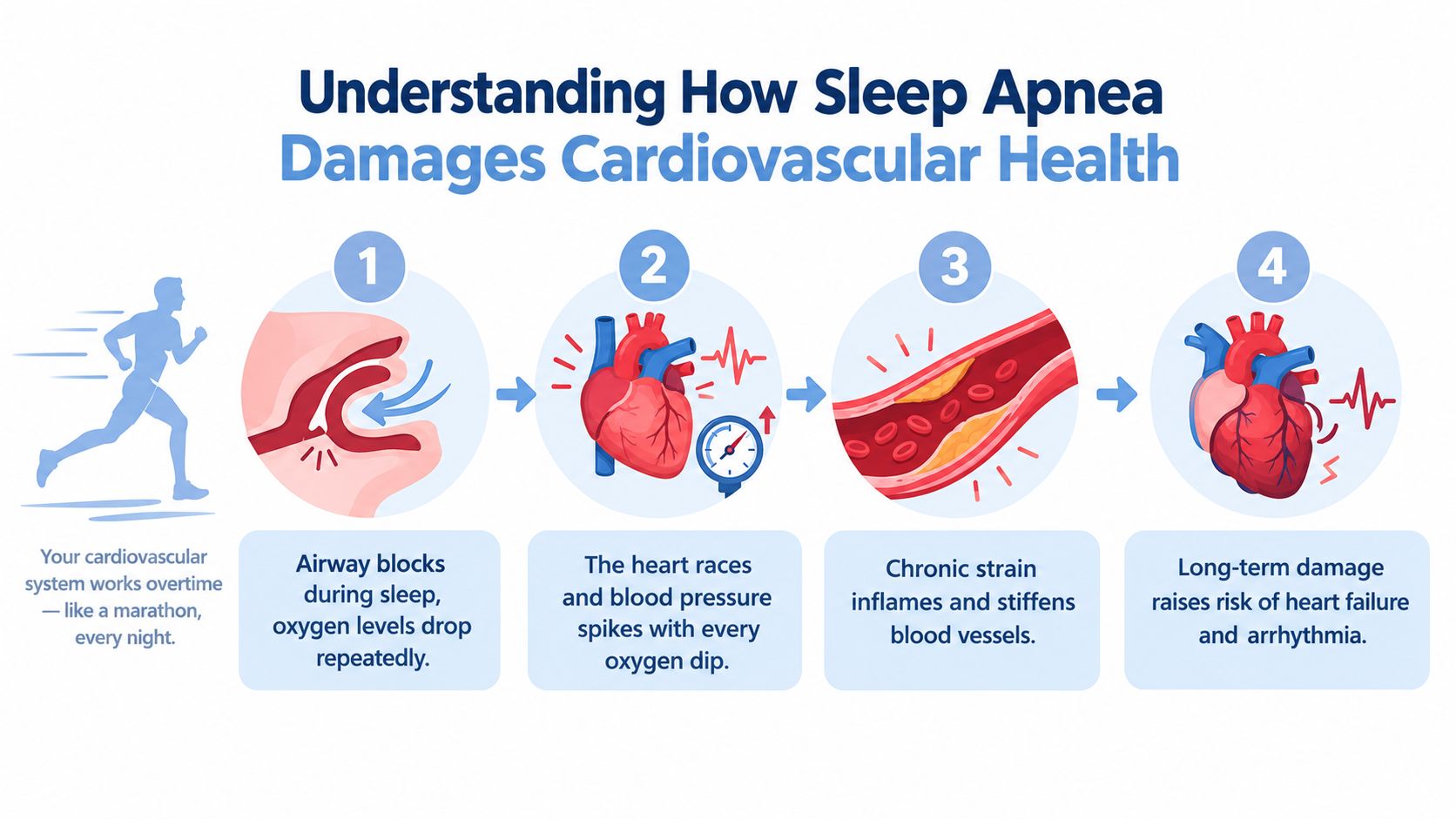
Sleep apnea places the cardiovascular system through repeated, short stress tests. During obstructive sleep apnea, the upper airway narrows or closes while breathing effort continues. Oxygen falls, the brain triggers an arousal, and breathing resumes. The person may not remember the event, but the heart and blood vessels respond each time.
The acute response during an apnea
Three mechanisms matter most:
- Intermittent hypoxia activates the sympathetic nervous system. Falling oxygen signals danger. Adrenaline-related activation increases heart rate and vascular tone, shifting the body toward a fight-or-flight state during a period that should support recovery.
- Large negative intrathoracic pressure swings increase cardiac workload. The person continues trying to inhale against a blocked airway. That effort changes pressure around the heart and can increase the strain required to fill and eject blood.
- Arousal produces blood-pressure surges. Breathing resumes with a rapid transition from obstruction to activation. The resulting pressure changes are brief, but their repetition can create a substantial overnight burden.
The American Heart Association scientific statement on sleep-disordered breathing and cardiovascular disease identifies intermittent hypoxia, sleep fragmentation, and negative intrathoracic pressure swings as pathways promoting sympathetic activation, endothelial dysfunction, and blood-pressure surges.
How repeated episodes become chronic strain
The endothelium, the thin inner lining of blood vessels, helps regulate vascular relaxation, clotting, and inflammation. Repeated oxygen fluctuation and pressure stress can impair that regulation. Over time, vessels may become less responsive, and the heart may face a less favorable pressure environment.
Sleep fragmentation adds another layer. Even when total time in bed appears adequate, repeated arousals interrupt the normal architecture of sleep. The result is not just a tired morning. It's a pattern in which the nervous system repeatedly abandons restorative sleep to restore breathing.
Practical rule: A quiet night by memory isn't proof of a quiet night physiologically.
This cascade helps explain why sleep apnea can worsen hypertension control and contribute to rhythm instability. It also explains why a person with coronary disease, heart failure, pulmonary hypertension, or atrial fibrillation may need a more deliberate evaluation than symptom screening alone.
What Major Cardiology Guidelines Say About Screening
Cardiology guidance increasingly treats obstructive sleep apnea as a cardiometabolic risk amplifier, not merely a respiratory diagnosis. The clinical reasoning is straightforward. Repeated hypoxia, arousals, and pressure swings can affect blood pressure, vascular function, and cardiac rhythm, so a sleep evaluation becomes relevant when cardiovascular disease is difficult to control or repeatedly returns.
The American Heart Association recommends screening for obstructive sleep apnea in patients with resistant or poorly controlled hypertension, pulmonary hypertension, and recurrent atrial fibrillation after cardioversion or ablation. These recommendations appear in the AHA guidance on sleep-disordered breathing and cardiovascular disease.
Screening is a clinical decision, not a symptom contest
A person doesn't need to report overwhelming daytime sleepiness before discussing testing. Cardiovascular context changes the threshold for evaluation. A patient with difficult hypertension, recurrent atrial fibrillation, or pulmonary hypertension may warrant screening even when the sleep complaint sounds modest.
The 2021 AHA statement also emphasizes hypoxia burden as a predictor of cardiovascular risk. That emphasis matters because two people with the same event count may experience very different oxygen exposure and recovery patterns. The sleep study must therefore be interpreted as a physiologic assessment, not just a diagnostic label.
The 2017 AHA/ACC heart failure guideline considered CPAP a possibly reasonable strategy, Class IIb, to improve sleep quality and daytime sleepiness in patients with cardiovascular disease and obstructive sleep apnea. That classification doesn't promise cardiovascular protection. It signals that treatment can have a role in selected clinical circumstances, while the expected benefit requires individualized judgment.
Putting sleep screening beside other risk signals
A preventive cardiology evaluation should place sleep findings alongside family history, blood pressure patterns, lipid markers, glucose-related risk, rhythm data, and evidence of atherosclerosis. Readers evaluating inherited risk can also review the practice's guidance on screening when there is a family history of heart disease.
That integrated approach prevents two common errors. The first is dismissing sleep apnea because the person feels functional. The second is treating a positive sleep study as a complete explanation for cardiovascular risk. Sleep apnea may modify risk, but it doesn't replace assessment of the other drivers that determine long-term heart health.
Why Oxygen Desaturation Matters More Than Event Count
The apnea-hypopnea index, or AHI, counts apneas and hypopneas per hour of sleep. In adults, an AHI below 5 is considered normal, 5 to 14.9 is mild, 15 to 29.9 is moderate, and 30 or higher is severe. The diagnostic framework also allows obstructive sleep apnea to be diagnosed at an AHI of 5 or higher when typical symptoms or comorbidities such as hypertension, coronary artery disease, or stroke are present, and at an AHI of 15 or higher without symptoms, as described in this diagnostic review.
AHI is useful, but it doesn't describe the full cardiovascular exposure. It doesn't fully capture how far oxygen falls, how long it remains low, how often the nervous system arouses the sleeper, or how quickly oxygen recovers.
The oxygen-burden question
A PLOS Medicine study found that total sleep time with oxygen saturation below 90% was the strongest OSA-related predictor of cardiovascular events or death, and that this measure increased risk by 50% after adjustment for known risk factors. The same report found that other sleep measures, including awakenings, mean heart rate, total sleep time, and excessive daytime sleepiness, were independently associated with a 5% to 50% increase in the composite cardiovascular outcome. Those findings are detailed in the PLOS Medicine analysis of sleep-related predictors.
This creates an important clinical distinction. A person with a comparatively low AHI but prolonged oxygen desaturation may carry more physiologic stress than someone with a higher AHI and brief, shallow events. The answer depends on the entire sleep-study profile and the person's cardiovascular phenotype.
A practical comparison
| Severity Level | AHI Range | Key Risk Indicator | Cardiovascular Implication |
|---|---|---|---|
| Normal | Below 5 | No diagnostic event burden by AHI | Cardiovascular interpretation still depends on other findings |
| Mild | 5 to 14.9 | Event count may be limited, but oxygen burden can vary | Risk assessment should consider symptoms, desaturation, and comorbidities |
| Moderate | 15 to 29.9 | More sustained event burden and possible hypoxemia | Coronary risk becomes more clearly adverse |
| Severe | 30 or higher | Greater event burden, often with more substantial oxygen stress | Stronger cardiovascular associations, particularly when hypoxemia is pronounced |
A 2017 BMJ Open meta-analysis found a graded relationship between obstructive sleep apnea severity and coronary heart disease risk. Mild disease wasn't significantly associated with coronary heart disease in that analysis, while moderate disease carried a relative risk of 1.38 and severe disease a relative risk of 1.63. The same analysis associated moderate and severe disease with increased vascular outcomes and all-cause mortality, as reported in the BMJ Open meta-analysis.
Questions worth asking after a sleep study
Executives reviewing results should ask whether the report includes:
- Oxygen exposure: How much sleep time occurred below 90% saturation?
- Event characteristics: Were events obstructive, central, or mixed?
- Arousal burden: How frequently did breathing disruption fragment sleep?
- Clinical context: How do findings relate to blood pressure, rhythm, heart failure, coronary disease, or stroke history?
The most useful interpretation doesn't ask only whether the AHI is mild, moderate, or severe. It asks what the cardiovascular system experienced overnight.
Does Treating Sleep Apnea Actually Protect Your Heart
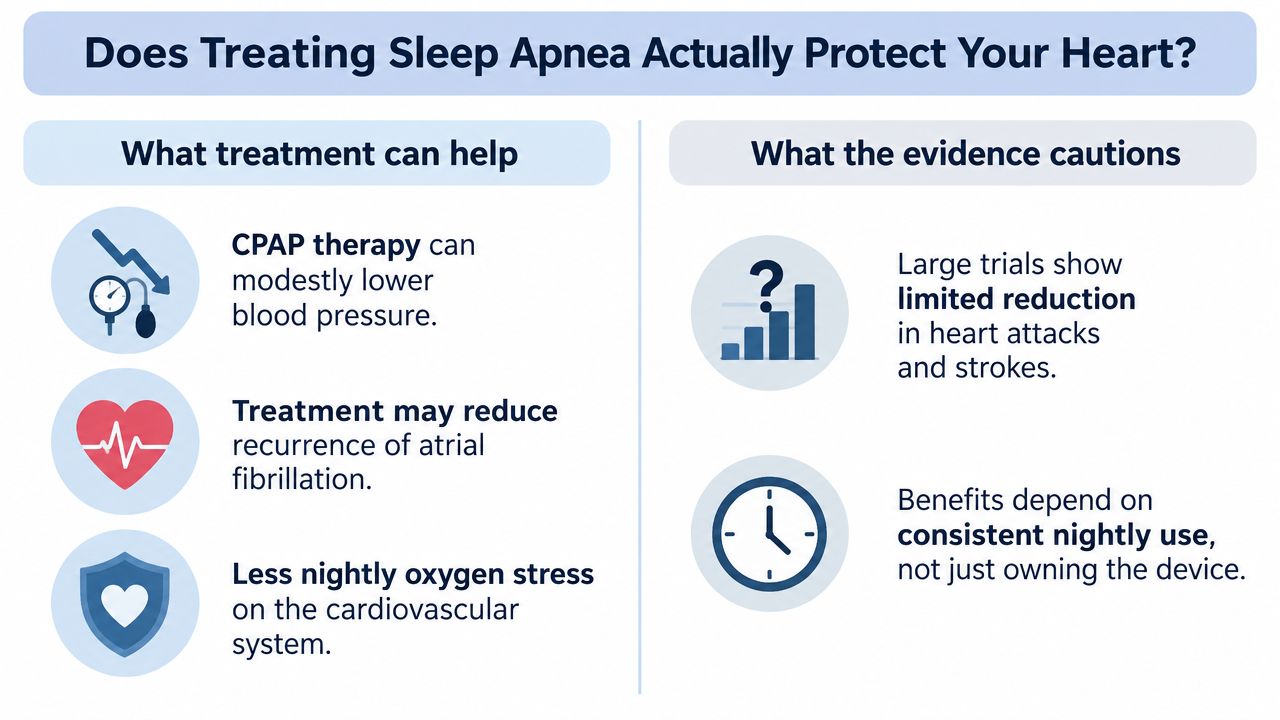
Treatment decisions require more nuance than the statement “CPAP protects the heart.” Untreated sleep apnea is associated with hypertension, atrial fibrillation, heart failure, stroke, and mortality, but randomized studies haven't consistently shown that CPAP reduces cardiovascular mortality. That distinction matters for patients who aren't sleepy and want to know whether treatment changes hard cardiac outcomes.
CPAP can improve airway patency and reduce obstructive events when used effectively. It may improve sleep quality and daytime sleepiness, and selected high-risk patients may benefit from better blood-pressure control or reduced rhythm burden. However, treatment should not be presented as a guarantee against heart attack, stroke, or heart failure.
Why the answer differs from patient to patient
The expected value of treatment depends on several variables:
- Apnea subtype: Obstructive and central sleep apnea don't have the same mechanisms or treatment options.
- Symptom burden: A person with severe sleepiness may gain a clear quality-of-life benefit even when cardiovascular outcomes remain uncertain.
- Cardiovascular phenotype: Hypertension, atrial fibrillation, heart failure, pulmonary hypertension, and prior vascular disease change the clinical priorities.
- Treatment consistency: A prescribed device can only help when the patient can use it reliably and the therapy addresses the relevant disorder.
The 2025 American Academy of Sleep Medicine guideline shift for central sleep apnea recognizes transvenous phrenic nerve stimulation as an evidence-based therapy and updates adaptive servoventilation data. This development reinforces a broader point: sleep-disordered breathing in patients with heart disease is becoming increasingly subtype-specific rather than a one-size-fits-all CPAP decision.
Choosing a treatment pathway
CPAP is one possible treatment for obstructive sleep apnea, but clinical assessment may also consider positional approaches, weight-related interventions, oral appliances, or procedural options. A patient exploring non-CPAP pathways can review this educational sleep apnea workflow from 3D DDS, while recognizing that treatment selection belongs with the relevant medical and dental professionals.
Advanced cardiac evaluation can also help establish the context in which treatment decisions occur. Information about advanced cardiovascular imaging may be relevant when clinicians are assessing atherosclerotic burden or other structural risk markers.
Clinical perspective: Treat sleep apnea to address the patient's actual burden, not to promise an outcome that the evidence hasn't established.
The most defensible strategy combines symptom relief, physiologic improvement, cardiovascular risk management, and follow-up. For a person who feels well but has substantial hypoxemia or significant heart disease, treatment may still deserve priority. For another person, the first step may be confirming the apnea subtype, reviewing the sleep-study details, and correcting other cardiovascular risks in parallel.
How to Approach Sleep and Cardiac Screening at Hosmane Longevity Center
A practical evaluation starts with a home sleep study when the history or cardiovascular profile raises concern. The test can assess breathing events, oxygen patterns, and related sleep signals in a familiar setting. Results should then be interpreted with blood pressure, rhythm, lipid, family-history, and vascular findings rather than viewed in isolation.
Hosmane Longevity Center can combine sleep evaluation with advanced cardiac testing such as Coronary Artery Calcium scoring, carotid intima-media thickness measurement, Lp(a), and ApoB. Its cardiovascular testing services also include other physician-directed assessments selected according to clinical context.
A typical preventive pathway may include:
- Clinical review: Dr. Vinay Hosmane evaluates symptoms, blood-pressure history, rhythm concerns, family history, and existing cardiovascular conditions.
- Home sleep assessment: Sleep data helps characterize obstructive or central breathing abnormalities and the associated oxygen burden.
- Cardiovascular risk mapping: Imaging, lipid biomarkers, ECG or ambulatory monitoring, and blood-pressure assessment provide complementary information.
- Prioritized planning: Findings are placed into a practical plan that accounts for work demands, travel, exercise, nutrition, and follow-up needs.
Testing is available to anyone, not only executive health program members, when clinically appropriate. In-person visits are available at Lewes and Wilmington clinics, which can support professionals who need a coordinated evaluation rather than fragmented appointments.
Hosmane Longevity Center provides physician-led preventive cardiology, home sleep studies, advanced cardiac testing, and individualized risk interpretation for adults concerned about sleep apnea heart disease risk. Visit Hosmane Longevity Center to request a consultation and discuss whether a coordinated sleep and cardiovascular assessment fits the individual's health priorities.