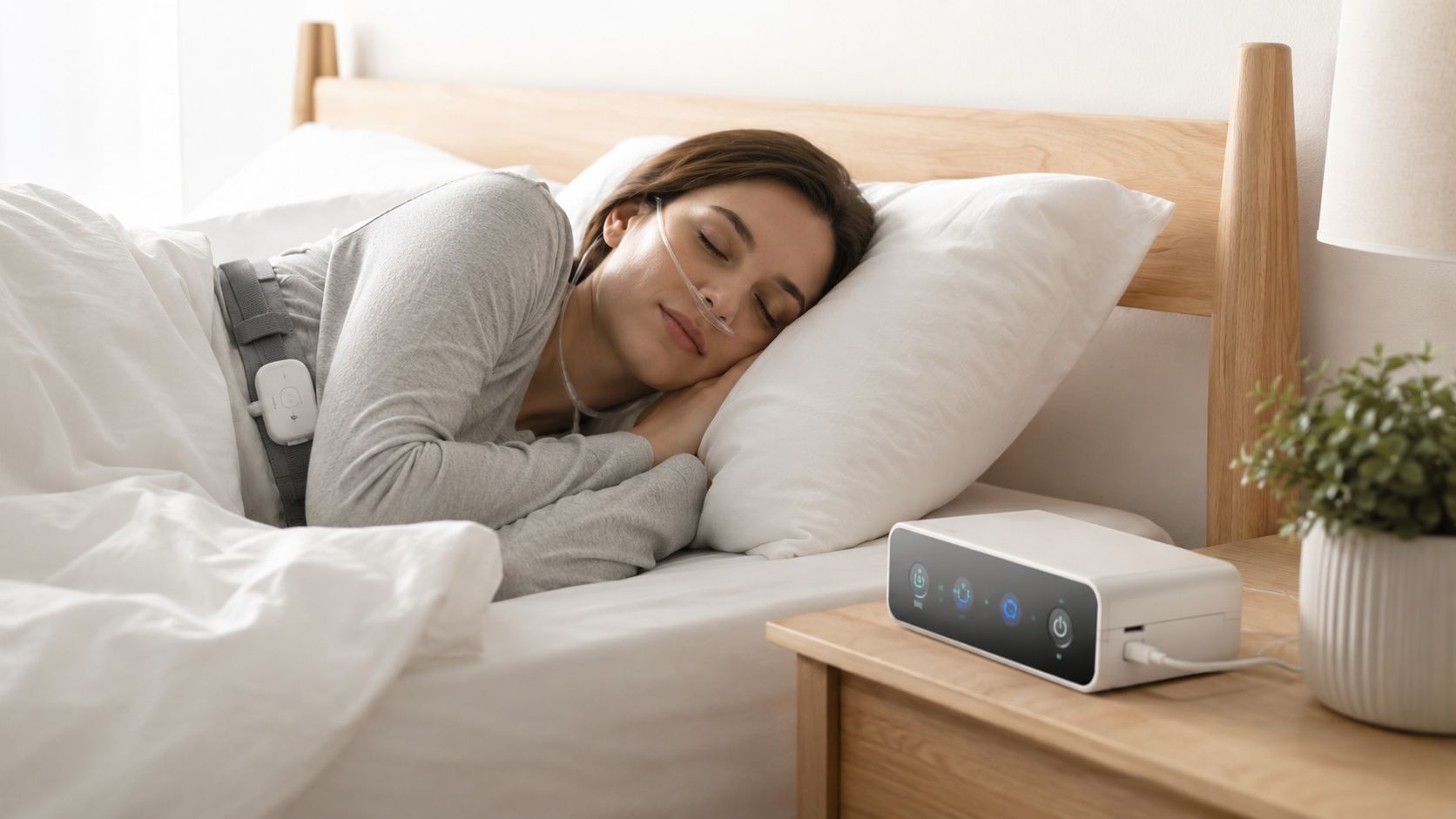
The most popular advice about a home sleep study for sleep apnea is also the most misleading: that a test performed in bed is nearly equivalent to spending a night in a sleep laboratory. Home testing is useful, often practical, and clinically appropriate for selected adults. It isn't a universal screening gadget, and a negative result doesn't always close the case.
That distinction matters for executives and professionals in Delaware, Pennsylvania, and Maryland who may be managing hypertension, atrial fibrillation, abnormal lipids, or a demanding schedule while assuming that fatigue is just the cost of work. Obstructive sleep apnea can intersect with cardiovascular risk, but the value of testing depends on choosing the right diagnostic pathway and interpreting the result in context.
Table of Contents
- Why a Home Sleep Study Matters More Than You Think
- What a Home Sleep Study Actually Records
- Who Qualifies and Who Should Skip It
- How the Night of Testing Works
- Home Sleep Study Versus In-Lab Polysomnography
- Reading Your Results Without Overconfidence
- Connecting Sleep Apnea to Heart and Longevity Care
- Next Steps After Your Home Sleep Study
Why a Home Sleep Study Matters More Than You Think
A home sleep apnea test, or HSAT, is best understood as a limited-channel diagnostic test with cardiovascular relevance. It usually measures breathing-related signals, oxygen saturation, and related physiologic changes. It doesn't provide the full picture of sleep architecture that a laboratory polysomnogram can provide.
The distinction is easy to miss because home devices are convenient and often produce a clear-looking report. A numerical result can create a false sense of completeness, particularly when the test doesn't record brain waves or establish the duration of sleep.
The American Academy of Sleep Medicine guideline on diagnostic testing for adult sleep apnea supports either polysomnography or HSAT for uncomplicated adults who have an increased risk of moderate-to-severe obstructive sleep apnea. The same guidance says that a single negative, inconclusive, or technically inadequate HSAT should be followed by polysomnography, and it limits home testing in several higher-risk clinical situations.
The cardiovascular reason to take testing seriously
Obstructive sleep apnea isn't only a complaint about snoring or poor sleep. Repeated airway obstruction can produce intermittent oxygen changes, surges in sympathetic activity, and disrupted sleep. Those physiologic stresses can be relevant to blood pressure, atrial fibrillation, and broader cardiovascular risk.
That doesn't mean every person with snoring has sleep apnea, or that treating sleep apnea guarantees prevention of a cardiovascular event. It does mean that the diagnostic decision deserves more care than selecting the most convenient device.
Practical rule: Convenience can determine where testing happens, but clinical probability and comorbidities should determine which test is appropriate.
A useful home study can identify obstructive breathing events in the right patient and move care forward efficiently. It may not explain persistent symptoms, mild disease, central breathing abnormalities, hypoventilation, or another sleep disorder. A negative report therefore deserves an honest interpretation, particularly when loud snoring, witnessed pauses, morning headaches, daytime sleepiness, resistant hypertension, or arrhythmia remains present.
What a Home Sleep Study Actually Records
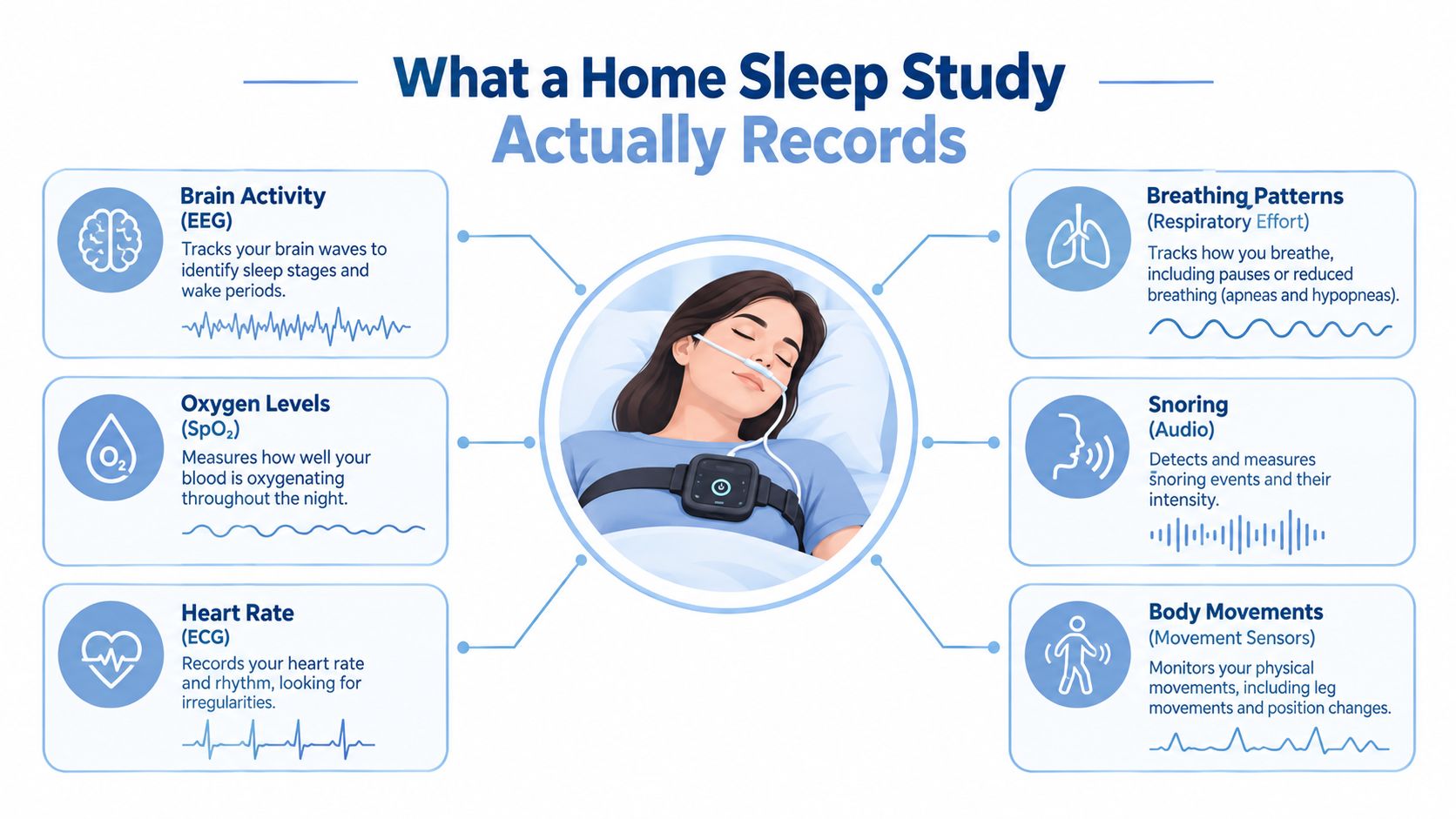
A full laboratory polysomnogram resembles a complete overnight physiologic examination. It can record brain activity, eye movements, muscle activity, breathing, oxygen, heart rhythm, and body movement while a technologist observes the study. An HSAT is more like a focused field assessment. It gathers the signals most relevant to respiratory events but leaves out several channels that help determine whether the patient is truly asleep and what kind of sleep disruption is occurring.
Most clinically used home devices record some combination of:
- Airflow: A nasal cannula detects changes in airflow through the nose and mouth.
- Respiratory effort: Chest and abdominal belts show whether the body is trying to breathe during an event.
- Oxygen saturation: A finger sensor tracks blood oxygen and pulse rate.
- Heart rate: The device may identify pulse changes associated with respiratory disturbance.
- Body position: Some systems distinguish back sleeping from side sleeping.
- Snoring or movement: Certain devices include microphones or motion sensors.
Why the missing EEG matters
The major limitation is the absence of electroencephalography, or EEG, in most HSAT systems. Without EEG, the device can't directly identify sleep onset, awakenings, or the transitions among sleep stages. It generally uses total recording time, or a related estimate, instead of true total sleep time.
That distinction affects the respiratory event index. If a person lies awake for a substantial portion of the recording, the denominator becomes larger than the actual time asleep. The calculated event rate can therefore be lower than it would be if true sleep time were known, which may underestimate severity, especially in mild disease.
The apnea-hypopnea index, or AHI, represents the number of apneas and hypopneas per hour of sleep in a laboratory study. On an HSAT report, the comparable number may be labeled the respiratory event index because the device estimates the time denominator. Clinicians then review the signal quality, event pattern, oxygen data, symptoms, and medical history rather than treating the number as an isolated verdict.
Consumer wearables may provide useful wellness information about pulse or oxygen trends, but a wearable without validated respiratory channels and clinician interpretation shouldn't be treated as equivalent to a diagnostic HSAT.
Who Qualifies and Who Should Skip It
The appropriate candidate for HSAT is generally an uncomplicated adult with a meaningful pretest probability of obstructive sleep apnea. That probability comes from the clinical picture, not from a single symptom. Loud habitual snoring, witnessed breathing pauses, nocturnal choking or gasping, excessive daytime sleepiness, and compatible examination findings may support the decision to test at home.
The expected disorder also matters. HSAT is designed primarily to evaluate obstructive sleep apnea in a patient whose history already points in that direction. It isn't intended to screen an asymptomatic population or investigate every cause of fragmented sleep.
A clinical comparison
| HSAT Eligibility at a Glance | Typically Qualifies for HSAT | Should Skip HSAT / Go to In-Lab |
|---|---|---|
| Symptoms | An adult with loud snoring, witnessed apneas, choking or gasping, and daytime sleepiness | Symptoms suggesting another sleep disorder, unexplained insomnia, or a pattern not well explained by obstructive apnea |
| Clinical probability | A moderate-to-high pretest probability of uncomplicated obstructive sleep apnea | Low probability, no symptoms, or concern for mild disease that a limited recording may underestimate |
| Medical complexity | No major condition likely to alter breathing during sleep | Significant cardiorespiratory disease, suspected hypoventilation, or neuromuscular weakness |
| Breathing pattern | Suspected obstructive events | Suspected central sleep apnea or another non-obstructive breathing disorder |
| History | No major neurologic or medication-related risk that complicates interpretation | Chronic opioid use, stroke history, or other circumstances requiring broader assessment |
| Population | Selected adults assessed by a qualified clinician | Pediatric patients and certain pregnancy-related situations requiring closer medical supervision |
The AASM pathway specifically limits HSAT in patients with significant cardiorespiratory disease, neuromuscular weakness, hypoventilation risk, chronic opioid use, stroke history, or severe insomnia. Significant chronic lung disease, congestive heart failure, and suspected central sleep apnea deserve particular caution because a negative or low HSAT score may not answer the actual clinical question.
Misapplying HSAT can create inappropriate reassurance. A patient with heart failure, unexplained oxygen abnormalities, or a history of stroke may need laboratory testing from the outset because the clinician must evaluate more than straightforward upper-airway obstruction.
How the Night of Testing Works
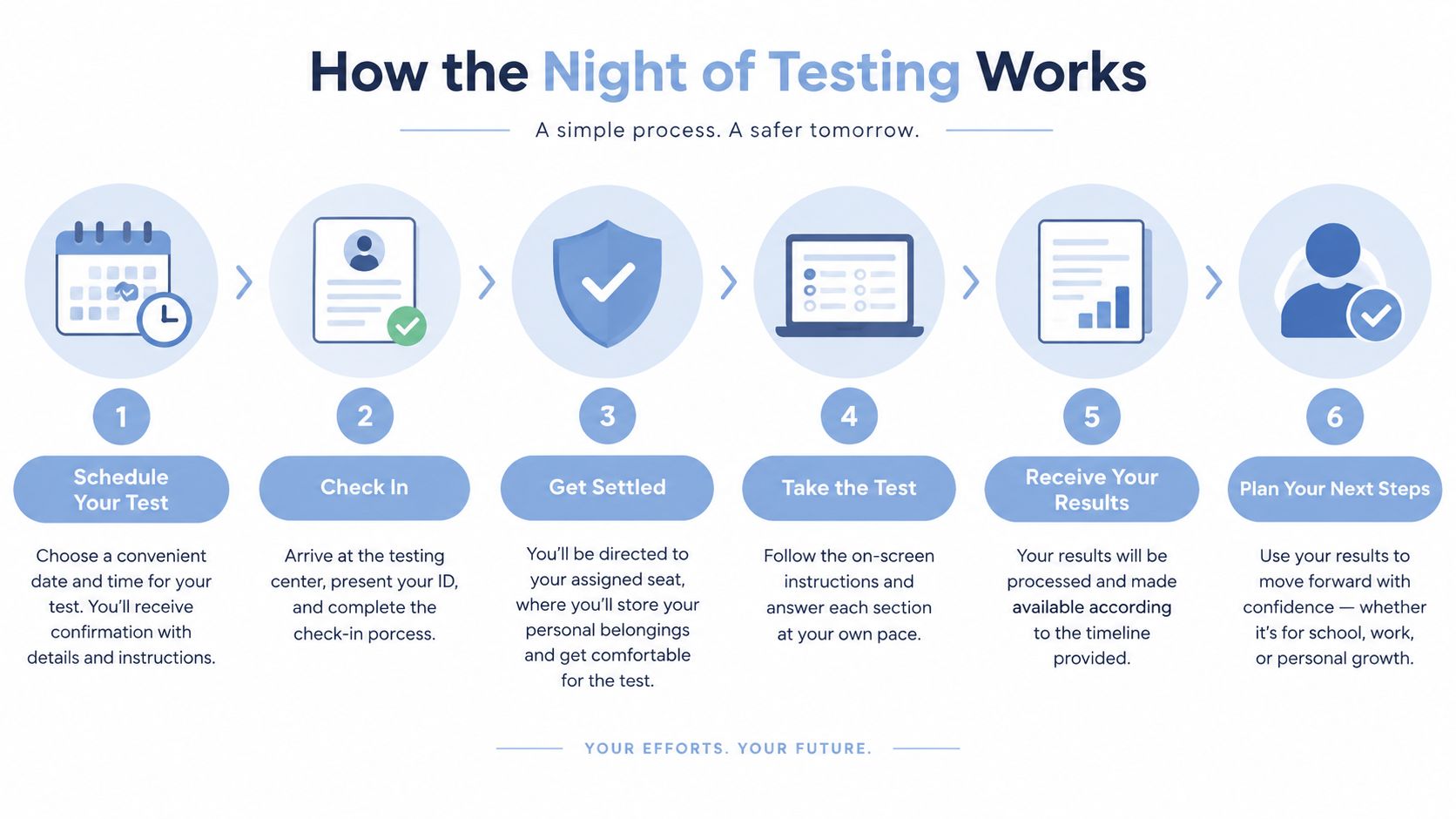
The process usually begins with a clinical assessment, followed by device pickup or shipping. A qualified team should explain the sensors, demonstrate placement, and clarify what to do if a signal is lost. The patient then takes the equipment home and follows the supplied instructions rather than improvising placement.
A typical evening sequence looks like this:
- Prepare the equipment. The device should be charged or supplied with working batteries, and the sensors should be checked before bedtime.
- Attach the nasal cannula. The small tubing sits beneath the nose and measures airflow. Open-mouth breathing can reduce the quality of the airflow signal.
- Place the finger probe. This records oxygen saturation and pulse-related information.
- Secure the effort belt. The belt around the chest or abdomen helps identify respiratory effort during airflow reduction.
- Start the recording. The patient follows the device instructions and sleeps in the usual bedroom environment.
- Return or upload the data. Depending on the service, the equipment is returned or the recording is transferred for review.
What improves the recording
The objective isn't to create a perfect night. It's to obtain interpretable signals during a representative sleep period. Alcohol can alter breathing and sleep architecture, while pets, unusual routines, or repeated awakenings can make the recording less representative. A detached sensor, depleted battery, loose belt, or nasal cannula displaced during sleep may produce an inadequate study.
A technician's review adds value because automated scoring can misclassify artifacts, movement, signal loss, and borderline events. The final interpretation should account for the quality of each channel rather than merely repeating the device's automated label.
Patients can ask about the expected turnaround, but the report may take several days because scoring and clinical interpretation are separate from returning raw data. Testing logistics and availability vary by practice. Information about available clinical testing services can help patients understand what questions to ask before scheduling.
Home Sleep Study Versus In-Lab Polysomnography
HSAT and in-lab polysomnography aren't competing versions of the same test. They answer overlapping but different clinical questions. HSAT asks whether a selected patient shows a pattern consistent with obstructive sleep apnea using a limited set of respiratory signals. PSG examines sleep, breathing, movement, oxygenation, and other physiology in greater detail.
A 2022 meta-analysis of peripheral arterial tonometry-based home testing summarized 13 studies and 1,227 participants. It reported pooled sensitivity of 96% at an AHI threshold of 5 events per hour, 88% at 15, and 80% at 30, while specificity was 44%, 74%, and 90% at those same thresholds, respectively. The figures show why performance depends on both the device and the severity cutoff, rather than supporting a blanket claim that every home test is equivalent to PSG. The evidence is summarized in the earlier AASM material linked above.
| Home Sleep Study vs. In-Lab Polysomnography | Home Sleep Study (HSAT) | In-Lab Polysomnography (PSG) |
|---|---|---|
| Primary strength | Convenient assessment of suspected obstructive sleep apnea in selected adults | Comprehensive evaluation of sleep and breathing disorders |
| Channels | Airflow, respiratory effort, oxygen saturation, pulse, and sometimes position or snoring | Respiratory channels plus EEG, eye movements, muscle activity, movement, and technologist observation |
| Sleep staging | Usually absent because EEG isn't recorded | Directly measured with EEG-based staging |
| Environment | Familiar bedroom, less disruptive for many patients | Controlled laboratory setting with monitoring throughout the night |
| Cost and access | Often less resource-intensive and easier to schedule | More resource-intensive and may require greater scheduling coordination |
| Best use | High-probability, uncomplicated obstructive sleep apnea | Negative or inadequate HSAT, complex disease, suspected central apnea, hypoventilation, parasomnias, or unexplained symptoms |
A 2021 accuracy study found no significant difference between home and laboratory testing for sleep efficiency, total sleep time, or sleep latency in its selected population, and concluded that home monitoring correlated well with the laboratory standard. Another comparative analysis reported 94.9% sensitivity, 62.5% specificity, and 91.0% overall accuracy for obstructive sleep apnea, with moderate-to-severe disease showing 80.0% sensitivity, 74.1% specificity, and 77.6% accuracy. These results support careful use, not indiscriminate use. Readers comparing testing pathways can also review this neutral resource on how to find better sleep test results.
Reading Your Results Without Overconfidence
An HSAT report commonly centers on the respiratory event index or an AHI-like value. A diagnosis is commonly supported at 15 or more events per hour, or at 5 or more events per hour when symptoms or cardiovascular comorbidities are present, as summarized in this primary-care review of obstructive sleep apnea diagnosis.
Clinicians often describe severity using these ranges:
- Mild: AHI from 5 to 14 events per hour.
- Moderate: AHI from 15 to 29 events per hour.
- Severe: AHI of 30 or more events per hour.
Those categories are useful, but the number doesn't carry the whole interpretation. An HSAT may use recording time rather than measured sleep time, so the reported respiratory event index can understate the true event frequency. Oxygen desaturation, body position, duration of events, symptoms, blood pressure, and the quality of the recording all influence the next decision.
A negative result isn't always the end
A negative HSAT may be reassuring when the clinical suspicion was low and the recording was technically sound. It shouldn't automatically exclude sleep apnea in a patient with persistent symptoms or meaningful cardiovascular findings. The AASM has noted reported false-negative rates as high as 17%, and the clinical concern is greatest when the disease may be mild, sleep time was overestimated, or the test didn't capture a representative night. The false-negative issue is discussed in this clinical review of negative home sleep apnea tests.
When symptoms persist: A negative, inconclusive, or technically inadequate HSAT should prompt discussion of in-lab polysomnography rather than reassurance alone.
An inconclusive report may result from insufficient usable recording, lost airflow or oxygen channels, sensor displacement, or very little estimated sleep. A clinician may repeat HSAT in a carefully selected patient, but the AASM recommendation is to proceed to PSG after a single negative, inconclusive, or technically inadequate study when the diagnostic question remains unresolved.
Connecting Sleep Apnea to Heart and Longevity Care
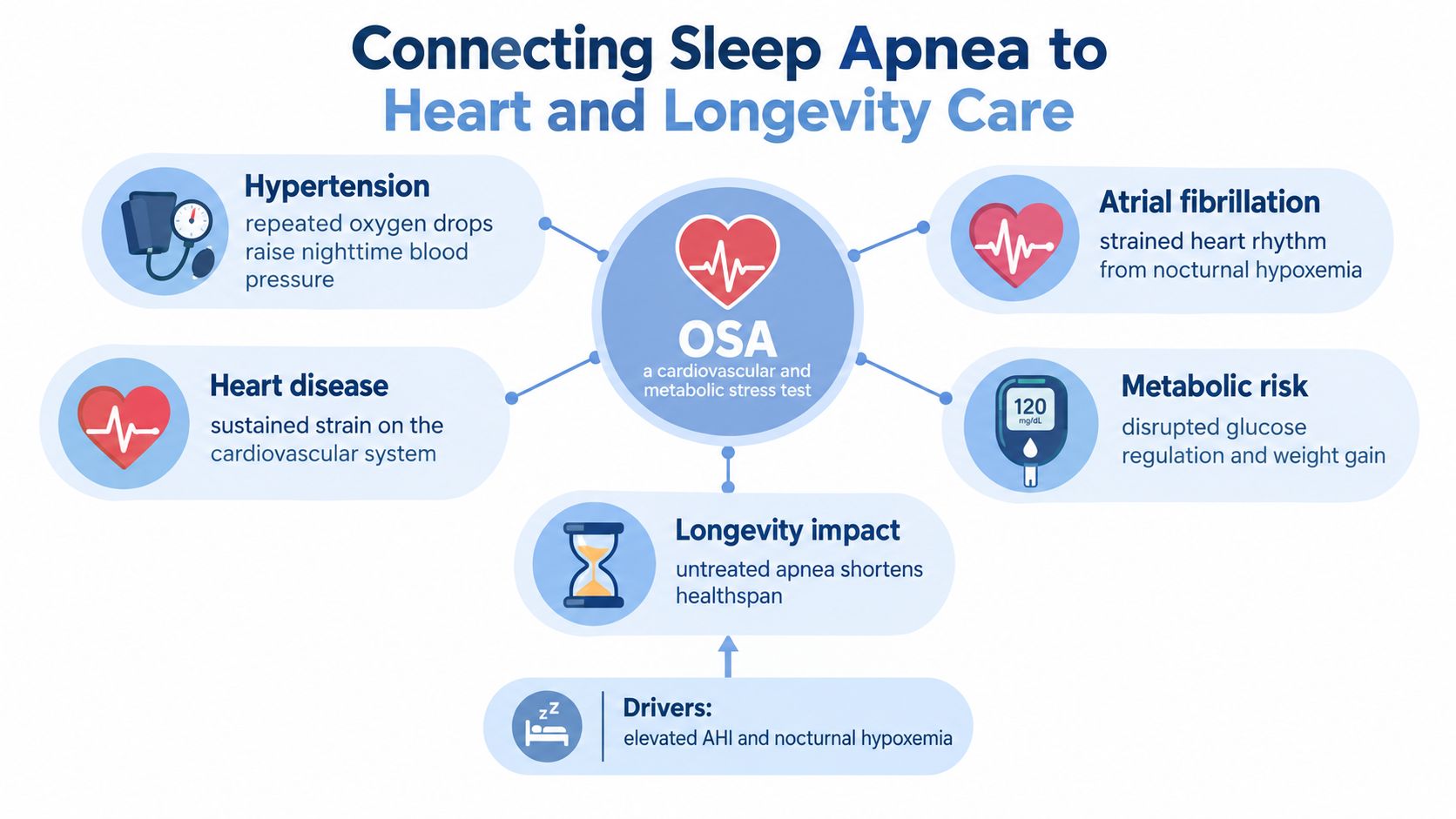
Sleep apnea should be considered a cardiovascular and metabolic stress test, not merely a sleep complaint. Repeated obstruction can place strain on the cardiovascular system through intermittent oxygen changes, pressure fluctuations, arousals, and increased sympathetic activity. Those mechanisms help explain why sleep apnea is clinically relevant in patients with hypertension, atrial fibrillation, heart failure, metabolic risk, or established vascular disease.
The home study contributes one piece of evidence. It may identify a meaningful obstructive breathing pattern, reveal oxygen desaturation, or show whether events are more prominent in a particular sleep position. It doesn't independently determine the patient's full cardiovascular risk, and it can't substitute for a broader medical evaluation.
The result needs clinical context
A patient with a high HSAT index and uncontrolled blood pressure may need both sleep treatment and a more deliberate blood pressure assessment. A patient with atrial fibrillation may need coordinated attention to rhythm management, sleep-disordered breathing, weight, alcohol exposure, blood pressure, and other modifiable factors. A patient with normal oxygen data but persistent fatigue may need evaluation for another sleep or medical explanation.
Preventive cardiology may also incorporate advanced lipid markers such as Lp(a) and ApoB, blood pressure phenotyping, metabolic testing, and imaging such as coronary calcium assessment when clinically appropriate. The purpose isn't to order every available test. It is to identify which measurements clarify risk and change management.
A family history of premature disease can further shape that decision. Educational guidance on family history and heart disease screening can help patients prepare for a more complete prevention discussion.
Treatment selection also depends on the disorder and the patient. Positive airway pressure, oral appliance therapy, positional treatment, weight management, and specialist or surgical evaluation may each have a role. Treatment can improve breathing during sleep, but no responsible clinician should promise that it will reverse established cardiovascular disease or guarantee longer life.
A more useful interpretation
The most productive question isn't, “Did the home test say yes or no?” It is, “What does this result add to the patient's cardiovascular and sleep profile, and what uncertainty remains?”
A 2024 review of FDA-cleared home devices found substantial false positives, false negatives, and variability among products, reinforcing the need for clinician interpretation rather than treating a device report as a stand-alone diagnosis. That review also supports a cautious view of home testing as a targeted diagnostic pathway, not a general-purpose population screen. The findings are available in this review of home sleep apnea testing devices.
Next Steps After Your Home Sleep Study
The report should be the beginning of a clinical conversation, not the end of one. A practical follow-up starts with obtaining the complete report, confirming that a qualified clinician reviewed it, and matching the findings to the original symptoms and medical history.
A post-test checklist
- Schedule follow-up: Arrange a results consultation promptly, often within one to two weeks, depending on clinical urgency and local availability.
- Bring the complete report: Request the full PDF, not only a summary label. Raw tracings and signal-quality information can reveal whether the automated score deserves confidence.
- Ask about the respiratory index: Clarify whether the report gives an AHI, respiratory event index, or another device-specific measure.
- Review oxygen data: Ask about oxygen desaturation, the pattern of low readings, and whether the signal was technically reliable.
- Check recording validity: Confirm the amount of usable recording time and whether airflow, effort, oxygen, and pulse channels remained intact.
- Discuss position: A positional breakdown can show whether events were concentrated while supine, although positional treatment still requires clinical judgment.
A mild result in a patient with minimal symptoms may lead to observation, symptom review, and cardiovascular risk optimization rather than an automatic treatment decision. Moderate-to-severe findings generally warrant discussion of therapy, particularly when symptoms, hypertension, atrial fibrillation, or other cardiovascular concerns are present.
An inconclusive or technically inadequate study shouldn't be forced into a diagnosis. A repeat HSAT may be reasonable in selected uncomplicated adults, while a negative study that conflicts with the clinical picture should lead to in-lab polysomnography. The AASM clinical guidance specifically recommends PSG after a single negative, inconclusive, or technically inadequate HSAT, as outlined in its diagnostic testing guideline.
Treatment should fit the patient
CPAP remains an important treatment option for obstructive sleep apnea, but it isn't the only pathway. Depending on anatomy, severity, tolerance, sleep position, dental status, and comorbidities, clinicians may discuss mandibular advancement devices, positional therapy, weight reduction, or referral for a procedural or surgical evaluation. Patients exploring non-CPAP approaches can review this overview of a CPAP alternative from Dr. Eric Wiitala, while recognizing that treatment selection requires individualized assessment.
For patients seeking a broader cardiovascular evaluation, a consultation with a preventive cardiologist near you can place sleep findings alongside blood pressure, lipids, metabolic markers, family history, and other risk factors. This article is educational and isn't a substitute for individualized medical advice.
Hosmane Longevity Center offers physician-led preventive cardiology, executive health, home sleep testing, advanced cardiac testing, and integrated risk assessment for patients in Delaware and nearby regions. To connect a sleep apnea evaluation with cardiovascular and longevity planning, schedule a consultation by visiting Hosmane Longevity Center.